
Poetry Month Spotlight
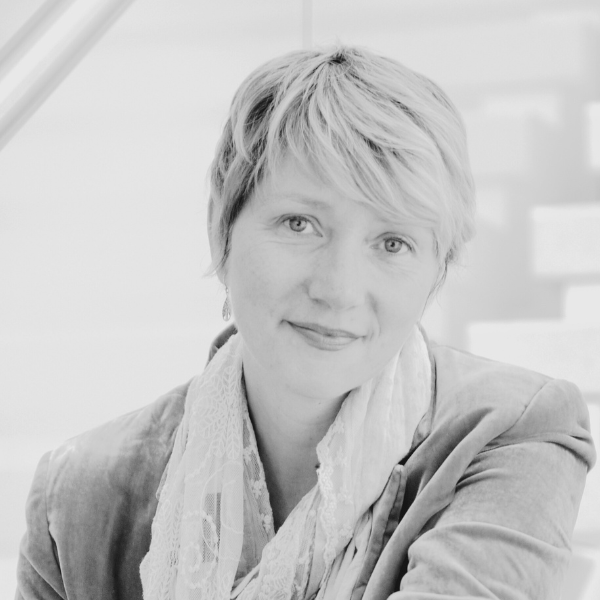
Rita Mae ReesePoet’s Introduction
I have been thinking more lately about how a poem is not made to teach others what the poet knows, but for the poem to teach the poet what is unsayable. I have found myself revising these two poems dozens of times, and it was only in the last few revisions that I discovered the question that was really driving me in both is what is the role of the poet, particularly now in America?
“Musophobia” highlights the tension between the poet and the making of empire. I am interested in the role of mice in poetry—from the “wee, sleeket, cowran, tim’rous beastie” of Robert Burns to Emily Dickinson’s “Grief is a mouse—” to the “Mice” of Eileen Myles. Why do mice appear so often in poetry? I think it’s because like mice, poets are inconvenient, and they can tell us a lot about ourselves if we disrupt the automatic meanings attached to them.
“The Remains of the Wolfman” is a eulogy of sorts. When my sister’s ex-husband died, I discovered that bodies with no one to claim them has become a pervasive problem in the United States (and, to be fair, in other countries too), particularly since the Covid pandemic. I thought of how her ex-husband had loved his body, and also how dying so alone is a horror that most of us can’t bear to contemplate. Of course, I thought of “The American Way of Death” and how our customs around this have changed and are still changing, but how utterly capitalism in particular can turn any one of us into pure objects.
As I think about the absurd role of the poet, the death of poet Renee Good at the hands of our own government, and what seems like our increasing powerlessness, I think about the words of Nikolay Nekrasov: “You may not be a poet, but you obliged to be a citizen.” I recognize that I am obliged to be a citizen, but of what country? Whose citizen are you when borders shift, as they did for Nekrasov, who was born in Ukraine but is considered a Russian poet? Or when your country attacks itself? Or if your country, the only one you have, has never acknowledged you as one of its own?
And as for being a poet, I only feel like one when I’m immersed in writing, which happens less and less often. Still, I find comfort and truth in the words of Wisława Szymborska’s poem “Possibilities”: “I prefer the absurdity of writing poems to the absurdity of not writing poems.”
What is the poem you are working on now trying to teach you? Your job in revision is to clear away the noise and debris until you can hear that lesson. Then you use that to start working on the next poems. If the lesson is too easy, don’t let the poem off so lightly—go back, dig in, keep listening to it. Bask in the absurdity.
Musophobia
My mother has a mouse problem
and no patience for my elaborate,
humane solutions. At our next visit,
she hands us a jar with the lid on tight
and a young mouse trying to clamber
to the top. My wife cries as we take it
to the community garden and dump it out
among the kale and zinnias. That night
over dinner we marvel that the mouse survived
in the sealed jar, that she escaped
good intentions and bad ideas this long
only to end up sticky with peanut butter
in a strange garden, predators able to smell her
a mile away. It’s hard not to see her as a hero
of sorts—the clever ancient enemy
of stored grain which was literally
the seed of empires—a hero always happy
to find an easy meal only to find her troubles
multiplied. Or if not a hero, perhaps a poet,
because isn’t this the muse in the mouse
—the nagging hunger, the blind hope,
the mad dash far from all you know?
The Remains of the Wolfman
My sister says she got a call from the state:
her second husband Tommy is dead.
I have this one memory of him: he’s
in his twenties, sitting on their couch,
happy in only his red briefs
his flat abdomen and ready thighs,
a rubber wolfman mask
(which neither of us mention)
hiding pockmarks but not his dark eyes
that never lingered like flies on me.
In his velvet drawl he confided
I like scary movies—
On the small TV, the opening scene:
a woman listening to a man on the phone
wanting her—or anyone—to claim
a man’s body. She has no money,
she says, and besides she hasn’t
seen the man in thirty years
she explains until her words
are transformed into a howl.
About the Poet
Rita Mae Reese (she/they) is the author of The Book of Hulga (University of Wisconsin Press) and The Alphabet Conspiracy (Arktoi Books). She has received a Rona Jaffe Foundation Writers’ Award, a Stegner fellowship, and a “Discovery”/The Nation award. They serve as the Director at Arts + Literature Laboratory in Madison, Wisconsin. Find out more at ritamaereese.com.
BMP Celebrates National Poetry Month
During these times of whistles, protests, and raising our voices, we think of the poet’s role as witness, as well as the way poets write to document what is happening, adding their words to the maelstrom that is the world. With this in mind, we’ve asked our featured poets: What do you want to say?
We hope you enjoy the answers—that they call you to the world, remind you of the ways carefully chosen language can capture a moment, call you to action. Poetry can also carve out a space for reflection, make connection, create a tiny time capsule of the now for us to hold on to.
Top photo by Ricardo Lima from Pexels