“This Is Kind of an Epic Love Story” Is the Rom-Com We Need

"This Is Kind of an Epic Love Story" Is the Rom-Com We Need

I’ve always had a soft spot for romantic comedies.

Romance isn’t taken too seriously and there is almost always an interesting cast of characters along for the ride. When it comes to romantic comedies involving LGBTQ+ characters, there are all too few in the world. As a result, I was delighted to discover Kacen Callender’s book This Is Kind of an Epic Love Story. Not only is it written by a Black queer author, but the main characters are queer people of color.

The book tells the story of Nathan Bird, an awkward Black teen and aspiring filmmaker. Nathan Bird doesn’t believe in happy endings due to his dad’s death and a break up with his girlfriend-turned-best friend. When his childhood best friend Oliver “Ollie” James Hernández returns to town, Nathan must decide whether his romantic feelings for Ollie are worth acknowledging.

In addition to the main characters, the secondary cast is also well done. In particular, Nathan’s mom is a nice balance of loving and strict, while Nathan’s sister Rebecca is a close confidant despite her being across the country.  Nathan’s relationship with his mom is poignant because they have to learn to deal with the aftermath of losing Nathan’s dad. Other interesting secondary characters include nerd-jock Gideon and nerdy romantic Ashley, who are mutual friends with Nathan, Flo, and Ollie.

Together, all the characters tell a sweet story of not only romantic love, but also coming-of-age, friendship, and family.

Together, all the characters tell a sweet story of not only romantic love, but also coming-of-age, friendship, and family. Nathan’s interactions with his loved ones are enhanced by smart, fun, and realistic dialogue. One particular conversation I enjoyed between Nathan and Ollie was about having sex for the first time, how awkward they felt and whether they were ready to do so. In fact, this might be the first time I’ve read about sex that wasn’t perfect the first time.

Nathan’s interactions with his loved ones are enhanced by smart, fun, and realistic dialogue.

A more quirky aspect of the dialogue is the various pop culture references throughout the book. Many nods are subtle such as Ollie naming his dog after Donna Noble from Doctor Who and Florence talking about the America Chavez comic book with her girlfriend Lydia. Certain movie references are used in an entertaining way, such as when Ollie and Nico spontaneously reenact a kiss from the film Amelie.

The only flaw I found in this book was the mild confusion I had while reading the interactions between Nathan and his loved ones. There are so many characters that it was a little difficult to keep up with them all. At one point, I had to go back and reread certain parts when I felt like I was missing something.

Nathan and his loved ones will make you smile and yell at them at the same time.

All in all, this book is the teen rom-com we need more of. Nathan and his loved ones will make you smile and yell at them at the same time. Filled with laughter, drama, and honesty, this book is queer coming-of-age bliss.

The Afro YA promotes black young adult authors and YA books with black characters, especially those that influence Pennington, an aspiring YA author who believes that black YA readers need diverse books, creators, and stories so that they don’t have to search for their experiences like she did.

Latonya Pennington is a poet and freelance pop culture critic. Their freelance work can also be found at PRIDE, Wear Your Voice magazine, and Black Sci-fi. As a poet, they have been published in Fiyah Lit magazine, Scribes of Nyota, and Argot magazine among others.
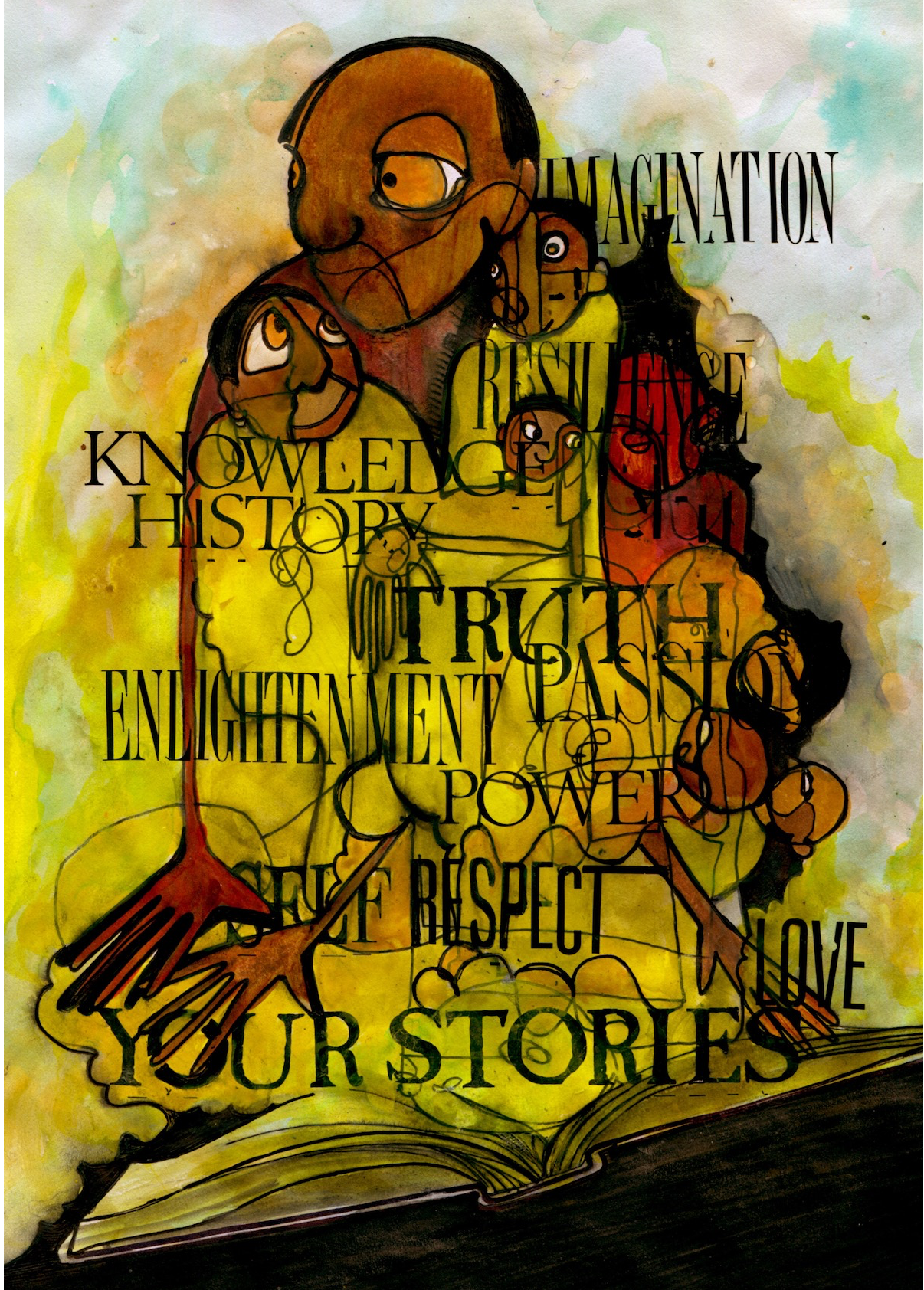
One of the best aspects of this book is its main lead, Nathan. His awkwardness, quirks, and passion shine through the sensitive voice given to him by the author. His internal dialogue is especially well-done, letting you get a sense of the anxiety he feels when it comes to interacting with others and forming close relationships. One train of thought goes, “I should do something. Ask her out. Tell her she looks nice. Wait, is that catcalling? Even if it’s in hipster cafe and not out on the street? Fucking shit. I’m a catcalling bastard.”

One of the best aspects of this book is its main lead, Nathan. His awkwardness, quirks, and passion shine through the sensitive voice given to him by the author.

Besides Nathan, his old and new love interests are also well written. Florence Lim is a visual artist who often draws Nathan’s favorite movie characters for him. She wants to see Nathan happy with a new love, even though Nathan still isn’t over her. While she has moved on and now has a girlfriend named Lydia, her friendship with Nathan is still important to her.

Meanwhile, Ollie is a deaf teen who aspires to be a photographer. He is as passionate about his art as Ollie is and uses his passion to encourage Ollie to go for his dreams. Ollie also uses a combination of sign language and the notes app of a cell phone to communicate, but this is just an extension of his character. Ollie is never depicted as inspiration porn for Nathan; he is just an everyday teen dealing with family problems and romance.

In addition to the main characters, the secondary cast is also well done. In particular, Nathan’s mom is a nice balance of loving and strict, while Nathan’s sister Rebecca is a close confidant despite her being across the country.  Nathan’s relationship with his mom is poignant because they have to learn to deal with the aftermath of losing Nathan’s dad. Other interesting secondary characters include nerd-jock Gideon and nerdy romantic Ashley, who are mutual friends with Nathan, Flo, and Ollie.

Together, all the characters tell a sweet story of not only romantic love, but also coming-of-age, friendship, and family.

Together, all the characters tell a sweet story of not only romantic love, but also coming-of-age, friendship, and family. Nathan’s interactions with his loved ones are enhanced by smart, fun, and realistic dialogue. One particular conversation I enjoyed between Nathan and Ollie was about having sex for the first time, how awkward they felt and whether they were ready to do so. In fact, this might be the first time I’ve read about sex that wasn’t perfect the first time.

Nathan’s interactions with his loved ones are enhanced by smart, fun, and realistic dialogue.

A more quirky aspect of the dialogue is the various pop culture references throughout the book. Many nods are subtle such as Ollie naming his dog after Donna Noble from Doctor Who and Florence talking about the America Chavez comic book with her girlfriend Lydia. Certain movie references are used in an entertaining way, such as when Ollie and Nico spontaneously reenact a kiss from the film Amelie.

The only flaw I found in this book was the mild confusion I had while reading the interactions between Nathan and his loved ones. There are so many characters that it was a little difficult to keep up with them all. At one point, I had to go back and reread certain parts when I felt like I was missing something.

Nathan and his loved ones will make you smile and yell at them at the same time.

All in all, this book is the teen rom-com we need more of. Nathan and his loved ones will make you smile and yell at them at the same time. Filled with laughter, drama, and honesty, this book is queer coming-of-age bliss.

[/et_pb_text][/et_pb_column][/et_pb_row][/et_pb_section]

The Afro YA promotes black young adult authors and YA books with black characters, especially those that influence Pennington, an aspiring YA author who believes that black YA readers need diverse books, creators, and stories so that they don’t have to search for their experiences like she did.

Latonya Pennington is a poet and freelance pop culture critic. Their freelance work can also be found at PRIDE, Wear Your Voice magazine, and Black Sci-fi. As a poet, they have been published in Fiyah Lit magazine, Scribes of Nyota, and Argot magazine among others.

“The Poet X” Is a Testament to Self-Expression

“The Poet X” Is a Testament to Self-Expression

As a teenager and budding poet, the very first verse novel I can recall reading is Bronx Masquerade by Nikki Grimes.

Told from the point of view of many diverse high school students in a slam poetry style, it wasn’t hard for me to enjoy. However, the brief glimpses into the characters’ personal lives weren’t enough for me to completely love the book. After finishing Elizabeth Acevedo’s The Poet X, I feel like it filled the gaps that Bronx Masquerade had.

The Poet X tells the story of Xiomara, an Afro-Latina teen who feels suffocated by her mother’s strict religious parenting and frustrated by the way the world perceives her as a brown girl with burgeoning sexuality. For a while, she writes down her truest thoughts in secret, convinced that no one will want to hear them. After being severely punished for daring to explore her sexuality and attraction to her male classmate Aman, she decides to join her school’s slam poetry club and finds the courage to express herself.

For a while, she writes down her truest thoughts in secret, convinced that no one will want to hear them.

One of the first things about the book I noticed was Xiomara’s poetic voice. Even prior to joining the poetry club, it is very distinctive, powerful, and vivid. In the early pages of the book, there is a page called “Names” in which Xiomara explains the origins of her name and the impact of it, evoking the image of a defiant warrior. Her personality is summed up in the following lines: “My parents probably wanted a girl who would sit / in the pews / wearing pretty floral and a soft smile. / They got combat boots and a mouth silent / until it’s sharp as an island machete.”

Although Xiomara initially keeps her thoughts secret, her struggle and desire to speak and act on them is always apparent. This is especially telling in the homework assignments that she turns in for her English class. While the first drafts of those assignments are honest, the final drafts are toned down to convey what Xiomara thinks her teacher, Ms. Galiano, wants to hear. Later, the fact that Ms. Galiano truly cares for Xiomara’s deepest thoughts becomes a key factor in Xiomara’s decision to join the poetry club.

Although Xiomara initially keeps her thoughts secret, her struggle and desire to speak and act on them is always apparent.

Ms. Galiano’s support of Xiomara is one of the most touching aspects of the book. She is patient enough to let Xiomara join the poetry club when she is ready and a caring enough teacher to gently nudge Xiomara toward slam poetry by introducing it in one of her classes. Later, she even becomes one of Xiomara’s shoulders to cry on after a tumultuous confrontation with her mother. Ms. Galiano reminds me of a Black high school literature teacher I had who encouraged my writing and helped me during a difficult time.

Others in Xiomara’s life include Aman, a young man with good intentions that almost always come through. There is Xavier, Xiomara’s genius twin, who tries his best to support Xiomara despite experiencing a very different sexual awakening from hers. But of the entire cast of characters, the character who most resonated with me after Ms. Galiano and Xiomara was Xiomara’s mother.

Xiomara’s mother is both problematic and sympathetic. She wants the best for her daughter but lacks the ability to listen to her daughter without using religion to criticize her. Her religion is a source of strength, because it helped her through the difficult birth of the twins, so she tries to impose it on them to help them be strong too.

Feeling stifled by her mother, her religion, and her peers, Xiomara uses the written word to say what she can’t say aloud.

Feeling stifled by her mother, her religion, and her peers, Xiomara uses the written word to say what she can’t say aloud. Most notably, she uses her words to express her sexual awakening and how women are held to different standards than men in religion and real life. The most surprising poem in the book involves her masturbating, something I rarely read about in YA books involving women of color. The ecstasy and stigma surrounding masturbation is examined, and it is refreshingly realistic to see in a book for teens.

Xiomara discovers slam poetry and starts to become braver and more honest about her feelings.

Ultimately, I believe Xiomara and her story resonated with me so much because she reflects a part of the teen poet I was and the adult poet I am becoming now. My personal favorite pages are when Xiomara discovers slam poetry and starts to become braver and more honest about her feelings. I understand the joy and struggle Xiomara experiences as a poet because I’ve experienced them many times myself. The Poet X is a testament to finding and expressing your personal voice.

The Afro YA promotes black young adult authors and YA books with black characters, especially those that influence Pennington, an aspiring YA author who believes that black YA readers need diverse books, creators, and stories so that they don’t have to search for their experiences like she did.

Latonya Pennington is a poet and freelance pop culture critic. Their freelance work can also be found at PRIDE, Wear Your Voice magazine, and Black Sci-fi. As a poet, they have been published in Fiyah Lit magazine, Scribes of Nyota, and Argot magazine among others.

Top photo by Diego Rosa on Unsplash


“The Dark Fantastic” Fills an Imagination Gap in Youth Media

"The Dark Fantastic" Fills an Imagination Gap in Youth Media

As someone who came of age with the Harry Potter series, it is astounding I barely noticed how few Black characters were in the books.

After all, the focus of the books was on the main characters Harry Potter, Hermione Granger, and Ron Weasley. Although Hermione Granger was a particular favorite, the default white protagonists I had become used to seeing in teen fiction and fantasy caused me to see her as white until a few years ago. In Professor Ebony Elizabeth Thomas’ book The Dark Fantastic, she puts a name to my experience: the imagination gap. Published by NYU Press, the book will be released in May 2019. Explained in the introduction, the imagination gap is a lack of development in the imagination of youth caused by seeing the same stories and the same default white characters. Thomas further explains that this is the result of the titular dark fantastic cycle, a cycle that is influenced by the role race plays in stories. The dark fantastic cycle involves a Black character embodying spectacle, hesitation, violence, and haunting, often on behalf of a white protagonist. By examining certain instances of the dark fantastic cycle in sci-fi fantasy books and shows aimed at teens, Thomas illustrates how the stories told in mainstream sci-fi fantasy media tend to erase the presence of Black characters, AKA The Dark Other.
The imagination gap is a lack of development in the imagination of youth caused by seeing the same stories and the same default white characters.
In The Dark Fantastic, Thomas chooses to discuss the dark fantastic cycle in four different media and four different Black female characters that have been discussed at large through digital media culture and communities (fandoms). These media consists of Rue from the young adult series The Hunger Games, Gwen from the BBC fantasy television series Merlin, Bonnie from the American teen vampire drama The Vampire Diaries, and Hermione Granger from the Harry Potter book series. While the critiques of all the media in this book are worth looking into, the ones for young adult literature are especially notable. Starting with Rue from The Hunger Games, Thomas explores how the dark fantastic cycle causes Rue’s innocence as a young Black girl to be transferred to Katniss, the series’s white female heroine. As a book series that initially focuses on children forced to battle each other to the death in a dystopian world, it was chilling to see how Rue is treated due to the dark fantastic cycle.
The dark fantastic cycle involves a Black character embodying spectacle, hesitation, violence, and haunting, often on behalf of a white protagonist.
Through the lens of the dark fantastic cycle, we see how Rue goes from being seen as innocent girl to not being seen at all. By the time Rue’s story enters the haunting phase of the cycle, she is a ghost who is only remembered as a resource for Katniss’s skills and a martyr for District 11. Rue’s dark fantastic cycle is reminiscent of other fictional Black deaths like Nurse Betty from Resident Evil: Extinction and Bill Potts from Doctor Who. Therefore, the chapter on Rue serves as a comprehensive explanation about Black fictional characters whose deaths motivate white protagonists. In addition to discussing Rue as a character, Thomas also tackles readers and viewers reaction to Rue in her book and movie form, relating the reactions her imagination gap theory and the dark fantastic cycle. By smoothly connecting these concepts to consumers, Thomas expertly demonstrates how an inability to visualize Black characters in sci-fi fantasy settings results in astonishment and outrage, especially from white readers and viewers in fandom. Thomas also does something similar in the chapter discussing Gwen from Merlin, showing how pervasive the imagination gap in a variety of media.
Thomas expertly demonstrates how an inability to visualize Black characters in sci-fi fantasy settings results in astonishment and outrage, especially from white readers and viewers in fandom.
In contrast to the chapter about Rue and The Hunger Games, the chapter on Hermione Granger and Harry Potter is more optimistic. This is due to Thomas’ personal anecdotes about her involvement in the Harry Potter fandom and how her fan fiction about the minor Black character Angelina Johnson relates to interpretations of Hermione Granger as a Black girl. In addition, Thomas explains how racebent interpretations of Hermione Granger are a part of several methods of restorying, i.e., retelling stories. With restorying, Thomas states that there is an infinite potential for stories due to the different methods involved in creating them. These include changing the location, changing the perspective, changing the mode, collaboration, and changing identity. Changing location moves the setting to another time and place, while changing the perspective lets another character tell their side of the story. Meanwhile, changing the mode consists of going from one medium to another (i.e. from fiction book to comic book), and collaboration involves people working together using digital media. Finally, changing identity can involve making a character perceived white to be Black or a cisgender character genderfluid. By bridging pop culture, personal experience, and academic study, The Dark Fantastic provides a crucial examination of race and storytelling in sci-fi fantasy media aimed at teens and young adults. Not only does Thomas discuss how Black characters are erased in an inescapable cycle, but she also provides a guide to breaking it. Many have already broken the dark fantastic cycle with new stories, and this book is a good starting point for more.

The Afro YA promotes black young adult authors and YA books with black characters, especially those that influence Pennington, an aspiring YA author who believes that black YA readers need diverse books, creators, and stories so that they don’t have to search for their experiences like she did.

Latonya Pennington is a poet and freelance pop culture critic. Their freelance work can also be found at PRIDE, Wear Your Voice magazine, and Black Sci-fi. As a poet, they have been published in Fiyah Lit magazine, Scribes of Nyota, and Argot magazine among others.

“Miles Morales: Spider-Man” Is a Down to Earth Read

“Miles Morales: Spider-Man” Is a Down to Earth Read

Spider-Man is both a title and a character that has morphed and evolved over time.

Although it began as the story of Peter Parker, Spider-Man has since become a mantle taken up by people such as Korean American Cindy Moon and Afro-Latino Miles Morales. At the time of this writing, Miles Morales’ story has been gaining prominence through not only comic books but also the animated film Into The Spider-Verse. Adding to that fame is Jason Reynolds’ 2017 young adult/children’s novel Miles Morales: Spider-Man.

Set in the lively city of Brooklyn, New York, this book examines Miles Morales experiencing a sort of identity crisis. His superpowers are on the fritz and causing him so much trouble at home and school that he is considering hanging up the suit for good. However, Miles soon finds a problem that is affecting both his superhero and civilian lives. Now, he must learn to bridge his past and present as a superhero and teenager in order to defeat an enemy that is all too close to home.

He must learn to bridge his past and present as a superhero and teenager in order to defeat an enemy that is all too close to home.

One of the most palpable aspects of this book is how Miles interacts with the city and neighborhood around him. A really fun scene involves Miles and his best friend Ganke on the subway with showtime boys, young break dancers that appear and dance spontaneously for cash tips. Another lively scene involves Miles and his father Jefferson witnessing some playful banter between customers and the barber at a barbershop. These scenes brings Miles’ neighborhood to life in a way that lets the reader see and feel Brooklyn even if they have never been there.

Besides Miles’ interactions with his neighborhood, his interactions with his friends and family are delightful. In fact, the most entertaining interactions involve Ganke, Miles’ crush Alicia, and Miles’ parents. Miles’ parents have a strict yet loving dynamic with their son, while Ganke is both comedic relief and buoyant support for Miles. Finally, Miles’ interactions with Alicia embody both the clumsiness of teenage crushes as well as a complicated, socially aware drive.

These scenes brings Miles’ neighborhood to life in a way that lets the reader see and feel Brooklyn even if they have never been there.

Enhancing Miles’ interactions with his family and friends are introspective sijo poems that Miles, Alicia, and Ganke learn to write for class. A Korean form of poetry involving three lines between fourteen and sixteen syllables, the sijos written by the characters allow them to express feelings they have a hard time conveying aloud. A sijo poem that shows a more vulnerable side to Miles goes, “I hate my father’s face when he tells me my block is a burden / like my job is to carry a family I didn’t create / like my life is for fixing something I didn’t break.”

Balancing out Miles’ friends and family is the chilling super-villain that Miles faces. Without giving too much away, the villain is a cleverly crafted character that is more than just some kooky super-powered bad guy. The villain is very much rooted in the real world, something that Miles can’t just punch away. Watching Miles slowly figure out the villain’s motives and connect the dots about their plot is gripping, with the final reveal of the villain’s identity shocking the reader and asking them to critique their own lives.

The villain is very much rooted in the real world, something that Miles can’t just punch away.

A final aspect of the book worth commenting on is how self-contained this story is. Even if you have never read a Miles Morales Spider-Man comic book or seen Into the Spider-Verse, you can pick up this book and read it without ever feeling lost or confused. Miles’ superpowers and superhero backstory is casually shown in a way that feels natural rather than an information dump. Some say that comic books are a stepping stone to novels, but this novel is a good gateway to comic books.

Overall, Miles Morales: Spider-Man is a down to earth, thoughtful book that combines the best of superheroics and teenage antics. Miles Morales is both a superhero to himself and a superhero to his loved ones. As he faces a true-to-life villain and learns to balance being a teenager with being a superhero, readers just might discover their own inner super powers too.

The Afro YA promotes black young adult authors and YA books with black characters, especially those that influence Pennington, an aspiring YA author who believes that black YA readers need diverse books, creators, and stories so that they don’t have to search for their experiences like she did.

Latonya Pennington is a poet and freelance pop culture critic. Their freelance work can also be found at PRIDE, Wear Your Voice magazine, and Black Sci-fi. As a poet, they have been published in Fiyah Lit magazine, Scribes of Nyota, and Argot magazine among others.

“The Belles” Is a Dark, Thoughtful Examination of Beauty Industries

"The Belles" Is a Dark, Thoughtful Examination of Beauty Industries

Beauty is often so glamorized that we see women as objects one moment and goddesses the next.

The glamorizing of beauty also leads to people spending thousands of dollars on make-up, plastic surgery, implants, and more. The cost of beauty also takes a physical, emotional, and mental toll as mind and bodies suffer from things such as self-hate, eating disorders, and even death. If beauty were an actual woman with god-like abilities, then society might be a lot like the world of Dhonielle Clayton’s The Belles.

In the world of Orléans, Camellia Beauregard is a Belle, one with the power to control Beauty. With beauty as a commodity, the Belles are revered and coveted by all, particularly favored by Orléans’ royal family. When Camellia comes to court, she discovers how far one royal would go to be the most beautiful and must make a crucial decision to use her powers for better or worst.

One of the best aspects of this book is its dazzling world-building. Combining aspects of the regional culture of New Orleans, the modern day beauty industry, and elements of fantasy and horror, it has loveliness that belies something sinister just beneath the surface. This is especially telling in the prologue of the book, which details how the Goddess of Beauty created the Belles after the God of the Sky cursed humans with “the skin the color of a sunless sky, eyes the shade of blood, hair the texture of rotten straw, and a deep sadness that quickly turned to madness.”

Combining aspects of the regional culture of New Orleans, the modern day beauty industry, and elements of fantasy and horror, it has loveliness that belies something sinister just beneath the surface.

A particularly interesting aspect of the world-building is how beauty standards constantly shift to capitalize on new trends and different looks being valued. Belles can change a person’s hair type, waist, skin tone, and more according to what is popular. However, there are still restrictions and rules, such as noses not being too slender to breathe with and older citizens above seventy not looking younger than their age. It makes the reader consider how the beauty industry interacts with consumers in real life and how confining beauty standards are.

Another part of the book I enjoyed was the book’s heroine, Camellia Beauregard. She is a complicated character in that she is driven to be the best while wanting to bring out the best beauty in others. At one point in the book, she states she wants to use her power as a Belle to make others love themselves. This desire is juxtaposed with her position as the Favorite, the Belle to the royal family. Since she is required to put the tradition of the Belles and the desires of the royal family before her own, it is interesting to watch her internal struggle, especially since she has a flighty spirit.

She is a complicated character in that she is driven to be the best while wanting to bring out the best beauty in others.

Revolving around Camellia’s character is an impressive cast of secondary and supporting characters. These characters can be divided between the Belles’ inner circle and those outside it. The most important people involved with the Belles include the royal family of Princess Sophia and Queen Celeste, the Belles’ guardian Madame Du Barry, and an older, former Belle named Ivy. Although only seen in certain parts of the book, Camellia’s sisters also play a supportive role as an emotional lifeline.

It makes the reader consider how the beauty industry interacts with consumers in real life and how confining beauty standards are.

In fact, Camellia’s emotional lifelines become a strong presence in her life due to her strong friendships with other women and her connection to her late mother Maman. Camellia’s sisters, particularly Ambrosia (aka Amber) and Edelweiss have notable bonds with Camellia that are a mix of competitive and loyal. Other friendships that were surprisingly enjoyable were that of Camellia and her servant Bree, Camellia and her stoic yet soft bodyguard Rémy, and Camellia and Ivy (which had the air of a mentor-mentee relationship as well).

One flaw of the book is how Camellia seems “stuck” at the royal palace despite knowing that there is something sinister going on. While it is understandable that her position as a Belle and the Favorite prevents her from leaving the palace unless she sneaks out, there could have been more snooping going on within the palace. As interesting as it is to see Camellia go about her duties and be receptive to secrets that way, the plot seems to plod without her leaving the palace more.

Another issue of the book is its treatment of a gay supporting character in the book. While the author does make better nods towards LGBTQ characters in certain parts of the book through its mention of trans characters and having an important secondary female character have a lady lover, the depiction of the character Valerie was in poor taste due to how she is violently killed off. While the intent was probably to demonstrate the cruelty of a certain character, LGBTQ readers might find this scene triggering.

Beneath the dresses and magic lie brutal truths about the costs of beauty standards and why they must change for the better.

Despite its flaws, The Belles is a dazzling, dark, and thoughtful examination of the beauty industry. Although it is set in an alternate world, The Belles has a glamorous yet eerie dystopian element that is worth paying attention to. Beneath the dresses and magic lie brutal truths about the costs of beauty standards and why they must change for the better. 

The Afro YA promotes black young adult authors and YA books with black characters, especially those that influence Pennington, an aspiring YA author who believes that black YA readers need diverse books, creators, and stories so that they don’t have to search for their experiences like she did.

Latonya Pennington is a poet and freelance pop culture critic. Their freelance work can also be found at PRIDE, Wear Your Voice magazine, and Black Sci-fi. As a poet, they have been published in Fiyah Lit magazine, Scribes of Nyota, and Argot magazine among others.

“Darius and Twig” Is an Honest, Contemplative Story about Living Your Dream

"Darius and Twig" Is an Honest, Contemplative Story about Living Your Dream

In Harlem, New York, Black writer Darius and Dominican runner Twig are best friends trying to become successful.

Yet bullies, family problems, and other people’s expectations try to shape and define them. Both of them will have to discover the courage to take the first step towards living their dreams. A premise like this seems simple, but this brief book summary belies a complex and powerful story.

Coming to terms with standing out becomes a major part of Darius’ growth as a writer and a person.

Out of everything in this book, the cost and triumphs that come from standing out resonated with me the most. Since I had insecurities similar to Darius and Twig’s when I was in high school, I believe that this book would’ve been comforting and inspiring for me as a teen. The late Walter Dean Myers’ has authentically captured what it’s like to feel out of place and I’m thankful that Black teens today have this book to turn to.

In fact, the only thing more emotionally driven than feeling like you shouldn’t stand out is feeling absolutely worthless as a person. One antagonistic character in the book is humanized through a shocking, grim turn of events that shows that finding your worth as a Black person can be harder for some. Ultimately, this character serves as a cautionary tale that encourages the reader to examine themselves and the racist socio-economic circumstances that can negatively impact Black youth.

The late Walter Dean Myers’ has authentically captured what it’s like to feel out of place and I’m thankful that Black teens today have this book to turn to.

Despite everything that Darius and Twig experience, these two young men manage to have a beautiful friendship that is heartwarming. No one is shaming each other for expressing their feelings due to some ridiculous need to “man-up”. No one is being a bad influence on each other. Instead, Darius and Twig encourage each other, joke around, and be honest with each other in order to bring out a better version of themselves.

While there was a lot I liked about this book, the only thing that bothered me was the lack of Black women or any women of color. Seeing only Darius’ depressed mom and Twig’s supportive yet barely there grandma made me wish there were more female figures in the boys’ lives, especially in Darius’ case. They didn’t necessarily have to be family, but a Black female mentor or role model would’ve been nice to see.

Darius and Twig is an honest, contemplative book about living your dream.

On the whole, Darius and Twig is an honest, contemplative book about living your dream. This book shows that standing out is worth fighting for, even if you struggle and feel out of place. True friendship can help you take the first step towards your personal goals despite people or circumstances trying to drag you down.

The Afro YA promotes black young adult authors and YA books with black characters, especially those that influence Pennington, an aspiring YA author who believes that black YA readers need diverse books, creators, and stories so that they don’t have to search for their experiences like she did.

Latonya Pennington is a poet and freelance pop culture critic. Their freelance work can also be found at PRIDE, Wear Your Voice magazine, and Black Sci-fi. As a poet, they have been published in Fiyah Lit magazine, Scribes of Nyota, and Argot magazine among others.

One of the first things that made me fall hard for this book was the voice of Darius. He has two different voices in this book: the voice of Darius the writer and teenager and the voice of Darius as a falcon. By writing and imagining himself as a falcon, Darius is able to see himself as powerful and capable, something that can overcome the obstacles in his life.

By writing and imagining himself as a falcon, Darius is able to see himself as powerful and capable, something that can overcome the obstacles in his life.

In fact, Darius and Twig have many obstacles. Darius has to look out for a mother with depression and a lively younger brother, while Twig is facing career pressure from his Uncle Ernesto and bullying from a duo named Midnight and Twig. Not to mention, both of them deal with racist microgressions from certain adults in their lives that are supposed to be teachers and mentors.

As a result of these issues, Darius and Twig become very conscious of the price of standing out to their ethnicity and for their individual talents. In chapter twenty, Twig has a heart-to-heart with Darius when he feels caught between standing out and getting put down for it and standing out and becoming successful. While Darius is able to encourage his friend, coming to terms with standing out becomes a major part of Darius’ growth as a writer and a person.

Coming to terms with standing out becomes a major part of Darius’ growth as a writer and a person.

Out of everything in this book, the cost and triumphs that come from standing out resonated with me the most. Since I had insecurities similar to Darius and Twig’s when I was in high school, I believe that this book would’ve been comforting and inspiring for me as a teen. The late Walter Dean Myers’ has authentically captured what it’s like to feel out of place and I’m thankful that Black teens today have this book to turn to.

In fact, the only thing more emotionally driven than feeling like you shouldn’t stand out is feeling absolutely worthless as a person. One antagonistic character in the book is humanized through a shocking, grim turn of events that shows that finding your worth as a Black person can be harder for some. Ultimately, this character serves as a cautionary tale that encourages the reader to examine themselves and the racist socio-economic circumstances that can negatively impact Black youth.

The late Walter Dean Myers’ has authentically captured what it’s like to feel out of place and I’m thankful that Black teens today have this book to turn to.

Despite everything that Darius and Twig experience, these two young men manage to have a beautiful friendship that is heartwarming. No one is shaming each other for expressing their feelings due to some ridiculous need to “man-up”. No one is being a bad influence on each other. Instead, Darius and Twig encourage each other, joke around, and be honest with each other in order to bring out a better version of themselves.

While there was a lot I liked about this book, the only thing that bothered me was the lack of Black women or any women of color. Seeing only Darius’ depressed mom and Twig’s supportive yet barely there grandma made me wish there were more female figures in the boys’ lives, especially in Darius’ case. They didn’t necessarily have to be family, but a Black female mentor or role model would’ve been nice to see.

Darius and Twig is an honest, contemplative book about living your dream.

On the whole, Darius and Twig is an honest, contemplative book about living your dream. This book shows that standing out is worth fighting for, even if you struggle and feel out of place. True friendship can help you take the first step towards your personal goals despite people or circumstances trying to drag you down.

[/et_pb_text][/et_pb_column][/et_pb_row][/et_pb_section]

The Afro YA promotes black young adult authors and YA books with black characters, especially those that influence Pennington, an aspiring YA author who believes that black YA readers need diverse books, creators, and stories so that they don’t have to search for their experiences like she did.

Latonya Pennington is a poet and freelance pop culture critic. Their freelance work can also be found at PRIDE, Wear Your Voice magazine, and Black Sci-fi. As a poet, they have been published in Fiyah Lit magazine, Scribes of Nyota, and Argot magazine among others.