BMP Celebrates National Poetry Month 2020!

BMP Celebrates National Poetry Month 2020


Poetry Contest: Interconnection & Community

Open All April – Fee Free For this year’s National Poetry Month at BMP Voices, we seek to celebrate the ways in which we’re interconnected — highlighting community, gratitude, and the ways in which creativity redounds upon itself, fed by collective energy and goodwill. Our fee-free contest is open to all styles and forms of poetry, with an eye toward our mission of discovering voices that are immediate, immersive, and urgent. Poems inspired by the work of others are welcome. We also welcome poems written to other poems or poets.

Submission Guidelines

Please submit 1-3 poems in a single document, a doc, docx, or PDF, free of identifying information. If your poem does respond to another poet’s work (by using an “after” form or any of their work as excerpted text) we require not only the name of the poet you are responding to but also the title of the original poem. Additionally, if a submitted poem quotes lines from another poet, we ask that the source text be properly attributed as an endnote. In the cover letter, please include contact information, a short bio, description or explanation of the poems (as appropriate), social media links, and a headshot (optional). Submissions will be reviewed for suitability by Brain Mill Press staff. For submissions selected for reproduction on BMP Voices, you will receive a contract granting Brain Mill Press the limited right to reproduce your piece. You will retain all other rights to your work. Your poetry and profile will be published on bmpvoices.com and promoted on our social media outlets. Your post will contain your headshot and bio, as well as information you may wish to include about recent work and your website and social media links. Brain Mill Press strongly encourages submissions from people of color, women, LGBTQIA+ writers, First Nations writers, and disabled writers. Please direct inquiries not answered in this call to inquiries@brainmillpress.com.

Prizes

The Brain Mill Press editors will select one or more submitted poems as the editors’ choice pick(s) approximately once a week through the month of April. Those authors whose poems are editors’ choice selections may choose any poetry title from the Brain Mill Press catalog for their prize. In early May, the editors will select a winning poem, and the poet will receive the full collection of Brain Mill Press poetry titles for themselves, as well as a second collection to gift to an organization of their choice.
National Poetry Month

BMP Celebrates National Poetry Month

For this year’s National Poetry Month at BMP Voices, we seek to celebrate the ways in which we’re interconnected — highlighting community, gratitude, and the ways in which creativity redounds upon itself, fed by collective energy and goodwill. Our fee-free contest is open to all styles and forms of poetry, with an eye toward our mission of discovering voices that are immediate, immersive, and urgent. Poems inspired by the work of others are welcome. We also welcome poems written to other poems or poets.

“How To Be Remy Cameron” Explores Identity with Complexity and Care

“How To Be Remy Cameron” Explores Identity with Complexity and Care

When other people define you based on labels, it can be hard for you to define yourself.

This is the conflict at the center of Julian Winters’s second novel, How To Be Remy Cameron. After being assigned an essay about who he is, seventeen-year-old Remy Cameron must come to terms with the labels others have given him and how they fit into how he sees himself.

For Remy, the most suffocating labels are the gay kid, the Black one, and the adopted child. Each label is a reminder of his Otherness, and confronting them via an essay that’s worth half his grade and a chance at a prestigious college is overwhelming—as it would be for anyone who has attended public high school. In fact, Remy feels so overwhelmed that he refers to the essay as “The Essay of Doom.

When other people define you based on labels, it can be hard for you to define yourself. This is the conflict at the center of Julian Winters’s second novel, How To Be Remy Cameron.

While dealing with this essay and the labels placed upon him, he also experiences two life-changing events. The first is learning about a previously unknown member of his biological family. The second is crushing on Ian Park, a Korean young man who recently came to terms with his orientation and isn’t publicly out. These events are notable not only in terms of character development but also because they deliver refreshing storytelling.

As a reader, I really appreciated how Remy isn’t completely cut off from his biological family. Given that the book’s premise is about identity and his adopted family is white, it would have felt uncomfortable not to see him interact with any other Black people besides one of his friends. The biological family member who reaches out to Remy is wonderfully fleshed out, becoming a nice confidante while being her own character. Furthermore, the topic of adoption is explored in a sensitive and realistic manner through Remy’s adopted family and his biological family.

When it comes to Ian Park, Remy’s crush and their subsequent romance is both amusing and heartwarming. A particularly enjoyable aspect of their interactions is how they always ask each other permission to kiss and touch each other. Remy learns to do this from Ian, who in turn learned the importance of consent from his grandmother. It’s really nice to see Remy adapt to Ian’s needs this way, especially since Ian isn’t publicly out yet. Remy never tries to get Ian to do anything before he is ready to, and this allows Ian to explore his orientation at his own pace.

In addition to these events, other aspects of the storyline help Remy question his identity further. One enjoyable scene is a conversation about music tastes between Remy and Brook, another Black student. It moves from talking about their favorite music artists to how eclectic their tastes are and how music doesn’t define them. The dialogue shows how close the two are as friends while giving Remy a small nudge in his personal journey.

Speaking of friendship, Remy’s interactions with his circle of friends are fun to watch. Featuring the witty Lucy Reyes and the single-minded Rio, among others, their dialogue never sounds forced or too cheesy. Remy and Lucy’s scenes together are especially amusing, because Lucy teases Remy in a way that is friendly and supportive. At one point, Remy must learn not to keep his friends in the dark too much, and it’s touching to see friendship and romance given an equal amount of weight.

All in all, How To Be Remy Cameron is a thoughtful, poignant, and fun coming-of-age experience.

Other notable characters include Remy’s adoptive family and his English teacher, Ms. Amos. Remy’s adoptive family is quirky and loving, with the mom into 80s music and the father able to make wicked French toast recipes. As the book progresses, both realize that while they can listen to Remy and try their best to cheer him up, they aren’t always going to be able to help him through certain things. Meanwhile, Remy’s English teacher is wonderful and honest in a way that puts things in perspective for Remy and encourages him to find his own voice.

All in all, How To Be Remy Cameron is a thoughtful, poignant, and fun coming-of-age experience. While self discovery isn’t always easy, Remy’s willingness to question and learn about himself is inspiring. With a great cast of characters, memorable dialogue, and a entertaining setting inspired by Dunwoody, GA, this book is wonderful.

The Afro YA promotes black young adult authors and YA books with black characters, especially those that influence Pennington, an aspiring YA author who believes that black YA readers need diverse books, creators, and stories so that they don’t have to search for their experiences like she did.

Latonya Pennington is a poet and freelance pop culture critic. Their freelance work can also be found at PRIDE, Wear Your Voice magazine, and Black Sci-fi. As a poet, they have been published in Fiyah Lit magazine, Scribes of Nyota, and Argot magazine among others.

Top photo by alex bracken on Unsplash


“Magnifique Noir Book 2” Exemplifies the Magic of Self-Care

“Magnifique Noir Book 2” Exemplifies the Magic of Self-Care

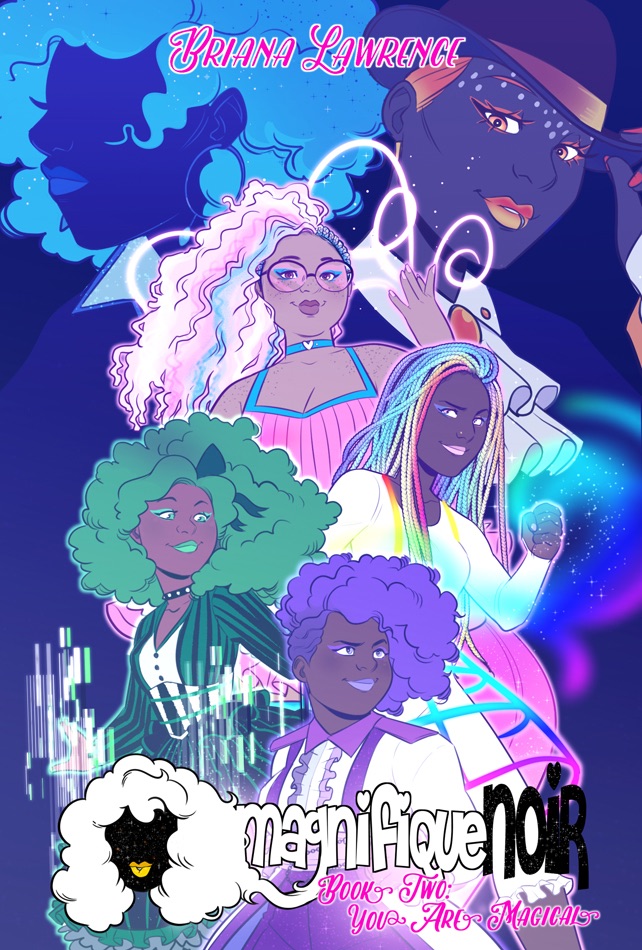
Created by Briana Lawrence, the illustrated novel series Magnifique Noir tells the story of Black queer young women as they come of age as young adults and as members of the magical girl team Magnifique Noir.

Book 2 of the series picks up a few weeks after the ending of Book 1. In the aftermath of a difficult battle, the new generation of the magical girl group Magnifique Noir is trying their best to move on. As they start to balance their everyday lives with their magical ones, the past comes back to haunt them in unexpected ways.

A noteworthy theme of this book is the pressure on Black women to be “the strong one.” Black women are always expected to put everyone else before themselves. Even though they are magical superheroes, the ladies of Magnifique Noir are still human. They have to learn to check in with themselves and each other. This is especially apparent in the book’s first two chapters, in which one of the girls is having nightmares about the team and their loved ones dying — a development that reflects the influence of the Japanese anime series Madoka Magica. The darkness of the situation is softened by the display of concern from her friends and her eventual decision to talk about the nightmares.
Another theme, related to the insistence that Black women be strong, is the expectation for Black women to always be wholesome. Rooted in respectability politics, this expectation denies Black women agency in terms of how they present and express themselves. A later chapter comments on this theme when the ladies attend a burlesque show inspired by Magnifique Noir. Kayla, a Black female burlesque dancer, is slut shamed by a white woman for her sexually charged take on Magnifique Noir’s Cosmic Green. Even though their superhero identities are a secret, Magnifique Noir stands up for Kayla as civilians.

This book shows Black women that they don’t always have to be strong or perfectly wholesome.

The decision to tackle the expectation of wholesomeness as it applies to Black women sets this book apart from other works inspired by magical girl anime. Given that the magical girl anime genre primarily features schoolchildren and was originally targeted at kids, it is rare to find books about adult magical girls doing adult things like seeing a burlesque show. Yet there are still some sparkly sweet moments could easily fit alongside classic magical girl manga like Sailor Moon.

One of my favorite moments takes the form of an illustration called “8 Bits of Rainbow” by artist Fried Unicorn Rainbow. It is a small yet dynamic and colorful piece depicting an awesome team-up between Magnifique Noir members Cosmic Green and Radical Rainbow. Another memorable illustration is “Rest Well, Magical Girls” by artist coloured_braids. It features three of the ladies in PJs sleeping together in the same bed. It is a tender moment captured well with pink pillows peaceful expressions, and the amusing contrast between the girl’s sleepwear.

In addition to illustrated moments, there is also great dialogue, scenes, and entire chapters devoted to queerness. One highlight features the character Marianna Jacobs figuring out how to define her asexual orientation with the help of Blaze, Magnifique Noir’s leader. The moments that build up to this one sensitively portray Mari’s orientation as something she is new to, but not something that she needs to change. Another notable moment is the romantic tension between Magnifique Noir’s Radical Rainbow (a lesbian) and Prism Pink (confirmed by the author to be a trans woman). Their scenes together capture the nervousness and excitement of having a crush very well.

One final bit of praise must go to the backstory about the old members of Magnifique Noir. While there are still some questions left unanswered, what is revealed is done in a way that will shock and perhaps surprise the reader. It was also great to see an older woman like Blaze growing a little closer to the girls and becoming more involved in their civilian lives as well as their magical ones. In this way, she becomes more like an auntie spending time with her nieces.

Adding a darker tone and some mature content, Magnifique Noir Book 2 continues to deliver a wonderful coming-of-age storyline with affectionate, powerful, and fun moments. This book shows Black women that they don’t always have to be strong or perfectly wholesome. No matter what you have to work through or how unwholesome you might seem, you are still magical.

—> Learn more about Magnifique Noir at the author’s website.

The Afro YA promotes black young adult authors and YA books with black characters, especially those that influence Pennington, an aspiring YA author who believes that black YA readers need diverse books, creators, and stories so that they don’t have to search for their experiences like she did.

Latonya Pennington is a poet and freelance pop culture critic. Their freelance work can also be found at PRIDE, Wear Your Voice magazine, and Black Sci-fi. As a poet, they have been published in Fiyah Lit magazine, Scribes of Nyota, and Argot magazine among others.

“A Dream So Dark” Is a Dark, Thrilling Return To Wonderland

“A Dream So Dark” Is a Dark, Thrilling Return To Wonderland

It has been ages since I have been emotionally invested in a book series.

Last year, I reviewed L.L. McKinney’s A Blade So Black and was utterly delighted. When the sequel, A Dream So Dark, was announced, I couldn’t wait to return to the Nightmare Verse series. Alice Kingston is a compelling and relatable heroine, and I wanted to see where her adventures would lead her next.

After the tumultuous climax to A Blade So Black, Alice Kingston must journey into a corrupted Wonderland to rescue her friend Maddie, a powerful Poet who has been kidnapped by dark forces. Alice is also dealing with the grim betrayal of her best friend, Chess, and the ongoing peril of the Black Knight. With these dangers come inner turmoil that threatens to tear Alice apart.

One of the most engrossing things about this book is Alice’s internal struggle with her fears. I have never liked so-called “strong female characters” who are allowed to be physically strong but not emotionally vulnerable, and this especially applies when those characters are Black girls and women. Black women are often expected to care for everyone but themselves, so to see Alice cry, be comforted, and learn to face her fears is wonderful.

Speaking of people who care for Alice, I really liked how Alice’s mother was written in this book. In the first book, the mother-daughter relationship was on thin ice because of Alice’s constantly breaking curfew due to her secret superhero lifestyle. In this book, it becomes even harder for Alice to keep her Dreamwalker duties a secret. In spite of all the lying, worry, and frustration, Alice’s mother still tries to understand her daughter as much as she can. Without giving away too much, I can say that it was really heartwarming to see the two grow closer in this book.

Another character that I liked to see caring for Alice is Alice’s grandmother, Nana Kingston. She was casually mentioned in the first book, so it was a pleasant surprise to see more of her in this one. Nana Kingston displays signs of Alzheimer’s disease but belies strength and cheekiness that radiates warmth and love to Alice. I especially liked the gift she gives Alice before she and her mom leave the nursing home.

I have never liked so-called “strong female characters” who are allowed to be physically strong but not emotionally vulnerable, and this especially applies when those characters are Black girls and women. Black women are often expected to care for everyone but themselves, so to see Alice cry, be comforted, and learn to face her fears is wonderful.

Of course, Nana Kingston and Alice’s mother are only two of the characters that made a good impression. Old characters like the Black Knight and Addison Hatta received some surprising character development that also added to the world-building of Wonderland. In particular, the Black Knight’s character development was interesting because it made him more than a one-dimensional villain lackey, though I wasn’t too keen about seeing certain chapters switch to his point of view.

Meanwhile, this book also introduces some newer characters. There are Romi and Haruka, Japanese Dreamwalkers and protectors of the Eastern gateway of Wonderland. Both are strong warriors, but Haruka is the most intriguing, as she serves as both a new friend and a new crush for Alice. Seeing those two bond over past battles and Sailor Moon was a lot of fun. It was also nice to see Alice’s bisexuality be so casually featured and confirmed, since I had my suspicions about Alice’s orientation in the first book.

One other newer character that was enjoyable was the Big Bad of the book. I liked how cunning they were in terms of their plan to manipulate Alice, Addison, an evil version of Chess, and the Black Knight. I also liked how genuinely scary their power over the Nightmares were. They embody the darkness of Wonderland to its fullest, and the reveal of their identity is well done.

It was also nice to see Alice’s bisexuality be so casually featured and confirmed, since I had my suspicions about Alice’s orientation in the first book.

There wasn’t much I disliked about the book. One improvement over the last book is seeing Chess and Courtney play bigger roles in Alice’s adventure, for better and for worse. I ended up liking them more than I did in the first book, and I’m interested in seeing how the events in this book will affect them in the next. In fact, this book made me extremely impressed with how the author has managed to handle such a huge cast of characters in the series.

All in all, this book is a darker, entertaining return to Wonderland that hardly disappoints. Alice fights darkness from within and without to emerge as a better hero and plant the first seeds of Wonderland’s return to its former glory. A Dream So Dark is a thrilling continuation of the Nightmare Verse series, and I eagerly await what will come next.

The Afro YA promotes black young adult authors and YA books with black characters, especially those that influence Pennington, an aspiring YA author who believes that black YA readers need diverse books, creators, and stories so that they don’t have to search for their experiences like she did.

Latonya Pennington is a poet and freelance pop culture critic. Their freelance work can also be found at PRIDE, Wear Your Voice magazine, and Black Sci-fi. As a poet, they have been published in Fiyah Lit magazine, Scribes of Nyota, and Argot magazine among others.

Top photo by Johannes Plenio from Pexels


“The Black Veins” Is an Epic Adventure Filled with Magic and Family

"The Black Veins" Is an Epic Adventure Filled with Magic and Family

One mysterious night, Blythe Fulton, an Elemental Guardian, is magically compelled against her will.

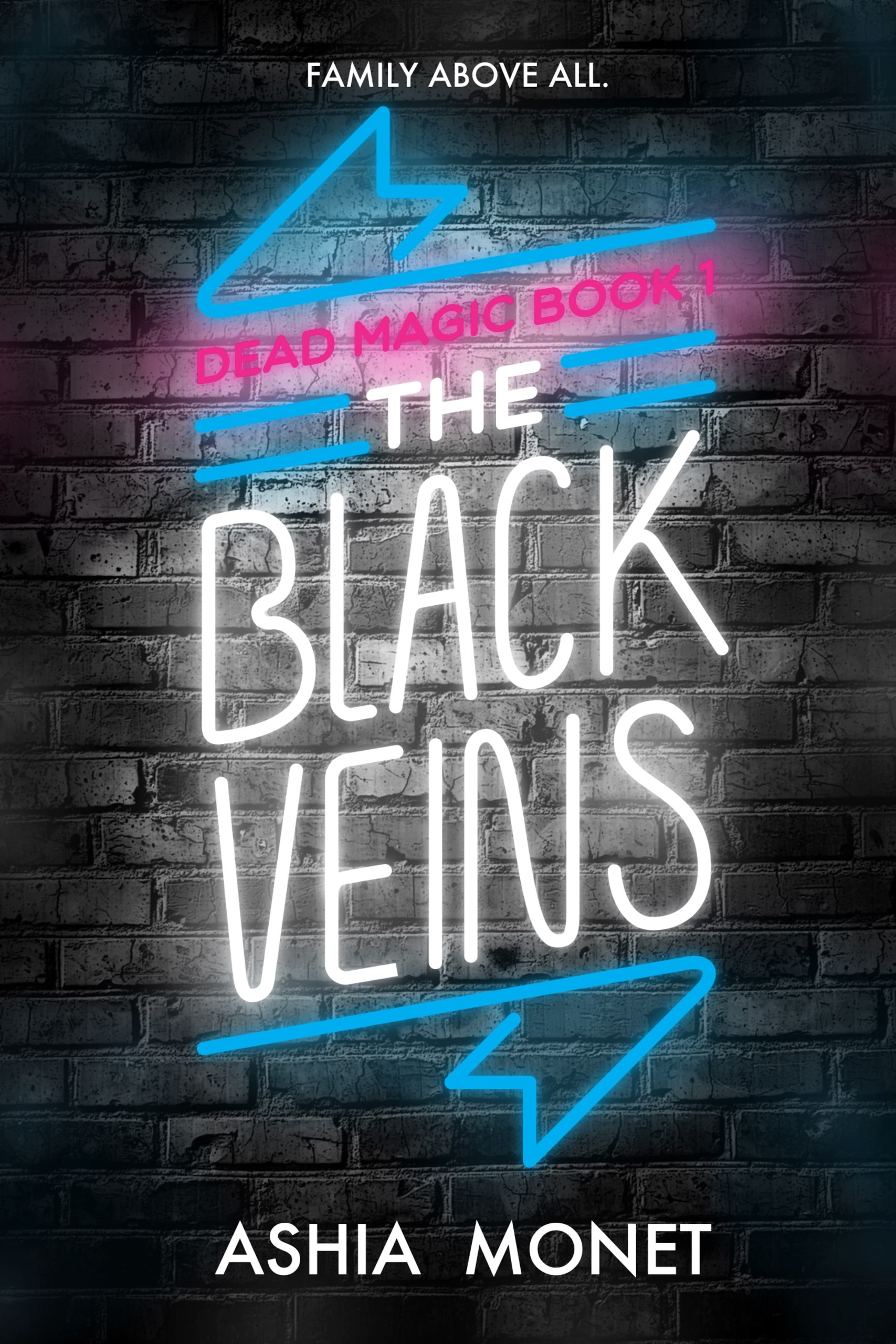
After reaching out to the magical government known as the Black Veins, Blythe’s family is kidnapped and taken to the Trident Republic. In order to save them, Blythe must embark on a cross-country road trip to find and team up with the other six Elemental Guardians. Along the way, Blythe must discover the secret to unlocking her magical abilities, learn to be a leader and friend, and figure out the connection between her family’s kidnapping and the tensions between the Black Veins and the Trident Republic.

The Black Veins is the first book in the Dead Magic series. It releases July 17, 2019.

The Black Veins is the first book in the Dead Magic series. It releases July 17, 2019.

The thing I immediately liked about this book is the book’s main Black teen lead, Blythe Fulton. I especially enjoyed the juxtaposition of Blythe’s status as an Elemental Guardian in the magical world and her status as a Black girl in the real world (aka the “Common World”). Even though Blythe has yet to unlock her powers, being an Elemental Guardian allows her to be given protection because of how important the Guardians are. However, those who are Common (i.e., non-magic) still see Blythe as a Black girl, exotic one moment and criminal the next.

Blythe is awesome and relatable as person. She is so many things, among them bisexual, nerdy, resourceful, impulsive, and kind. One of the most touching examples of her kindness is when she explains friendship to Daniel, an Elemental Guardian who has lived a sheltered life: “Friendship is an art, like gardening or photography. It’s something you get better at with practice, and not everyone does it the same way. So don’t worry if you don’t get it now. It’ll happen.”

Blythe is … so many things, among them bisexual, nerdy, resourceful, impulsive, and kind.

The other Guardians have their own quirks and imperfections that will make you both enjoy them and yell at them. One who comes to mind is Cordelia Deleon, Guardian of the Mind and a haughty Chinese hacker who undergoes some major humbling. Another is Guardian of Time Storm Crane, a fat, Black vigilante hero who is kick-butt and initially single-minded in pursuit of her own goals. The only thing more interesting than the Guardians as individuals is the Guardians becoming a family.

Although each of the Guardians is recruited into Blythe’s mission in different ways and all have their own personal agendas, watching them grow close to each other is incredibly moving. These moments are especially memorable when they have time to catch their breath and be teenagers talking and having fun with each other. Much of the fun consists of dialogue between the characters, which is purely friendship, with only a little bit of flirting between some characters. It is refreshing to see queer characters in a book without a love interest, because queer friendships are just as important as queer romance.

Speaking of the dialogue, there is a lot of great stuff that is a mix of funny, comforting, and true to life. One of my favorite bits is when Blythe and Storm are complimenting each other. Blythe says, “I like you, for what it’s worth.” Storm replies, “I’m straight.” to which Blythe says, “I meant as a friend. You’re not even my type.” Storm says she’s insulted, and Blythe cheekily says, “Straight girls always are.” If this book ever gets adapted into a TV series or a film, I really hope they keep the banter and the downtime between the Guardians.

A final aspect of the book I enjoyed was the world-building. The concept of a world of magic hidden alongside the ordinary world is always interesting, and Monet does a good job of introducing readers to the world of the Elemental Guardians and magicians. From how magic is hidden from Common people to a magicians’ war to a forest that allows time travel, there is a lot for the fantasy reader to delight in. My personal favorite bit of world-building is “the Gilded Wardrobe,” a thrift store for magical goods.

From how magic is hidden from Common people to a magicians’ war to a forest that allows time travel, there is a lot for the fantasy reader to delight in.

There wasn’t much I disliked about The Black Veins. While the novel’s major antagonist certainly showed they were not to be trifled with, I found them a little boring. I was also interested in learning if magic affected modern technology like smart phones and social media, but the novel did not address this — though I admit my curiosity was mostly a personal one. Since this book is the first of the Dead Magic series, there is plenty of room for the world of The Black Veins to grow.

Overall, The Black Veins is an entertaining read, an epic adventure filled with magic and found family. If you love fantasy or have wondered what certain fantasy series would be like if they took place during the age of social media, give this book a try. It’s full of action and fun for teens, but anyone can enjoy it.

The Afro YA promotes black young adult authors and YA books with black characters, especially those that influence Pennington, an aspiring YA author who believes that black YA readers need diverse books, creators, and stories so that they don’t have to search for their experiences like she did.

Latonya Pennington is a poet and freelance pop culture critic. Their freelance work can also be found at PRIDE, Wear Your Voice magazine, and Black Sci-fi. As a poet, they have been published in Fiyah Lit magazine, Scribes of Nyota, and Argot magazine among others.

Top photo courtesy Caleb+Kaci Carson from Pexels.


We Are Made of Woven Memory Circles

We Are Made of Woven Memory Circles

A Review by C. Kubasta

Raki Kopernik’s book of prose poetry The Memory House covers a lot of territory — both literally and figuratively.

In four sections, the poet tells the story of three generations across three continents, contrasting kibbutz and urban life, communal living with single-family homes, dating, love and family dynamics. The poet’s voice inhabits grandparents, parents, and her own memories, with wishes for family and future. Throughout these particular and personal stories, there is a thread that opens up the individual story to make a wider, humanistic claim. It begins with the two-page preface to the book but has its clearest articulation on page 22. In the middle of narrating her family’s emigration to Israel, these lines: “Three quarters of a century later, in 2016, Syrian refugees on illegal boats, same, trying to escape into Europe. Same thing. Same.”

In the spirit of disclosure, I direct the press that published Kopernik’s book — we’re an embedded press at my university, and our students worked with the manuscript to learn editing, book layout, and the ins and outs of taking a manuscript to finished book. Our art students designed the cover (beautifully articulated ears of wheat) and created original artwork for the interior pages. Working with the students, they pointed out a number of things that inspired them about Kopernik’s book — how her forms invited them in, somewhere between storytelling and the poetry they were used to; how her long lines and details allowed them to picture the scenes she described, the fields of wheat and sunflowers, the groves of fruit trees; her sudden bursts of humor; the way food and taste threaded throughout every moment — cucumbers, butter, pears, and chocolate.

What I notice each time I re-read the book is how the poet’s voice and memories are bound up with her mother’s. Section One begins with her mother, “My mother lived on a moshav,” and tells how that came to be through the stories of the previous generation: an old British airport hangar, but before that a grandmother in a prison camp in Palestine, and before that both grandparents’ arrival by boat, and before that Romania. In the midst of these early pages, these primal stories, the poet tells us her mother’s first memory, “a dog barking behind a screened door, its mouth full of sharp teeth and drool, its legs taller than her three-year-old self.” Kopernik then makes the all-encompassing move, “her memory could have been any year, any country.” What child doesn’t have some terrifying memory lodged somewhere, what child doesn’t remember some beast at the door? It is the twining of these — these small anywhere-moments with the larger stories of families making and re-making, migrating & moving — that accomplishes the large and small of The Memory House. Two pages later, we are granted the title line, after more moments that refract the mother’s memories through the poet-daughter’s voice: “Our memories tangle into a single memory house.”

Because Kopernik’s book can be read as narrative or as a traditional poetry book, I don’t want to give away the ending — there are moments of resolution there, even if not in the mode of plot reveals. There are four sections overall: the first tells the story of the parents, growing up and meeting, emigrating to America; in the second, we encounter the poet herself, visiting Israel for summer vacations, staying back on the kibbutz with her maternal grandparents; the third tells the story of the paternal grandparents; in the last section, we find out the spare story of what happened when the parents arrived in America, how the poet’s family began.

In telling her mother’s story, Kopernik lingers on her mother’s dreams and desires — to stay on the kibbutz, to be surrounded by family, to begin a family of her own. When she falls in love with the man she will marry and start a family with, she resists him after he leaves for America. There are images of the mother-to-be, her care for her siblings, her developing instincts learned alongside the communal values of the kibbutz. She tells the story of her mother plucking a stinger from her brother’s face, giving him her precious squares of chocolate. She tells how the young woman pretended to mother her younger brother, seven years separating them. How she wanted four children. How even if she didn’t like the food served in the bet yeladim, she “knew not to complain about food.” In this inhabiting of her mother’s memories, Kopernik’s voice rises, moving up and up to survey not only her own family’s story but encompass the stories of others, to demonstrate one way to inhabit the past — through memory, through experience, through language.

In Section Two, when the poet visits her parents’ homeland, she writes:

Sometimes the Midwest smells like the Middle East in the heat of summer.

The smell of, nothing matters but this moment.

You might not think of the Middle East like that if you only know it from the news.

Experience has more dimensions than media. You don’t know the whole thing unless you can feel it on your skin, through the holes in your face.

But she’s told us all this before. We just didn’t have the stories yet — about Uncle Chocolate, who always brought chocolate. About the kibbutz pool, playing with the children, about the time a shallow dive left blood in the water. About how “puberty ruined everything.” About the rarity of pears — the sweetness of compote. In story after story, so many circling around meals, and food, and taste, there are the pleasures of sweetness — offered as gifts, made with love, created and cooked alongside family and the extended family created by the kibbutz. And there is the sweetness that is recognized because the thing offered is rare, or precious, not easy to find or keep — like the store called Kol Bo, which means “everything in it,” but the name is a misnomer. The daughter-poet, the American daughter-poet, points this out — her voice wry and laced with nostalgia.

The preface to the collection begins with a description of how there were no gardens, only dust, “the water sparse.” Prickly pears imported from Mexico, a fruit with “a tender heart at the barely visible center.” Kopernik makes the connection quickly, the heart of the cactus like Israel: “everyone wants the sweet middle. The core. What they think is the soul.” She names a literal place, she names an imagined place. She introduces a memory-place, peopled with loved ones and secondhand stories. Then she tells us, “borders are imaginary lines made up by people.”

About the Author

Raki is a Jewish, queer, experimental fiction and poetry writer. She is the author of The Other Body chapbook (Dancing Girl Press), The Memory House (The Muriel Press 2019), and The Things You Left (forthcoming Unsolicited Press 2020). Her work has been published in New Flash Fiction Review, Blue Lyra Review, El Balazo, Duende, and others. It has also been shortlisted and nominated for several awards, including the Pushcart Prize for fiction. She lives in Minneapolis.

Top photo by Clem Onojeghuo on Unsplash

Portaging celebrates new writing from the Midwest with a particular focus on experimental and hybrid work from small presses.

C. Kubasta writes poetry, fiction, and hybrid forms. She lives, writes, & teaches in Wisconsin. Her most recent books include the poetry collection Of Covenants (Whitepoint Press) and the short story collection Abjectification (Apprentice House). Find her at ckubasta.com and follow her @CKubastathePoet.