Poetry Month Spotlight: Rita Mae Reese

Poetry Month Spotlight

Rita Mae Reese

Poet’s Introduction


I have been thinking more lately about how a poem is not made to teach others what the poet knows, but for the poem to teach the poet what is unsayable. I have found myself revising these two poems dozens of times, and it was only in the last few revisions that I discovered the question that was really driving me in both is what is the role of the poet, particularly now in America

“Musophobia” highlights the tension between the poet and the making of empire. I am interested in the role of mice in poetry—from the “wee, sleeket, cowran, tim’rous beastie” of Robert Burns to Emily Dickinson’s “Grief is a mouse—” to the “Mice” of Eileen Myles. Why do mice appear so often in poetry? I think it’s because like mice, poets are inconvenient, and they can tell us a lot about ourselves if we disrupt the automatic meanings attached to them.

“The Remains of the Wolfman” is a eulogy of sorts. When my sister’s ex-husband died, I discovered that bodies with no one to claim them has become a pervasive problem in the United States (and, to be fair, in other countries too), particularly since the Covid pandemic. I thought of how her ex-husband had loved his body, and also how dying so alone is a horror that most of us can’t bear to contemplate. Of course, I thought of “The American Way of Death” and how our customs around this have changed and are still changing, but how utterly capitalism in particular can turn any one of us into pure objects.  

As I think about the absurd role of the poet, the death of poet Renee Good at the hands of our own government, and what seems like our increasing powerlessness, I think about the words of Nikolay Nekrasov: “You may not be a poet, but you obliged to be a citizen.” I recognize that I am obliged to be a citizen, but of what country? Whose citizen are you when borders shift, as they did for Nekrasov, who was born in Ukraine but is considered a Russian poet? Or when your country attacks itself? Or if your country, the only one you have, has never acknowledged you as one of its own?  

And as for being a poet, I only feel like one when I’m immersed in writing, which happens less and less often. Still, I find comfort and truth in the words of Wisława Szymborska’s poem “Possibilities”: “I prefer the absurdity of writing poems to the absurdity of not writing poems.” 

What is the poem you are working on now trying to teach you? Your job in revision is to clear away the noise and debris until you can hear that lesson. Then you use that to start working on the next poems. If the lesson is too easy, don’t let the poem off so lightly—go back, dig in, keep listening to it.  Bask in the absurdity.

Musophobia


My mother has a mouse problem
and no patience for my elaborate,
humane solutions. At our next visit,
she hands us a jar with the lid on tight
and a young mouse trying to clamber
to the top. My wife cries as we take it
to the community garden and dump it out
among the kale and zinnias. That night
over dinner we marvel that the mouse survived
in the sealed jar, that she escaped
good intentions and bad ideas this long
only to end up sticky with peanut butter
in a strange garden, predators able to smell her
a mile away. It’s hard not to see her as a hero
of sorts—the clever ancient enemy
of stored grain which was literally
the seed of empires—a hero always happy
to find an easy meal only to find her troubles
multiplied. Or if not a hero, perhaps a poet,
because isn’t this the muse in the mouse
—the nagging hunger, the blind hope,
the mad dash far from all you know?

The Remains of the Wolfman


My sister says she got a call from the state:
her second husband Tommy is dead.

I have this one memory of him: he’s
in his twenties, sitting on their couch,
happy in only his red briefs
his flat abdomen and ready thighs,
a rubber wolfman mask
(which neither of us mention)
hiding pockmarks but not his dark eyes
that never lingered like flies on me.
In his velvet drawl he confided
I like scary movies—

On the small TV, the opening scene:
a woman listening to a man on the phone
wanting her—or anyone—to claim
a man’s body. She has no money,
she says, and besides she hasn’t
seen the man in thirty years
she explains until her words
are transformed into a howl.

About the Poet


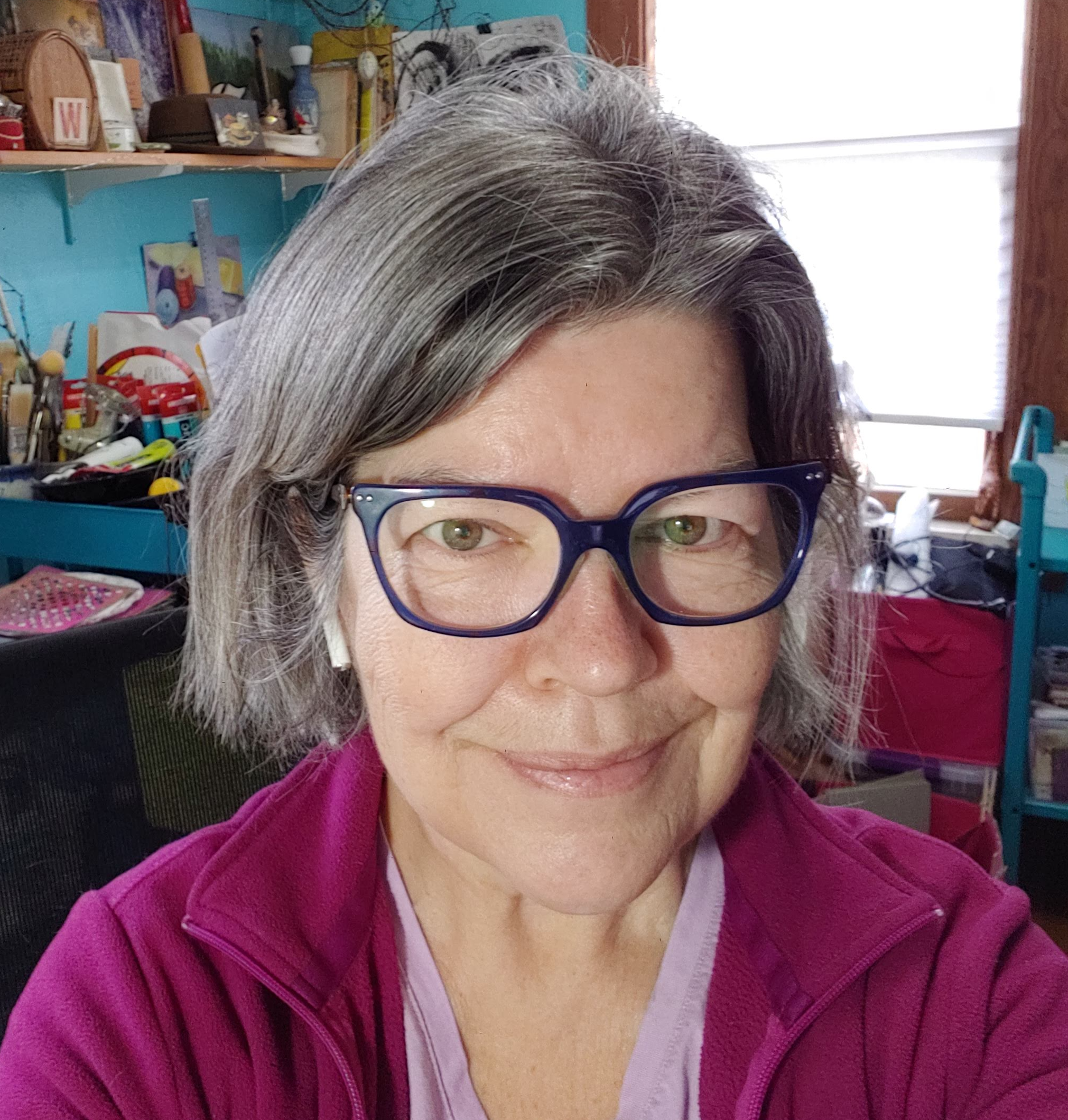
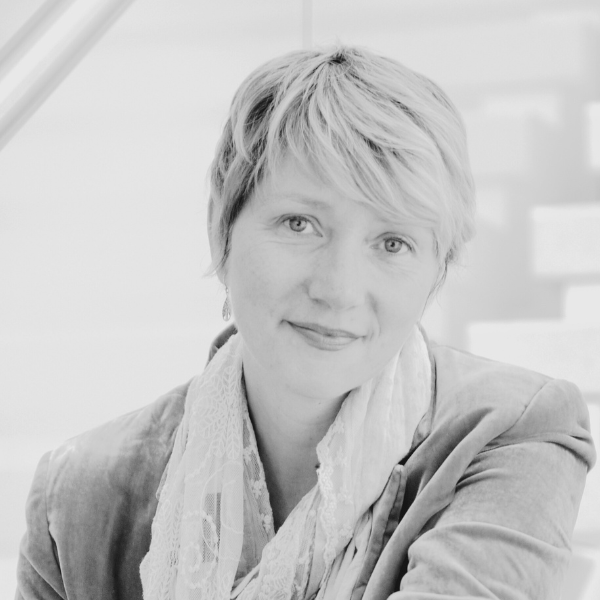
Rita Mae Reese (she/they) is the author of The Book of Hulga (University of Wisconsin Press) and The Alphabet Conspiracy (Arktoi Books). She has received a Rona Jaffe Foundation Writers’ Award, a Stegner fellowship, and a “Discovery”/The Nation award. They serve as the Director at Arts + Literature Laboratory in Madison, Wisconsin. Find out more at ritamaereese.com.
Katrina Serwe
National Poetry Month

BMP Celebrates National Poetry Month

During these times of whistles, protests, and raising our voices, we think of the poet’s role as witness, as well as the way poets write to document what is happening, adding their words to the maelstrom that is the world. With this in mind, we’ve asked our featured poets: What do you want to say?

We hope you enjoy the answers—that they call you to the world, remind you of the ways carefully chosen language can capture a moment, call you to action. Poetry can also carve out a space for reflection, make connection, create a tiny time capsule of the now for us to hold on to.

Top photo by Ricardo Lima from Pexels
Poetry Month Spotlight: Anneliese Finke

Poetry Month Spotlight

Anneliese Finke

Poet’s Introduction


I’ve been thinking a lot recently about dehumanization (cheerful, I know). But the longer I live, the more I think this is the real basis of all – not just most, but all – of the evils we see in the world. And so, when people talk about poetry of witness or documentation, that means to me a poetry of rehumanization. What is important is not that people agree about things, especially in a democracy; what is important is that people are always deeply aware of the humanity of others, whether they agree with them or not.

Authority


is a nineteen-year-old boy
with short-cropped hair
and stubby fingers
and a uniform and a gun

he is watching a woman
his eyes wide
she is younger than she looks
squatting by the metal fence

what is the worst that can happen
if he ignores her
what is the worst that can happen
if he acts

he shifts his weight
like a nervous student
one with an important test
the teacher forgot to attend

and what is she doing
neither laughing nor crying
her whispering is too soft
to be called singing

For Peace


There is the peace of the moment
..before the pull of the trigger,
....and the peace after.

There is the blank white peace
..of the silent snowfield,
....motionless and cold,

the small red peace
..of the rabbit not crawling
....away from the fox.

There is the peace of the tree
..lying shattered after the storm,
....damp wood slowly rotting,

the peace before the footsteps
..and the opening
....of the door.

There is no peace for the winner—
..the victorious wolf, licking
....its red paws—

Peace belongs to us, lying
..frozen in the snow, hands
....still bound behind our backs—

The peace of the small hole,
..the ragged-edged cut—
....the peace of silence

settling upon us,
..flake
....by flake.

Prescriptions for Self-Help


For despair: wailing and weeping
until your voice blends in the cacophony
and your tears mingle in the dirt

For suffering: dancing out of yourself,
spinning, stomping, passing partner
to partner until they are infinite

For anger—the kind of powerless anger
that leaves you bone-weary and frail:
singing and never stopping

Not even after you die, whether they
fill your mouth with dirt
as they bury you, or whether

they wrap their hands, a noose,
around your throat, until
there’s no air left in this world—

They shake the dust off their hands
after a job well-done; one wipes a drip of sweat
from their forehead—walking home,

they pass under fragrant pines, birds
singing—something familiar tickles their minds,
although they haven’t realized it yet—

years later, your skull safely away,
your vocal cords rotted into dust,
they pass a group of children playing—

their jumprope song becomes an itch
in the brain, impossible to scratch,
impossible to ignore. No one would say

you are the winner here, if
they even knew your name. But
each day, sleep eludes them a little longer.

For guilt—the kind of inescapable guilt
that leaves you bone-weary and frail:
nothing

nothing but listening and never stopping,
listening forever in case the song becomes forgiveness,
forgiveness, forever, nothing

Notes

“Authority” first appeared in the 2024 Wisconsin Poets’ Calendar.

About the Poet


My style is a sort of literal surrealism or magical realism, and yet I believe very strongly in clarity. If I could ask one thing of a reader or listener, it would be to really try to picture what I’m describing in my poetry. Like Chagall’s figures who float through the air, I am trying to capture a world that is both clear and real but also strange and magical – ordinary and extraordinary all at once – as though perhaps these two things are not as different as we assume.

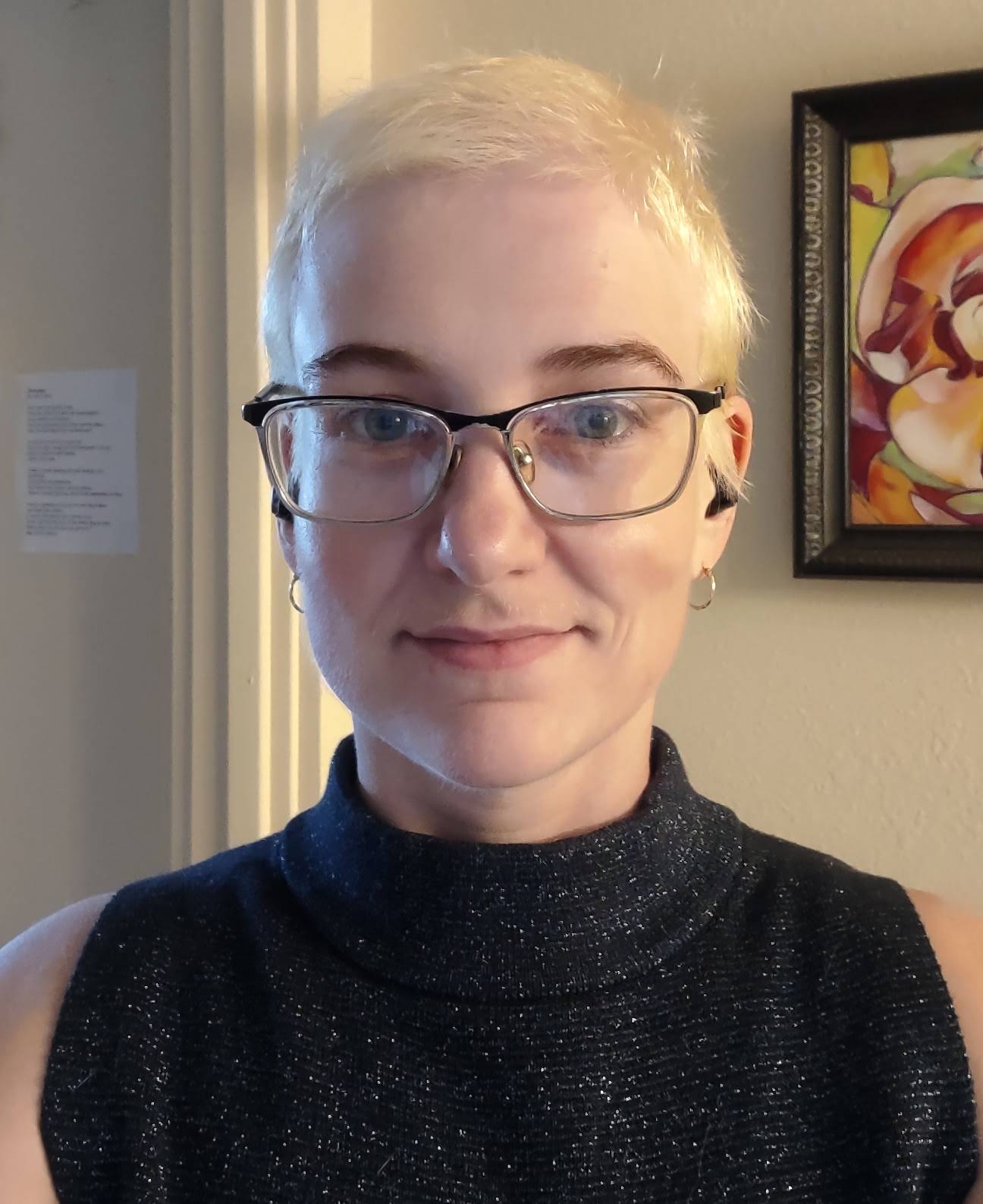
My work has appeared in literary journals including Ruminate, The Georgetown Review, Bramble, and the anthology The Lake Is Mother To Us All. I am currently serving as Poet Laureate of Sheboygan, WI, from 2026–2029. You can find me online here.

Katrina Serwe
National Poetry Month

BMP Celebrates National Poetry Month

During these times of whistles, protests, and raising our voices, we think of the poet’s role as witness, as well as the way poets write to document what is happening, adding their words to the maelstrom that is the world. With this in mind, we’ve asked our featured poets: What do you want to say?

We hope you enjoy the answers—that they call you to the world, remind you of the ways carefully chosen language can capture a moment, call you to action. Poetry can also carve out a space for reflection, make connection, create a tiny time capsule of the now for us to hold on to.

Top photo by Carol Hamilton via Depositphotos

BMP & WFOP Chapbook Contest Winners 2024

Chapbook Contest Winners

Brain Mill Press & the Wisconsin Fellowship of Poets

Brain Mill Press and the Wisconsin Fellowship of Poets are delighted to join in announcing the winning selections in this year’s inaugural chapbook contest honoring Wisconsin poets.

Working together, the Brain Mill Press poetry staff selected a long list of ten collections to pass along to our contest judge, Tracy Mishkin, who winnowed this list down to three short list finalists and one winning collection—all of which have been offered publication contracts with Brain Mill Press. The pleasures of reading these collections were a balm to our editors in a year of upheavals both expected and surprising.

Winner

Your Body Should Be a Part of the World

by Ellen Samuels


Ellen Samuels’s collection stood out to contest judge Tracy Mishkin for its portrayal of “the speaker finding a way home from chronic illness and sick-making medical institutions.”

As the winning poet, Samuels will be awarded an honorarium of $250 by the Wisconsin Fellowship of Poets.

Ellen Samuels is the author of a poetry collection, Hypermobilities (Operating System, 2021), and a chapbook, December Morning (Finishing Line Press, 2002), as well as many works in disability studies. Her poetry and creative nonfiction have appeared widely, including in Colorado Review, Copper Nickel, Nimrod, Brevity, Massachusetts Review, and the Journal of the American Medical Association. Her awards include two Lambda Literary Awards, two Pushcart nominations, and the FineLines Prize from Mid-American Review. She is an Emeritus Professor at the University of Wisconsin–Madison and is working on a book titled Sick Time: What Chronic Life Tells Us. She lives in Monona, WI with her partner and dog.

Short List Finalists


First Steps by Katrina Serwe

Katrina Serwe, BS, MS, PhD…it took her three degrees to figure out she’s really a poet. Now she’s on Wisconsin’s Ice Age Trail finding poems. You can follow her journey at katrinaserwe.com. Her poetry has been featured in publications she loves such as Bramble Lit Mag, Portage Magazine, Scrawl Place, The Little Book Project WI, Moss Piglet, The Solitary Plover, The Blue Heron Review, and in the 2024 anthology The Lake is Mother to Us All. She received an honorable mention in the Wisconsin Fellowship of Poets 2023 Triad Theme contest and took 3rd place in the Wisconsin Fellowship of Poets 2023 Triad Emerging Poet contest.

Bone River Blossom by Jenna Rindo

Jenna Rindo worked for years as a pediatric RN at hospitals in Virginia, Florida and Wisconsin. She writes to better understand and appreciate the complications of the human body, mind and spirit. She is a runner and trains for races from the 5K to the full marathon. A former ESL teacher she now tutors and mentors refugee students. She believes that all forms of art involve finding the balance between what to include and what to leave out. John Ruskin said it much more eloquently: “Nothing is ever seen perfectly, but only by fragments and under various conditions of obscurity.” Her poems and essays have been published in AJN, Calyx, Rhino, Tampa Review, WI People and Ideas Magazine, Bramble, One Magazine, Verse Virtual and other journals.

Thread Me an Exit by Wendy Vardaman

Wendy Vardaman (wendyvardaman.com), PhD, works as a web & digital media specialist. She is the author of Obstructed View (2009), Reliquary of Debt (2015), and the chapbook (with Sarah Sadie), Rules of (dis)engagement, or Dubious perFormances (2016). In addition to poetry, her creative practice has included editing, prose writing, illustration, printmaking, and design. She served as Madison, Wisconsin, poet laureate from 2012 to 2015 and volunteers as a graphic designer. Her poems, essays, and interviews have appeared in numerous publications, anthologies, and projects. She was awarded the 2024 Dick Scuglik Memorial Fellowship from Write On, Door County for a writer working in ekphrasis.

Long List Finalists


An Arsonist and a Black Sheep Walk into a Bar by Lori Khadse

A View of Trees by Mark Rich

Basketball Becomes Me by Lora Keller

Love the Loop by Shaun Fletcher

My Mother as God by Tessa Naylor

Spa Day by Heather Hanlon

National Poetry Month Contest Winners 2023

National Poetry Month Contest Winner 2023

Sujash Purna

Picking a poem from so many poems shared during National Poetry Month is always so difficult—how to set something experimental and free-versed against a tight form and judge one “better” when they reach for such different things?

While selecting a group of poems was no easier this year, the pleasures of reading were multiplied by being able to engage with a group of poems from each poet: to trace their voices through several poems, see how the notion of cycle translated from one to the next, how a subject could be visited across forms (sometimes turned inside out) or explored in concentric layers of complexity. Thank you for sharing your work—you turned me inside out, made me look again and again at what you were pointing to: be it a hummingbird, or a spare portrait in words, or the tangled mythologies of culture complicated by list forms.

For the winning selection, Sujash Purna’s poems “You Poor” begin with bludgeon lines, tender lines, sequestered on a page of negative space. Of the four poems, the variety in forms move from that spareness to a discursive voice-driven plea where the line endings deliver with a power that insists on being read aloud. The repetition of “your” and the breaking of “your” fragment not only the imperative to speak, but the self who speaks. In the final poem, the strategies of the first three coalesce: spareness, space, repetition, and concrete detail to connect the earlier poems in the cycle to each other, and to connect more fully to the reader.

Other noteworthy poets sharing their poem groupings include:

Ellie Lamothe’s “A Funeral in March,” “If We’re Honest,” and “Litany”

J.F. Merifield’s “Portraits”

Devon Balwit’s “Notes on Thomas Mann’s Joseph and His Brothers [II-V]”​

—C. Kubasta, Editor, BMP Voices Poetry Month

Winner


“You Poor” Cycle by Sujash Purna

1.

.
.
.
.
I’m never going to see my mom again

…………………………………………………………………………..I am too poor to do that

2.

.
People in Missouri
don’t know who
I am anymore
.
.
.
.
People in Dhaka
don’t know who
I am anymore
.
.
People where I
am now
.
don’t
.
want to know

There Must Be Something Wrong

.
Visually nothing is aesthetic
It’s the lens they put on you
And tell you that this is how
You should look at this thing
That will neither make you
Happy nor circumvent your
Danger unless you tell your
-self yourself yourself your
Self to believe in the story
That they built based on
Your struggles, based on
Your sacrifices, based on
Your absences from your
Loved ones. Even the
Word love has become
Corrupt. It’s how they
Want you to feel. Not
How you feel. Because
If you feel that way
There must be something
Wrong. There must be
Something wrong. There
Must be something wrong.

Inductive Reasoning for a Family

.
glycerine drops

.

psoriasis-looking spots

.

your hair

a harsh sun

this master’s degree minimum wage job

that phd holder adjunct gig

two kids

two parents

their

health care

who cares?

you do

yours?

who cares?

you’re on your own now

you’re on your own now

you’re on your own now

You Poor III

.
I don’t write about flowers and lovers anymore

I write about shit that went out of control

Not the white people Babylon

Or American Hustle kind of coke-infused

Out of control

.

I write about being in a place

Where nobody wants you

Paycheck-to-paycheck immigrant

Renewal-to-renewal immigrant

Paying-double-the-tax immigrant

Taking-half-the-benefits

Taking nothing because

I should be already

Thankful

Immigrant

Sujash Purna is a Bangladeshi poet and photographer based in Madison, Wisconsin. He is the author of Epidemic of Nostalgia‘ (Finishing Line Press), In Love with the Broken (Bottlecap Press), and Azans for the Infidel (Mouthfeel Press). His poetry has appeared in South Carolina Review, Hawai`i Pacific Review, Kansas City Voices, Poetry Salzburg Review, Gutter, Stonecoast Review, and others. His photography can be found on Instagram @poeticnomadic.

Short List


“A Funeral in March,” “If We’re Honest,” and “Litany” by Ellie Lamothe

A Funeral in March

.
I belong to the cold bones of winter.
Bare-skinned, barren, and remembering

the sound of your laugh like a funeral bell.
The sound of the boreal wind

whispering through the pines,
a wisdom for our children and their children,

and the ones they will love
without knowing why.

The gentle grief of living one evening to the next,
exchanging one ending for another.

I want to leave my brittle body behind,
become lost in the brume,

a spectre collecting light
and sadnesses leftover from years before.

Still, I am willing to endure.
I am willing to endure.

If We’re Honest

.
it’s a miracle that we come together at all,
that romance
is ever more than a formality
between two unreliable narrators of their own suffering.

We became accustomed to the taste of saltwater,
learned to perform that ritual
of kind pittances,
found a peculiar lightness

in clinging to the soft things.
My body, clumsy and pitted,
lingering in the cold sweat of your body.
Several vital organs missing

between the two of us.
You tell me your sadnesses in a voice
so sweet and perplexing,
I almost forget hunger

and the way it blooms
violet like a bruise along my jaw.
I almost forget to cherish
the way your throat opens up when you laugh.

Now everything we do is imaginary.
And I fear our love, too,
is just in our heads.
So I touch you to make it real,

and slowly,
to untangle the solemn etymology of desire,
and the terrible things
we endure out of loneliness

The terrible things we do to the people
we are trying to love.
You peel my clothes off in the dark room
and I let you.

But touching me becomes an unnatural thing
with our bones bleached.
The ceremonial undoing,
by some despondent architect of quiet endings

Litany

.
I am sitting cross legged on a pier,
bargaining with the stillness of the morning.
Having no one to mourn
my body as it acquiesces,
surrenders memory (even the dear ones),
becomes the fog hanging low over the lake.
I am thinking about things too bleak
for the morning
and the delicate charms of its first light.
The temporality of bliss
and the reasons I have been unkind.
I am learning there is nothing constant
but the wintering
and warming of desires,
how even ordinary wounds can fester.
I am learning about curiosity
and too, about hunger,
from the ruby-throated hummingbird
and her relentless need to move toward something.
A tender certainty.
The medicinal commonalities
between sugar water and song.
You don’t sing for me
and I begin to keep some of my sadnesses to myself.
Even then, I don’t pretend to love silence
the way you do.
So this is how it goes.
We suffer,
and we owe,
and we rejoice
in the delicate light of dawn,
in the surrendered memory,
in the hummingbird and her hunger.
And each day
we sit at the mouth of the lake
and recite our own litany of yearning.

Jareen Imam author photo

Ellie Lamothe is a poet living in K’jipuktuk (Halifax, NS) with her cat Arabella. She’s passionate about feminism, addressing gender-based violence, and engaging in community care through her role at a local women’s shelter. She loves going for walks with an iced matcha latte, being cozy, listening to Celtic music while she writes, and playing Dungeons and Dragons. Her work has appeared in Glass: A Journal of Poetry (Poets Resist), Kissing Dynamite, Yes Poetry, and Ghost City Review, among others. You can follow her on Instagram @ellielamothe.

Short List


“Portraits” by J. F. Merifield

Portrait as Lost Calf

.
the barbed wire and dirt road sing
together of dust, of dry grass
.
tanning in the wind
on sun-swept
hills that roll away
.
from an unmulched garden
left to wild,
its nature becoming its own

Portrait as Hunger

.
the wind holds the hawk
still
above the ditch

no field mouse
nosing out just yet

the hunt afoot
all the same

a patient moment
an urge held
aloft

Portrait as Landscape Painting Titled: Night Flying Over Winter Mountains

.
the moon full
illumines

marbled mountains
snow-pearled

and forest black.

squiggled lines
where light and dark

touch
splinter
wrinkle
ripple

thirty-one thousand feet below.

Portrait as Impressionist Painting of the Seine River Bank Titled: Communique

.
my mind is a weighted hook
plunging through waves
of quells and quivers,
each distant image a one-piece
unshouldered one side at a time,
down to the hips for now,

factually speaking boats float
and “the sun always seems to be
your friend not mine,”
Guillemots sings,
so I count the waves
rolling on to shore,

warily we have spoken
of where the two meet,
saturating one another, these moments
fit us, as in exposing to each we see
there is thread tethered,
hooked at both ends.

J.F. Merifield, a poet living in northwest Montana with a Poetry M.F.A. from George Mason University, has poems published by Wild Roof Journal, High Shelf Press, Sheepshead Review, Cathexis Northwest Press, La Picciolette Barca, Neuro Logical, Verse, and Rust & Moth, among others.

Short List


“Notes on Thomas Mann’s Joseph and His Brothers [II-V]” by Devon Balwit

Notes on Mann’s Joseph and His Brothers [II]

.
1. What is it like to walk in the arrogance of one’s own beauty?

2. We lesser lights suspect mockery.

3. Coupled with the gift of prophesy and a diaphanous robe, it is too much.

4. Who could blame our plots and spite-dug pit,

5. our preference for small gods to one vaster than telling.

6. Our gods are amenable to thimble-sized offerings, atonements of human measure.

7. Why serve the ineffable, suffering blindness

8. when comfort can be found in the dark?

Notes on Mann’s Joseph and His Brothers [III]

.
The favorite son knows nothing
about jealousy, cannot imagine anyone
loving him less than he loves himself,

ignorant of how his very shadow sears
like coals, of how his dulcet voice
brays in our ears, or of the paths

we furrow in our dreams, each tracing
a different murder, a different exile,
a hoe against his skull, a shearing knife

to his testicles, eager for even one
of our father’s tears to vault
as a rich and much-awaited inheritance.

Notes on Mann’s Joseph and His Brothers [IV]

.
Do you love humankind? the angel asks.
What a question for even a favorite son to answer.
We love what loves us back, what is easy
to love, what passes the time. We usually smile
at one another, the boy says, the rest of humanity
and I. Despite near divinity, the angel smirks. How little
the lad has been thwarted. Later, much later,
the angel will ask again and receive a changed reply.
For now, he merely accompanies the boy
to the future, that doorway to heartbreak
through which every soul steps.

Schadenfreude: Notes on Mann’s Joseph and His Brothers [V]

The angels … were created in Our image, yet are not fruitful…[T]he beasts are fruitful, yet are not after Our likeness. We will create man—in the image of the angels, and yet fruitful!

1. Once again, creation disappoints.

2. The angels flutter a vast gloat.

3. Hadn’t they warned יהוה embodied souls could only blunder?

4. Even the cherubs suspected wombs would only gestate frustration.

5. Still, יהוה pursued his puny and petulant shadows.

6. Part of the problem, the favorite son observes the tutting echelons,

7. dazzled as they scintillate—uncountable gossiping mouths.

Jareen Imam author photo

Devon Balwit’s work appears in The Worcester Review, The Cincinnati Review, Tampa Review, Barrow Street, Rattle, Sierra Nevada Review, and Grist, among others. Her most recent collections are We Are Procession, Seismograph [Nixes Mate, 2017], Dog-Walking in the Shadow of Pyongyang [Nixes Mate Books, 2021] and Spirit Spout [Nixes Mate Books, 2023]. For more, visit https://pelapdx.wixsite.com/devonbalwitpoet

Editors’ Choice, Week 4


“Ekundayo (Daughter When You Read This…),” “Survivor Series,” “Pray for Me,” and “Inner Child” by Donnie Moreland

Ekundayo (Daughter, When You Read This…)

.

I’ll begin with a sermon on empty pill bottles,

a full tub and desperation.

I’ll begin with a confession — a lot of niggas don’t make it here.

I’ll begin with the ground beneath my daddy’s feet rotating like a crooked wheel,

keeping him in place but spreading him apart

like the black hole between my teeth and

each letter in the declaration, “I’m going to kill myself.”

I called him first.

I’ll begin with the semicolon on my right wrist.

I’ll begin as your father.

I’ll begin where Pa Pa refused to say your daddy’s name in the past tense.

You began because he refused our finale.

I’ll begin with his rebuttal.

I’ll begin with his love.

A love swollen between wounds and cures.

Fear and fire.

Gore and glory.

A love.

Love.

I’ll begin with love.

And somewhere along the way, we’ll figure out that joy part.

Survivor Series

.

My father used to wrestle me.

Pin me.

Raise my legs and count to three.


I laughed, in defeat.

Each holler covers the distance between the cosmos in creation.


We don’t talk much now.

I feel his hand on my shoulder when I wrestle my daughter  —   the pressure of falling onto a bed

or into birth  — and I turn to reverse his maneuver.

But he’s not there.

Just the marbled monument to a tag team comeback that never was.


We don’t talk much now.

But luckily, ghost stories don’t always belong to the dead.

Pray for Me

.

Say a little prayer for the boy.

For me.

For him.

And his men.

Say a little prayer for his father.

His father’s keeper.

And his keeper still.

Say a little prayer for the boy.

And if you can, say another.

Inner Child

.

I hope that boy inside you…

the one kicking his feet in the air, hollering at cartoon characters and

eating cotton candy in Crayola crayon castles,

picking his nose and

dirtying his pant legs while running shoeless

to the corner store…

I hope that boy still triumphs over his archnemesis.

I hope he’s still doing somersaults on wood chips

where the splinters jab deepest.

I hope that boy still pulls on fire alarms and opens closet doors to evil empires in need of a champion.

I hope that boy still throws himself down rolling hills, under a pink sunset and a white moon.

I hope that boy knows his golden grin is still heaven.

Jareen Imam author photo

Donnie Denkins Moreland Jr is a Houston-based health educator and multidisciplinary artist. Donnie holds a Master’s Degree in Film Studies from National University and a Bachelor’s Degree in Sociology from Prairie View A&M University. Donnie’s work centers cultural healing, black masculinities, and film criticism. Donnie has contributed to Black Youth Project, Brown Sugar Literary Magazine, RaceBaitr, Root Work Journal, A Gathering of the Tribes, Unmute Magazine, and Sage Group Publishing.

National Poetry Month

BMP Celebrates National Poetry Month

As the pandemic has continued into its second year, we at Brain Mill are thinking about spaces & places: how we exist in space, the importance of access, and the particulars of navigating places. We have gathered together in ways that may have been new to us over the last few years, greeting each other in small squares of connectivity, developing relationship and care with virtual check-ins, follows, and voices translated via technology. In our best moments we have learned to listen; in our worst, we have been caught up by all the ways we need to do better and think more deeply about community systems and for whom entry is barred.

Jareen Imam author photo

About the Editor

C. Kubasta writes poetry, fiction, and hybrid forms. Her most recent book is the short story collection Abjectification. She supports her creative work as Director of Education at Shake Rag Alley Center for the Arts in Mineral Point, Wisconsin. Find her at ckubasta.com and follow her @CKubastathePoet

Top photo by Jill Burrow

Editors’ Pick Week 3: Poetry Cycle by Victoria Gransee

Editors' Pick, Week 3

Poetry Cycle by Victoria Gransee

Khakis Creased at the Altar


Pinches of a rosary, black breath muttering, and you’re not here.
Red knees to the floor, clammy palms clasped, and you’re not here.

Republics, homelands, houses and ceilings all fall.
I live in a tear habit looking for you, here but not quite here.

When looking for saviors, I turn to you last. You know this.
I speak first the name of my brother, but he’s not here.

I threaten you with temples, “pull me out and I will sing.”
It’s not a real promise; I know you are not here.

The woman in red tells me I am wrong to denounce what I have
not seen. I have seen trace in the trees, but certainly not here.

Nowhere I know resembles a church. No one I know resembles
a churchgoer or a god. I search for you alone, and you’re not here.

From the open window, the whistling wind has nothing to say
of my heretic vices. I blow out my candles. You’re still not here.

Cracking


When imagining your face, all I see
is the furrowed brow of a brother
tossing years and years into half a suitcase
I think about your bruised ankles hitting
the bottom stair, you’re the rusty nail I remember

Oh, God, sitting on the windowsill, watching you wait for the train
You’re going home and that isn’t where
the burn marks are from, you’re thinking about covering
your scars
We share the same ones, you’re thinking about covering

Me,
I’m thinking about the streetlights you avoided, the black night shrouding
the set of your jaw
Glancing back, missing my vantage
point, our leather jackets

hung beside each other
Think about flailing, think about how it felt; a cliff and three feet of water
I want to sit on the roof, I wanna smoke again
I want to talk about death hanging between us; I never wanna talk again
This is the mercy of the Now, the horror of the Cycle.

Turn around, turn around, turn around
I wanna hear your footsteps, I want to feel the lack of sound from the creaky floorboards,
I miss dancing around them, hot pokers pressed to feet, I’m thinking about maman and her eyes
her prayers – Fear is divinity; God is a Poetic Device –
I’m thinking about those glittering balls

The family tree in the family jewels, we talk nonsense, we speak French
We drink champagne, we sip truth serum, we trip
on the back garden stair
and rupture our lips
and don’t speak for days


Kanooska


1.
My little brother was born with a sea in his head,
haunting him at night, waves lapping the shore, a
steady drumbeat, white foam.

Come and find out.

I’d find him perched on the sailboat bed, sheets
clinging to him like hands, choking on the stuff,
and bring him down, clicking my tongue
“oh malen’kiy, where have you gone?”

He says, “I am half my maker’s shape,” and I see
that he’s been drowning in the dream. He spits up
water and hope. I nurse him to health with pills
and potions, doctor’s orders.

We cannot have a dreamer in these walls.

2.
My little brother was born in a snowdrift December,
flurries of snow howling through his hair, a
blue child with eyes set on the nearing horizon.

What is it you’re looking for?

“The sun,” he says, and I see that he watches the sky
like a Catholic, expectant. When night falls, he climbs
the mast of the sailboat bed and sets off for distant
lands. I hardly recognize him come morning time.

He says, “It exists, you know,” and what I know is
he’s been spending time in someone else’s
kitchen, tasting stone houses with cluttered
mantelpieces. He has found a Home, found it foreign.

We cannot have him in these walls.

3.
My little brother was born in the place the horror movie
happens. A werewolf howling from distant hills.
The blackening of her eyes, the curve of their lips.

Come and find out.

I find him perched on the sailboat bed, hand
wrapped in white gauze. He has been drowning.
He spits up seafoam and ale. The wallpaper peels.
“Oh malen’kiy, what did you say?”

He says, “I am half my maker’s shape,” and I see
two summers ago, his palms carving through waves.
He has seen the Catholic’s sun. There is no nursing
him to health. There is no need.

We cannot have a dreamer in these walls.

About Victoria Gransee

Victoria Gransee (@vgransee) is a Wisconsin-based writer fascinated by memory, self, and the divine.

National Poetry Month

BMP Celebrates National Poetry Month

Happy National Poetry Month! For poets and poetry lovers—and perhaps for those who love poets—this is a special time. At Brain Mill Press, we like to celebrate all month long by sharing featured poets, and with our fee-free contest. This year, we’re thinking about poetry cycles, poems that speak to each other, forms that build on each other (like crowns), and the ways a poem can be a scaffold or foundation for other poems. Our words are often in response to other poems, and our own body of work is often an ongoing conversation. We speak to each other, with ourselves, and sometimes into the void—hoping someone will answer back.

Top photo by Isabella Fischer on Unsplash

Editors’ Pick Week 2: ‘Daughter of Our People’ Cycle by Sandi K. Johnson

Editors' Pick, Week 2

'Daughter of Our People' Cycle by Sandi K. Johnson

The Devils Come to Town


Often the Kru or Gola dancing devils visited the city:
us, city folks, would hear the drums and abandon markets
or food on coal pots and run like goats to go witness;
we, the school kids, would leave our day’s lessons,
leaping through windows in our green, school jumpers,
and arguing couples would quit to run together, holding hands;
everyone wanted to watch the country dancing devils,
even the frighten children hiding in their mama’s lappah;
we would follow the dusty cloud of their paths,
the village people in Kente suits singing old songs,
and young boys beating leather drums with sweaty hands;
the trailing crowd would circle around like morning chickens
as the country devils dance stories with their bodies;
some wore outfits of dried palm leaves and wooden masks
with old clothes holding long stalks for arms and legs,
others wore huge rice bags filled with banana leaves,
making them look round as lumpy, giant balls,
but none of them showed skin or signs of a man inside;
they ran through backyards and streets in hurry,
and we would watch the spectacle as they flipped or romped
as if they drifted and weaved by like walking mango trees,
zapping in and out of crowds, leaving stings of happiness;
the old people loved them for reminding us of our heritage,
and they loved us for our generous handouts;
some of us would give them money from knotted lappahs,
others would hand over cold water or sugarcanes,
and when they departed, we would stand around for days,
comparing records about the wonders of the devils’ visit.

Growing Hands


By the age of four,
…………I’d already made up
…………my mind to grow my hands
like my mother’s. I wanted
…………to keep my nails long
…………and strong like hers.
Polish of some obscene color,
…………bemused in ego,
…………wasn’t her fashion.
Her nails’ styling sat clean
…………like blessed communions,
…………which felt soothing
on my scalp as she braided my hair.

Over the years, her hands endured
…………hours of typing and longhand writings
…………as a secretary at the U.S. Embassy
and still carried patience
…………like Mother Mary’s tears when she
…………returned home to her children;
with grace and peanut oil,
…………she rubbed our bared backs
…………as we fell asleep to her touch.
Her hands remained holy
…………when her husband roamed
…………to other women’s abodes,
and with dignity, she wielded
…………them again to pack us
…………away from a house of contrition.

Far across the Atlantic in America,
…………she ascended her hands
…………in soapy waters, cleaning
dance studio’s mirrors as tuition,
…………and with those same hands,
…………she clapped for my passions,
mended theater costumes and dresses;
…………even my lavish, velvety prom dress,
…………with embroidery and sequins,
kept her aching hands up all night,
…………stitching and tagging beads
…………days before I walked in
as the prettiest Liberian girl
…………dancing the Moonwalk
…………at my American prom.

When her mom became sick
…………with failed kidneys,
…………she rolled up her sleeves;
like Sunday’s ushers, she
…………roamed back and forth
…………in the aisles of our home,
employed her warm hands
…………to bathe, change, and care for
…………her mom in a dying bed,
and when that Sunday morning awoke,
…………a little flower knelt on a bedtable
…………as her mom’s last breath surged.
My mom kissed her mother’s hand as if a relic,
…………then she offered her hands as freely
…………as a martyr to seal her mother’s silent eyes.

Now, in her own age of discernment,
…………as dementia and time kneel at her bedside,
…………I render my hands into hers,
which feel as cold as last rites
…………but anointed in beatification
…………with parables left untold.
I pass on some of the warmth
…………she loans me,
…………and as our hands unify,
I can’t help but dwell on
…………how lovely the wear
…………might look on my hands someday.


Devil Makers


She was always told
Red was Devil color
The brighter the shade
The further she strayed
Covered in Eve’s sin
In the eyes of God
Tradition shamed her
As if her lineage wasn’t kin
Church wives cursed her
As if she summoned wraths
But who taught her
That crimson shade?
Who caused her to bleed
As an innocent child
In her bed at night
Just to feed into lust?
Who craved her more
When she flushed out
The life inside of her?
Who glorified her curves
In skimpy red dresses
Or kissed her like holy feet
when she plastered
that brassy red lipstick
Like stains from Holy wine?
Who came soliciting
With lacy red lingerie
And ordered her to spread
Like a good little girl?
Who called her sexy
In those red Gucci heels
Only to spank her to pout
During the heat of infidelity?
Who showed her a woman
Flashy in red is a pure vixen?
Who’s the true Devil?

About Sandi K. Johnson

A Liberian, West African born. Holds a BA and MA in English: Creative Writing from Mount Mary University. An English professor of 13 years in Houston, Texas. Published works include: “Little Kate’s Shoe” (poem) in Sounds of this House with National Book Foundation, “Smoke Break” & “The Invisible Woman” (poems) with Solstice Literary Magazine, and “Waiting” (short story) & “A Good-bye after a Hello” (poem) with Swirl Literary Arts Journal. Awards include: The Solstice Institute for Diverse Voices Prize in 2009, and winner of the Stephen Dunn Poetry Prize in Solstice: A Magazine of Diverse Voices in 2021.  

National Poetry Month

BMP Celebrates National Poetry Month

Happy National Poetry Month! For poets and poetry lovers—and perhaps for those who love poets—this is a special time. At Brain Mill Press, we like to celebrate all month long by sharing featured poets, and with our fee-free contest. This year, we’re thinking about poetry cycles, poems that speak to each other, forms that build on each other (like crowns), and the ways a poem can be a scaffold or foundation for other poems. Our words are often in response to other poems, and our own body of work is often an ongoing conversation. We speak to each other, with ourselves, and sometimes into the void—hoping someone will answer back.

Top photo by Godisable Jacob