Wrappers

Wrappers

Cathryn Cofell

Wrappers

You’re twelve and in love with the boy next door
only you don’t quite know it yet.
That tingle between your legs
is something you fumble for while your sister sleeps,
while you are awake and dreaming.
You play married, practice that first boy kiss
against your pillow, hide pennies under
your tongue to imagine his taste.

The next day you’re doing laps in the pool
and suddenly blood is everywhere.
You check the water for sharks.
You dead man float but no one comes
to save you. This is how you learn
you are a woman: a pool of blood,
underwear packed with toilet paper,
a grocery bag handed over without words,
filled with pads and belts, too many loose ends.

You grow into this, the best you know how.
Follow package instructions, listen in the halls,
peel tampons like popsicles,
meet a proper boy who peels you like a popsicle,
makes you bleed on his gold shag rug.
You think about buying protection, being protected,
being exposed like a grifter.

Later, you’re in college, geography, discussing faults
and shields, so you tell the next guy over you think
you are pregnant. You are telling the wrong man,
he is not the one who should help you,
he is as close as you will get. Your friends take you
for a drive so you can cramp and bleed again.

After this, the blood never stops flowing.
You’ve seen bad guys on Starsky and Hutch
die from less of a loss and here you are,
day after day,
chucking off soaked undies in the bathroom at the mall.
This is no cycle, this is two straight lines
off the horizon, this is the community blood bank,
this is thirty years of looking between your legs
and you too dumb to move.

You will bleed through two weddings, one divorce,
twelve intrauterine inseminations,
twenty-five pregnant friends,
half a dozen bloated tirades on the way to the movies,
the gas station, through the lipstick aisle at Sears,
a thousand reasons to reject science or god or both
until you’re done,
done in,
chewed up like a piece of sugarless gum,
bled out like an old brake line,
scooped out like a pumpkin,
all your insides dumped, bagged, tied with a twist,
taken to the curb,
your outside shell washed clean
and grinning.

About Cathryn Cofell

Cathryn Cofell, Appleton, has birthed Sister Satellite (Cowfeather Press), six chapbooks, and Lip, a CD blending her poetry with the music of Obvious Dog. She believes the arts are crucial for positive health and advocates for an abundance of it, as a member of the WI Poet Laureate Commission and WI Academy of Sciences, Arts & Letters, and as a volunteer with the Fox Cities Book Festival, the Wisconsin Fellowship of Poets, and the Appleton Poetry Rocks Reading Series.

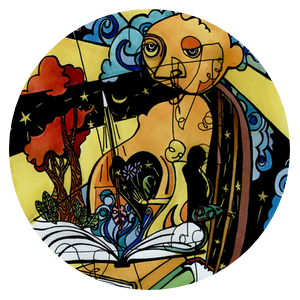
National Poetry Month

BMP Celebrates National Poetry Month 2016

If “love calls us to the things of this world,” then poetry too can call us to think about challenging questions, difficult situations, and social justice, implicating and engaging the reader with the world we live in, in the hope that this engagement is a step toward wrestling with our better selves.

The Raisin & The Bullet

Alicia Rebecca Myers is a poet and essayist who holds an MFA from NYU, where she was a Goldwater Writing Fellow. Her work has appeared most recently in Best New Poets 2015; The Rumpus; Brain, Child Magazine; Gulf Coast; jubilat; The Carolina Quarterly; and Fairy Tale Review. In February of 2014, she was awarded a residency at the Kimmel Harding Nelson Center in Nebraska City. Her chapbook, My Seaborgium, was released by Brain Mill Press in January 2016. She teaches at Wells College.

Website

BMP Celebrates National Poetry Month

If “love calls us to the things of this world,” then poetry too can call us to think about challenging questions, difficult situations, and social justice, implicating and engaging the reader with the world we live in, in the hope that this engagement is a step toward wrestling with our better selves.

Widow

Poetry Month Spotlight

Sonya Vatomsky

They didn’t tell me where the funeral was so I know it’s everywhere,

spilling over edges with its overwhelming hunger while I brew tea

the Russian way my mother taught me because strength necessitates

dilution. There is always tea and there are always lemons; consistency

is a little gift. “Did you know gift is the German word for poison?”

speaks a voice flush with anecdotes like some bloodfed mosquito

high on insulin (or maybe nostalgia). “Beware the standing guest”

I say, or think, or whatever –– talking to yourself is a dish best served

cold, and anecdotes are a fish without a schoolmate, and I’m waiting

for my own blue lips because it’s me who was the goth all these years,

wasn’t it? Wasn’t I the one dropping the knife at the dinner table and

saying come and come and come until tears ran dirty streets through my

various eyeshadows: sad little tombstones for my superstitions, carrying

sense out to sea? Whatever. They didn’t tell me where the funeral was

so I filled a ripped bag with knives, left their sharp trail as breadcrumbs.

I’ll be waiting here for your ghost, or for a regeneration of myself

which will not recognize him.

About Sonya Vatomsky

Sonya Vatomsky is a Moscow-born, Seattle-raised ghost. They are the author of Salt is for Curing (Sator Press) & My Heart in Aspic (Porkbelly Press) and a poetry editor at Anthropoid. Find them by saying their name five times in front of a bathroom mirror or at sonyavatomsky.tumblr.com.

National Poetry Month

BMP Celebrates National Poetry Month 2016

If “love calls us to the things of this world,” then poetry too can call us to think about challenging questions, difficult situations, and social justice, implicating and engaging the reader with the world we live in, in the hope that this engagement is a step toward wrestling with our better selves.

Then Became

Then Became

Cynthia Hogue

Then Became

        for Sylvain

© Cynthia Hogue, 2014. Originally published in TAB: a journal of poetry and poetics (2014). Used with permission.

About Cynthia Hogue

Cynthia Hogue was born in 1951 in Rock Island, Illinois. She taught in the MFA program at the University of New Orleans before moving to Pennsylvania, where she directed the Stadler Center for Poetry at Bucknell University for eight years. While in Pennsylvania, she trained in conflict resolution with the Mennonites and became a trained mediator specializing in diversity issues in education. She has published eight collections of poetry, three of which— Revenance (2014), Or Consequence(2010), and The Incognito Body (2006)—were published by Red Hen Press. Other books include When the Water Came: Evacuees of Hurricane Katrina (University of New Orleans P, 2010); Flux (New Issues Press, 2002); The Never Wife (Mammoth Press, 1999); The Woman in Red (Ahsahta P, 1989); and Where the Parallels Cross (Whiteknights Press, 1983). Her ninth collection, In June the Labyrinth, will be published by Red Hen Press in 2017. Since 2006, Hogue has been an active translator from contemporary French poetry whose co-translated Fortino Sámano (The overflowing of the poem), by poet Virginie Lalucq and philosopher Jean-Luc Nancy, won the 2013 Harold Morton Landon Translation Award from the Academy of American Poetry. Hogue was a 2015 NEA Fellow in Translation. She is the Maxine and Jonathan Marshall Chair in Modern and Contemporary Poetry in the Creative Writing Program at Arizona State University.


National Poetry Month

BMP Celebrates National Poetry Month 2016

If “love calls us to the things of this world,” then poetry too can call us to think about challenging questions, difficult situations, and social justice, implicating and engaging the reader with the world we live in, in the hope that this engagement is a step toward wrestling with our better selves.

How I Will Do It

Under the glint of your glasses I will love you

and as the hiss of the last can of Sprite sizzles from your hand

I will drink your extra Sprite and I will walk your dog I will

love you under the yellow basement lights of the DMV

I will let you feed me foreign candies in the taxi to the airport

and on the plane I will give you the window I will let you

hold the Skymall and someday the lap pool darling someday

the smallest book lamp you’ll ever need I will never read Home

& Gardens I promise you I will never let the literature of housewives

bring us down even with an apron or a minivan I will

still spank you gently and always tell you love you when

you are walking towards the door I never love you more than then

Tracey Knapp’s first full-length collection of poems, Mouth, won the 42 Miles Press Poetry Award in 2014 and was published in September 2015. Tracey has received scholarships from the Tin House Writers’ Workshop and the Dorothy Sargent Rosenberg Poetry Fund. Her work has appeared in Best New Poets 2008 and 2010, Five Points, Red Wheelbarrow Review, The New Ohio Review, The Minnesota Review, and elsewhere.

Website

BMP Celebrates National Poetry Month

If “love calls us to the things of this world,” then poetry too can call us to think about challenging questions, difficult situations, and social justice, implicating and engaging the reader with the world we live in, in the hope that this engagement is a step toward wrestling with our better selves.

Stepmother en Filipinas, circa 1948

Stepmother en Filipinas, circa 1948

Victoria G. Smith

Stepmother en Filipinas, ca. 1948


I.
Long before the clop-clopping of hooves
echo from the sun-baked road,
and the calesa drops off its passenger
and her groom, there will have been
a thousand chores completed.

The bride will arrive at her new home
and regally ascend to her forerunner’s
legacy on narra steps and floors
polished to ebony shine, mirroring
her long virginal skirt like lover’s
eyes lurid with desire.

And the dining table will not betray
one speck of dust—she could lick off
her dinner straight from its top.
And her dinner will be served
by an army of young servants,
sneaking peeks for signs
of approval or—Dios mio!
displeasure, as they learn
to address her, Ima
mother.

II.
Typhoid had robbed them of their blood
mother during the war that taught them
their sculptor father was useless
when art served no purpose but vain hope,
and beauty only attracted unwanted attention,
and it was more important to learn how
to bow low to the Hapon and say Hai!
like you meant it, unless you craved
a lusty beating, and how to carve
out a living selling poor man’s meals
from the bodega of their house.

Everyone says how lucky they were
for a young lady to want to marry
a man with seven children already.

III.
The fourteen-year old eldest daughter resents
the woman not much older than she
usurping her place as mistress of the house,
can’t think of what more a man could want
beyond a brood of obedient children
catering to his needs. Doesn’t grasp this
until that night when he orders everyone
to bed early, and the house—
thought to be dead all that time,
rises and sleepwalks.

The daughter knows,
for she heard it straight from the loose lips
of the heaving and groaning floors.

About Victoria G. Smith

Philippine-born author and poet Victoria G. Smith’s first career was in law practice. After marriage to an American that led her to immigrate to the United States, she rediscovered and pursued a childhood passion: creative writing. Her early efforts won her first place in the 2004 (Fifth Annual) Ventura County Writers Club–Ventura Country Star national short story writing contest—the first time she’d entered a writing competition. Recent distinctions include the 2015 Driftless Unsolicited Novella Award for her novella, Faith Healer, and semifinalist for the 2015 Elixir Press Fiction Award for her story collection, Faith Healer and Other Stories. Her poetry and other literary work are published by, among others, Reed Magazine, The Greenwich Village Literary Review, The Earthbound Review, Elite Critiques Magazine, Ruminate Magazine, Westward Quarterly, The Earthen Lamp Journal, The Milo Review, Lyrical Iowa, and Dicta. Her essay, “Gatekeepers and Gatecrashers in Contemporary American Poetry: Reflections of a Filipino Immigrant Poet in the United States,” appears in Black Lawrence Press’s 2015 anthology, Others Will Enter the Gates: Immigrant Poets on Poetry, Influences, and Writing in America. Her first book of poems, Warrior Heart, Pilgrim Soul: An Immigrant’s Journey, was published in November 2013 to critical acclaim spearheaded by Kirkus Reviews. Later that same year, the Chicago Filipino Asian American Hall of Fame honored her with the Outstanding Writer Award. She writes a monthly poetry column for VIA Times Magazine. Smith attended the 2005 UCLA Asian American–N.V.M. Gonzales Writers Program and has been featured as an emerging writer in several print media and online articles. She is currently writing her first novel, Gabriela’s Eyes, and a second poetry collection, Mother of Exiles.

Updates on her literary work and author events may be found on her website, VictoriaGSmith.com.

National Poetry Month

BMP Celebrates National Poetry Month 2016

If “love calls us to the things of this world,” then poetry too can call us to think about challenging questions, difficult situations, and social justice, implicating and engaging the reader with the world we live in, in the hope that this engagement is a step toward wrestling with our better selves.