“Who Put This Song On?” Is a Heartfelt Exploration of Identity and Mental Health

“Who Put This Song On?” Is a Heartfelt Exploration of Identity and Mental Health

Due to my intensely personal experience with depression, I was really interested in Morgan Parker’s semiautobiographical debut young adult book, Who Put This Song On?

Set in 2008 in a conservative Southern California town, the book follows the story of Morgan Parker, who is told depression is something that happens to people who lack faith, and that her Blackness shouldn’t be mentioned too much. Following a mental health crisis, Morgan decides to figure out who she is. Armed with an expansive soundtrack of mostly 2000s emo music, Morgan examines herself and everything she has been told in order to find out who she wants to be.

Armed with an expansive soundtrack of mostly 2000s emo music, Morgan examines herself and everything she has been told in order to find out who she wants to be.

One of the things I immediately liked about the book was the voice of Morgan Parker’s teen self. She sounds tired, but also curious and resilient. She has hit rock bottom, but she is willing to climb out of the hole depression caused her to fall into. Above all, Parker’s teen self has a voice filled with hard-won clarity that results in honest observations about her mental health, her identity, and the world around her.

Morgan’s teenage voice is enhanced with diary entries, emails, and a Yellow Notebook in which she and her friends write about their exploits in sex, romance, and crushes. One of my personal favorite lines is, “I have no idea if I have the hypothetical and figurative balls to be a Black Panther or actual Rosa Parks… sometimes I don’t even know if I want to keep being alive. But as long as I’m here, and I’m me, I will definitely be intense, ridiculous, passionate, and sometimes hilarious.”

In addition to Morgan herself, the secondary cast of characters is also worth mentioning. There’s her white best friends Meg and James, her Black love interests David Santos and Sean Santos-Orenstein, the racist history teacher Mr. K, and Morgan’s family. All of these characters affect Morgan both positively and negatively, and the nuanced way they are presented adds depth to the narrative. At one point, Meg has to be called out by Morgan when Meg says, “You’re not really Black,” even though Morgan considers Meg a friend.

It’s worth noting, too, that the way Morgan is treated by her small town and family is influenced by mental health stigma, her religiously conservative community, and the 2008 political climate. To her white peers and white adults, Morgan is expected to be excited at the possibility of a Black president as well as an authority on Black history, even as she is asked not to bring up her Blackness too much.

Moreover, Morgan’s family alternates between treating Morgan like a difficult, fragile person to be around and treating her as someone who is trying her best to live. They know Morgan is going through a difficult time, but they don’t quite understand it. They let Morgan see a therapist and help her get access to antidepressants, but they also try to avoid the issue and frequently blame Morgan herself until they realize their mistake.

“I have no idea if I have the hypothetical and figurative balls to be a Black Panther or actual Rosa Parks… sometimes I don’t even know if I want to keep being alive. But as long as I’m here, and I’m me, I will definitely be intense, ridiculous, passionate, and sometimes hilarious.”

Still, there are characters in the book who are more sensitive toward Morgan’s mental health issues and open-minded about her questioning of religion, Blackness, and her place in the world. Cousins David and Sean Santos fill this role as both love interests and new friends. When David first meets Morgan, he helps her through a panic attack, and they talk about their favorite movies. Both David and Sean are notable for being presented as added emotional support, rather than cure-alls for Morgan’s depression.

Finally, the music references are a fun bonus throughout the book. Although I was only familiar with one or two of the artists, it was nice to see a Black girl coping with her depression through emo music without anyone giving her a hard time about it. Seeing so many different 00’s emo music artists mentioned rang true to my own experiences of my teens and early twenties.

In the end, this book was a heartfelt exploration of identity and mental health. Who Put This Song On? shows that you don’t have to let your mental illness or other people determine who you can be, even if you’re tired of fighting. By questioning what you are taught and forming your own sense of self, you can change your personal potential for the better.

The Afro YA promotes black young adult authors and YA books with black characters, especially those that influence Pennington, an aspiring YA author who believes that black YA readers need diverse books, creators, and stories so that they don’t have to search for their experiences like she did.

Latonya Pennington is a poet and freelance pop culture critic. Their freelance work can also be found at PRIDE, Wear Your Voice magazine, and Black Sci-fi. As a poet, they have been published in Fiyah Lit magazine, Scribes of Nyota, and Argot magazine among others.
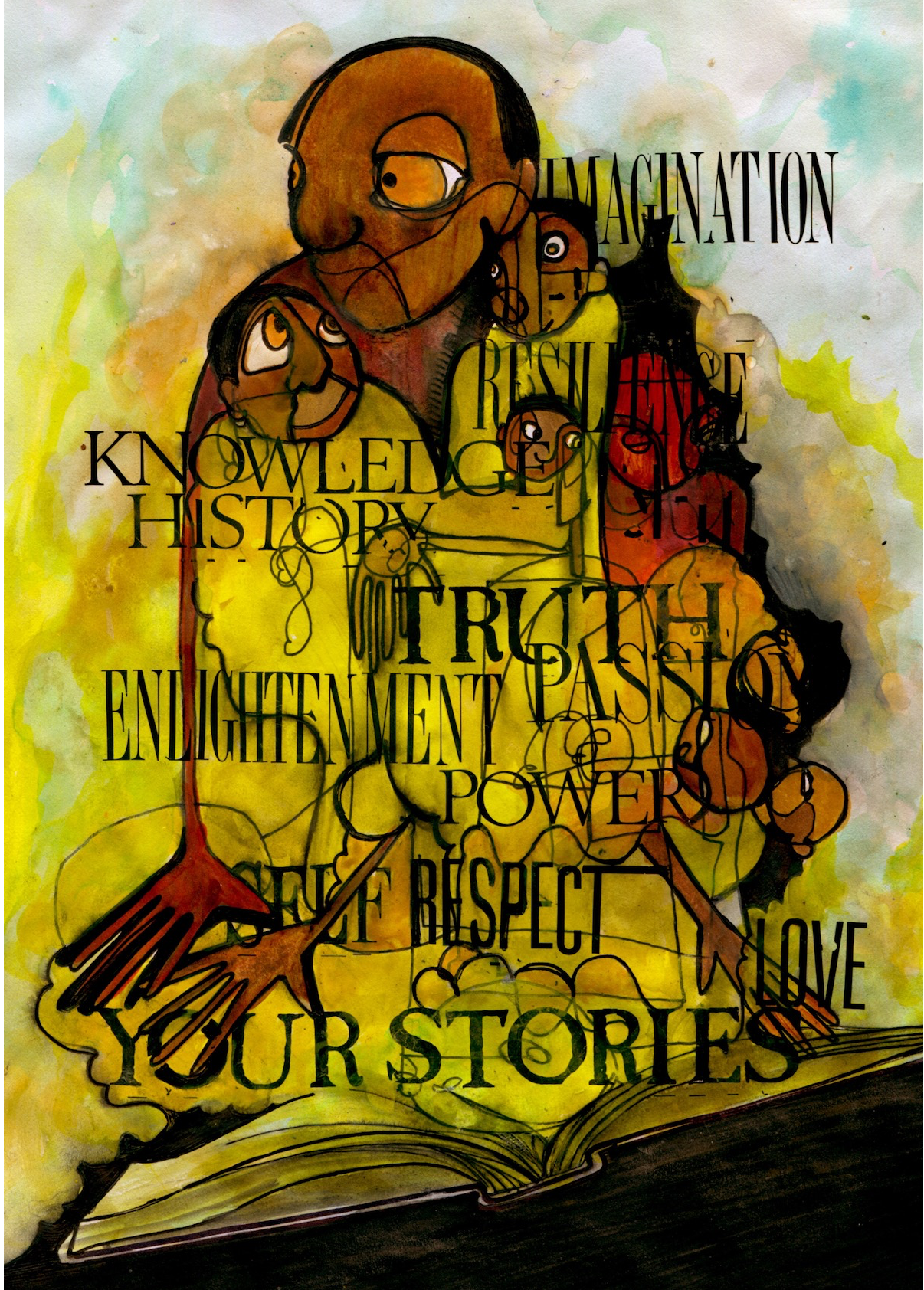
Top photo by insung yoon on Unsplash


“A Dream So Dark” Is a Dark, Thrilling Return To Wonderland

“A Dream So Dark” Is a Dark, Thrilling Return To Wonderland

It has been ages since I have been emotionally invested in a book series.

Last year, I reviewed L.L. McKinney’s A Blade So Black and was utterly delighted. When the sequel, A Dream So Dark, was announced, I couldn’t wait to return to the Nightmare Verse series. Alice Kingston is a compelling and relatable heroine, and I wanted to see where her adventures would lead her next.

After the tumultuous climax to A Blade So Black, Alice Kingston must journey into a corrupted Wonderland to rescue her friend Maddie, a powerful Poet who has been kidnapped by dark forces. Alice is also dealing with the grim betrayal of her best friend, Chess, and the ongoing peril of the Black Knight. With these dangers come inner turmoil that threatens to tear Alice apart.

One of the most engrossing things about this book is Alice’s internal struggle with her fears. I have never liked so-called “strong female characters” who are allowed to be physically strong but not emotionally vulnerable, and this especially applies when those characters are Black girls and women. Black women are often expected to care for everyone but themselves, so to see Alice cry, be comforted, and learn to face her fears is wonderful.

Speaking of people who care for Alice, I really liked how Alice’s mother was written in this book. In the first book, the mother-daughter relationship was on thin ice because of Alice’s constantly breaking curfew due to her secret superhero lifestyle. In this book, it becomes even harder for Alice to keep her Dreamwalker duties a secret. In spite of all the lying, worry, and frustration, Alice’s mother still tries to understand her daughter as much as she can. Without giving away too much, I can say that it was really heartwarming to see the two grow closer in this book.

Another character that I liked to see caring for Alice is Alice’s grandmother, Nana Kingston. She was casually mentioned in the first book, so it was a pleasant surprise to see more of her in this one. Nana Kingston displays signs of Alzheimer’s disease but belies strength and cheekiness that radiates warmth and love to Alice. I especially liked the gift she gives Alice before she and her mom leave the nursing home.

I have never liked so-called “strong female characters” who are allowed to be physically strong but not emotionally vulnerable, and this especially applies when those characters are Black girls and women. Black women are often expected to care for everyone but themselves, so to see Alice cry, be comforted, and learn to face her fears is wonderful.

Of course, Nana Kingston and Alice’s mother are only two of the characters that made a good impression. Old characters like the Black Knight and Addison Hatta received some surprising character development that also added to the world-building of Wonderland. In particular, the Black Knight’s character development was interesting because it made him more than a one-dimensional villain lackey, though I wasn’t too keen about seeing certain chapters switch to his point of view.

Meanwhile, this book also introduces some newer characters. There are Romi and Haruka, Japanese Dreamwalkers and protectors of the Eastern gateway of Wonderland. Both are strong warriors, but Haruka is the most intriguing, as she serves as both a new friend and a new crush for Alice. Seeing those two bond over past battles and Sailor Moon was a lot of fun. It was also nice to see Alice’s bisexuality be so casually featured and confirmed, since I had my suspicions about Alice’s orientation in the first book.

One other newer character that was enjoyable was the Big Bad of the book. I liked how cunning they were in terms of their plan to manipulate Alice, Addison, an evil version of Chess, and the Black Knight. I also liked how genuinely scary their power over the Nightmares were. They embody the darkness of Wonderland to its fullest, and the reveal of their identity is well done.

It was also nice to see Alice’s bisexuality be so casually featured and confirmed, since I had my suspicions about Alice’s orientation in the first book.

There wasn’t much I disliked about the book. One improvement over the last book is seeing Chess and Courtney play bigger roles in Alice’s adventure, for better and for worse. I ended up liking them more than I did in the first book, and I’m interested in seeing how the events in this book will affect them in the next. In fact, this book made me extremely impressed with how the author has managed to handle such a huge cast of characters in the series.

All in all, this book is a darker, entertaining return to Wonderland that hardly disappoints. Alice fights darkness from within and without to emerge as a better hero and plant the first seeds of Wonderland’s return to its former glory. A Dream So Dark is a thrilling continuation of the Nightmare Verse series, and I eagerly await what will come next.

The Afro YA promotes black young adult authors and YA books with black characters, especially those that influence Pennington, an aspiring YA author who believes that black YA readers need diverse books, creators, and stories so that they don’t have to search for their experiences like she did.

Latonya Pennington is a poet and freelance pop culture critic. Their freelance work can also be found at PRIDE, Wear Your Voice magazine, and Black Sci-fi. As a poet, they have been published in Fiyah Lit magazine, Scribes of Nyota, and Argot magazine among others.

Top photo by Johannes Plenio from Pexels


Tristan Strong Will Sweep You Away with Epic Adventure and African Folklore

Tristan Strong Will Sweep You Away with Epic Adventure and African Folklore

African mythology and folklore aren’t exactly common knowledge. When you think of gods and goddesses, it’s usually Greek and Norse gods like Zeus and Thor that come to mind.

Now characters such as High John the Conqueror and Anansi, along with their stories, are being introduced to a new generation through Kwame Mbalia’s dynamic middle grade fantasy Tristan Strong Punches a Hole in the Sky. The book will be released on October 15.

Tristan Strong is a twelve-year-old boy grieving the loss of his best friend, Eddie, and smarting from being defeated in his first boxing match. While visiting his grandparents’ farm in Alabama, he accidentally unleashes an evil haint and creates a hole between the real world and a magical world of African American folk heroes and West African gods. Now he must work together with them and undergo an epic quest to retrieve Anansi’s story box to save the world.

One of the best aspects of this book is how accessible the folktale and mythology characters are. These characters are modernized without losing their roots and inspire awe with their strength, humor, and sprinkles of humanity. One of my personal favorites is the character Gum Baby, who was originally a doll the trickster Anansi made to capture a fairy. Although she is commonly known by the sometimes derogatory term “Tar Baby,” the author makes her a fully fleshed-out character who is spunky, hilarious, and a clever fighter.

Another notable aspect of the book is Tristan Strong, the protagonist. Having been exposed to so many images of Black boys and men who are pressured to be hypermasculine at all times, I was pleasantly surprised to see Tristan Strong be a bit insecure and emotionally vulnerable. It is heartwarming to see him grow as a character and come into his own as a hero and as a person. One of my favorite parts of his character arc is Tristan slowly facing his fear of heights. Initially, he screams really loudly at being in the air, but eventually he comes to realize there are things more important than his fear.

In addition to Tristan himself, his friendship with Eddie, another Black boy, is wonderful. Even though Eddie has passed away, he lives on in a journal of stories and memories that become increasingly precious to Tristan. Tristan’s flashbacks to good and bad times with Eddie are a key part of Tristan’s coming to terms with his grief and his journey as a hero.

In fact, Eddie, Tristan, and Gum Baby are just a few of the amazing cast of characters in this book. There is also Ayanna, a Black girl who has the makings of a strong leader and fighter. Another Black girl, Thandiwe, is a fierce warrior who reminded me a lot of Dora Miljae from the Black Panther comic books. Although I would have liked to see more Black female folklore and mythical characters in addition to Gum Baby, I did enjoy seeing two of them embody Virginia Hamilton’s The People Could Fly.

Having been exposed to so many images of Black boys and men who are pressured to be hypermasculine at all times, I was pleasantly surprised to see Tristan Strong be a bit insecure and emotionally vulnerable.

In addition to the characters, the world building is also very well done. Although there is a lot to keep up with without a map or index of places, I found the author’s decision to make the world of the African folk heroes and gods parallel to the real world compelling, especially given how that world has allegorical references to postcolonialism and slavery. Some parts of it are dark, but it is subtle enough that middle grade readers won’t be terrified. Also, the world building as it applies to the book’s main antagonist is brilliant.

All in all, Tristan Strong Punches a Hole in the Sky is a dazzling adventure that will sweep you away. Reluctant middle-grade readers will tear through the book’s four hundred pages for the action and magic, while older readers will appreciate the book’s in-depth world building. It is a grand start to a new series and a perfect introduction to African myth and folklore.

The Afro YA promotes black young adult authors and YA books with black characters, especially those that influence Pennington, an aspiring YA author who believes that black YA readers need diverse books, creators, and stories so that they don’t have to search for their experiences like she did.

Latonya Pennington is a poet and freelance pop culture critic. Their freelance work can also be found at PRIDE, Wear Your Voice magazine, and Black Sci-fi. As a poet, they have been published in Fiyah Lit magazine, Scribes of Nyota, and Argot magazine among others.

top photo by Jenn Evelyn-Ann on Unsplash


“Opposite of Always” Teaches How to Value Love through Time Travel

"Opposite of Always" Teaches How to Value Love through Time Travel

Most romance stories usually follow the same formula. Boy meets girl. Boy and girl fall in love. Boy and girl have some misunderstandings but somehow manage to declare their love for each other and live happily ever after.

In Justin A. Reynolds’s Opposite of Always, this formula gets a little more complicated thanks to a four-month time loop.

Jack Ellison King is an African American teen who never quite succeeds at important milestones. When he meets Kate on the steps of a house party, he’s hoping to somehow succeed at romance. Then Kate tragically dies of an illness, and Jack is sent back in time to the day they met. Given the second of many chances, Jack strives to prevent Kate’s death while weighing the consequences of his choices and the people he chooses to be with.
Given the second of many chances, Jack strives to prevent Kate’s death while weighing the consequences of his choices and the people he chooses to be with.

In addition to Jack himself, I also enjoyed the people he’s surrounded by, including his parents, his best friends, Franny and Jillian, and sometimes Kate herself. Jack’s parents are really good parents who want Jack to be happy while expecting him to honor his commitments. Franny and Jillian are dating each other and still manage to be good friends to Jack, setting a good example for him. Meanwhile, Kate is a really sweet love interest who can’t dance, wants to be an architect, and has a caring and protective family.

All of these characters really enrich the romance, comedy, and drama in the storyline. The farther you get into Jack’s attempts to save Kate, the more you learn to appreciate Jack and Kate’s romance and the higher the stakes become when it comes to his other relationships. As a result, you want Jack to succeed, but you also want Jack’s friends and family to be happy. A personal favorite subplot involves Jack trying to help Franny mend things with his absent father, Mr. Hogan.

Though I enjoyed the book, there were a few flaws that I couldn’t help but notice. One involves the characterization of Kate, who is not a stick-figure love interest but is not as fleshed out as I would have liked her to be. As much as I appreciated reading a romantic dramedy with two Black leads, I wish we had a chance to see more of Kate’s character in terms of her personal interests and skills.

All in all, Opposite of Always is an entertaining coming-of-age romantic dramedy that teaches the value of small moments and decisions. Love from a partner, a friend, or a family member matters, and it is important to cherish all the love that comes your way for as long as you can.

I had mixed feelings about the time loop as well. This might have been due to my limited exposure to time travel in pop culture, but I was expecting the time loop to be shown differently than it was. As a result, I was left a little disappointed by it at the end of the book. Yet I was willing to overlook a plot hole with the time loop when I realized that the author was doing his best to balance two different fiction genres in the same story.

All in all, Opposite of Always is an entertaining coming-of-age romantic dramedy that teaches the value of small moments and decisions. Love from a partner, a friend, or a family member matters, and it is important to cherish all the love that comes your way for as long as you can. The book was refreshing and enjoyable, and I hope its movie adaptation will be, too. 

The Afro YA promotes black young adult authors and YA books with black characters, especially those that influence Pennington, an aspiring YA author who believes that black YA readers need diverse books, creators, and stories so that they don’t have to search for their experiences like she did.

Latonya Pennington is a poet and freelance pop culture critic. Their freelance work can also be found at PRIDE, Wear Your Voice magazine, and Black Sci-fi. As a poet, they have been published in Fiyah Lit magazine, Scribes of Nyota, and Argot magazine among others.

Top photo by Beth Tate on Unsplash


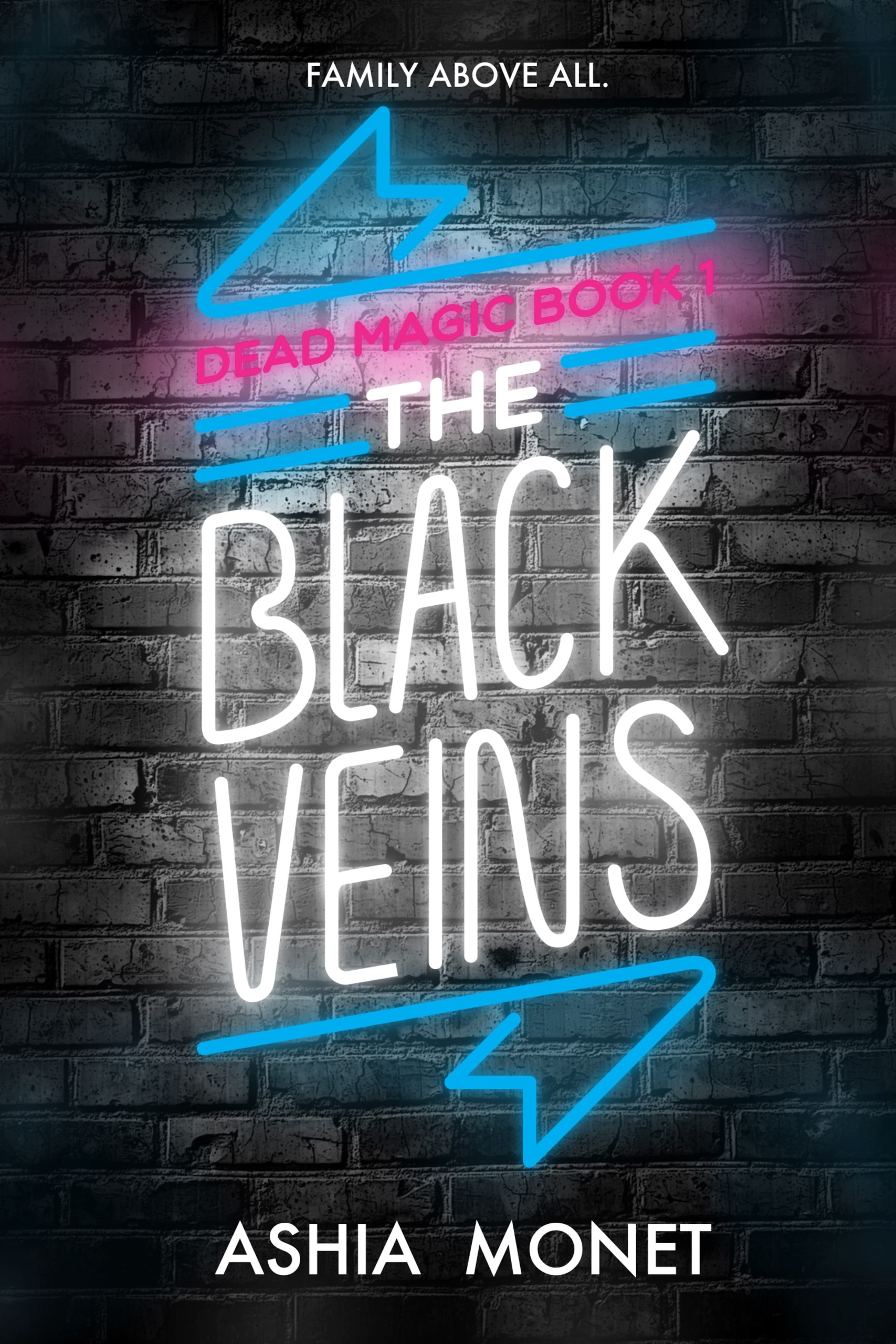
“The Black Veins” Is an Epic Adventure Filled with Magic and Family

"The Black Veins" Is an Epic Adventure Filled with Magic and Family

One mysterious night, Blythe Fulton, an Elemental Guardian, is magically compelled against her will.

After reaching out to the magical government known as the Black Veins, Blythe’s family is kidnapped and taken to the Trident Republic. In order to save them, Blythe must embark on a cross-country road trip to find and team up with the other six Elemental Guardians. Along the way, Blythe must discover the secret to unlocking her magical abilities, learn to be a leader and friend, and figure out the connection between her family’s kidnapping and the tensions between the Black Veins and the Trident Republic.

The Black Veins is the first book in the Dead Magic series. It releases July 17, 2019.

The Black Veins is the first book in the Dead Magic series. It releases July 17, 2019.

The thing I immediately liked about this book is the book’s main Black teen lead, Blythe Fulton. I especially enjoyed the juxtaposition of Blythe’s status as an Elemental Guardian in the magical world and her status as a Black girl in the real world (aka the “Common World”). Even though Blythe has yet to unlock her powers, being an Elemental Guardian allows her to be given protection because of how important the Guardians are. However, those who are Common (i.e., non-magic) still see Blythe as a Black girl, exotic one moment and criminal the next.

Blythe is awesome and relatable as person. She is so many things, among them bisexual, nerdy, resourceful, impulsive, and kind. One of the most touching examples of her kindness is when she explains friendship to Daniel, an Elemental Guardian who has lived a sheltered life: “Friendship is an art, like gardening or photography. It’s something you get better at with practice, and not everyone does it the same way. So don’t worry if you don’t get it now. It’ll happen.”

Blythe is … so many things, among them bisexual, nerdy, resourceful, impulsive, and kind.

The other Guardians have their own quirks and imperfections that will make you both enjoy them and yell at them. One who comes to mind is Cordelia Deleon, Guardian of the Mind and a haughty Chinese hacker who undergoes some major humbling. Another is Guardian of Time Storm Crane, a fat, Black vigilante hero who is kick-butt and initially single-minded in pursuit of her own goals. The only thing more interesting than the Guardians as individuals is the Guardians becoming a family.

Although each of the Guardians is recruited into Blythe’s mission in different ways and all have their own personal agendas, watching them grow close to each other is incredibly moving. These moments are especially memorable when they have time to catch their breath and be teenagers talking and having fun with each other. Much of the fun consists of dialogue between the characters, which is purely friendship, with only a little bit of flirting between some characters. It is refreshing to see queer characters in a book without a love interest, because queer friendships are just as important as queer romance.

Speaking of the dialogue, there is a lot of great stuff that is a mix of funny, comforting, and true to life. One of my favorite bits is when Blythe and Storm are complimenting each other. Blythe says, “I like you, for what it’s worth.” Storm replies, “I’m straight.” to which Blythe says, “I meant as a friend. You’re not even my type.” Storm says she’s insulted, and Blythe cheekily says, “Straight girls always are.” If this book ever gets adapted into a TV series or a film, I really hope they keep the banter and the downtime between the Guardians.

A final aspect of the book I enjoyed was the world-building. The concept of a world of magic hidden alongside the ordinary world is always interesting, and Monet does a good job of introducing readers to the world of the Elemental Guardians and magicians. From how magic is hidden from Common people to a magicians’ war to a forest that allows time travel, there is a lot for the fantasy reader to delight in. My personal favorite bit of world-building is “the Gilded Wardrobe,” a thrift store for magical goods.

From how magic is hidden from Common people to a magicians’ war to a forest that allows time travel, there is a lot for the fantasy reader to delight in.

There wasn’t much I disliked about The Black Veins. While the novel’s major antagonist certainly showed they were not to be trifled with, I found them a little boring. I was also interested in learning if magic affected modern technology like smart phones and social media, but the novel did not address this — though I admit my curiosity was mostly a personal one. Since this book is the first of the Dead Magic series, there is plenty of room for the world of The Black Veins to grow.

Overall, The Black Veins is an entertaining read, an epic adventure filled with magic and found family. If you love fantasy or have wondered what certain fantasy series would be like if they took place during the age of social media, give this book a try. It’s full of action and fun for teens, but anyone can enjoy it.

The Afro YA promotes black young adult authors and YA books with black characters, especially those that influence Pennington, an aspiring YA author who believes that black YA readers need diverse books, creators, and stories so that they don’t have to search for their experiences like she did.

Latonya Pennington is a poet and freelance pop culture critic. Their freelance work can also be found at PRIDE, Wear Your Voice magazine, and Black Sci-fi. As a poet, they have been published in Fiyah Lit magazine, Scribes of Nyota, and Argot magazine among others.

Top photo courtesy Caleb+Kaci Carson from Pexels.


The Weight of the Stars Is a Gorgeous Novel about New Possibilities

"The Weight of the Stars" Is a Gorgeous Novel about New Possibilities

After an accident brings them together, Ryann Bird finds herself keeping track of space messages for her classmate Alexandria.

Although they have a frosty start, the two eventually bond over their status as misfits and an appreciation of outer space. As Ryann begins to help Alexandria learn more about her astronaut mother and her one-way space mission, their tentative friendship slowly blooms into something more.

One of the first things that drew me to this book was its very short chapters. Each of them has its own title and is only a few pages long, reminding me of those brief short fiction stories known as flash fiction. This resulted in a nice, steady pace for the storyline that urges the reader to keep reading without making them feel bogged down by page length. It was an unexpected yet relaxing reading format.

In addition to the leisurely pace of the chapters, the prose itself is great to read. It is lyrical, thoughtful, and sometimes even humorous. It gives almost every character their own unique voice that makes their personalities palpable. An example of this is the following exchange between Ryann, Alexandria, and one of Ryann’s friends, Shannon:

“What a bitch,” Shannon seethed. “They tell us not to judge a book by its cover, but then, like, they say mean things like that.”

“You have to learn to not care, you know?” Alexandria replied.

“Or at least be able to defend yourself well,” Ryann mumbled.

Speaking of the characters, they are wonderful to get to know. While there are too many to list them all, personal favorites included Ryann, James, Alexandria, Ahmed, and Shannon. Ryann is a tall butch Black girl who is a tough yet loving mother hen to her found family of misfit friends and to her younger brother, James, and his baby, Charlie. James became mute after the death of his and Ryann’s parents. He fiercely loves Ryann and Charlie. Alexandria is a soft butch mixed-raced Black girl whose coldness protects a warm heart. Ahmed has beautiful polyamorous parents and is a loyal friend. Shannon is popular yet kind and fun, a refreshing deviation from the usual popular girl trope.

Bonding the characters, especially Alexandria and Ryann, together is the topic of outer space and the stars. Even for someone uninterested or unfamiliar with space facts, the information is presented in a way that is easy to understand and thoughtful. One part of the book that is especially notable is the depiction of how Ryann and Alexandria’s parents influenced their own outer space goals and appreciation. It is truly touching to see both young girls discuss and work toward their hopes and dreams under the stars.

Together, the writing format, prose, and the characters work to tell a emotionally resonating story about new chances and the burdens we all carry. There is also a slow-burn romance that is pleasant to watch unfold as Alexandria and Ryann grow closer. Sometimes, the baggage we carry can be too much to handle alone, especially if that baggage is unwillingly given to you. K. Ancrum’s The Weight of the Starstells us that others can help you carry that weight and that sometimes it’s okay to put yourself first.

A minor flaw of the book involves some of the characters. While the huge cast of characters made for engaging reading, it also made it a little confusing at times. It can be easy to mix up some of the characters, and I did this myself with it came to Ryan’s friends Blake and Tomas, as well as the adult characters of Alex’s dad Raleigh and the CEO Roland. This wasn’t too bothersome, but Blake and Tomas did feel like the same person sometimes, since their character dialogues felt similar.

All in all, this book is a gorgeous novel about new possibilities, love, and family. Great pacing, characters, and prose, along with a love of outer space, make this a novel worth reading. If you’re looking for a new contemporary coming-of-age story and/or romance, prepare to be dazzled and heartbroken all at once.

The Afro YA promotes black young adult authors and YA books with black characters, especially those that influence Pennington, an aspiring YA author who believes that black YA readers need diverse books, creators, and stories so that they don’t have to search for their experiences like she did.

Latonya Pennington is a poet and freelance pop culture critic. Their freelance work can also be found at PRIDE, Wear Your Voice magazine, and Black Sci-fi. As a poet, they have been published in Fiyah Lit magazine, Scribes of Nyota, and Argot magazine among others.

Top photo by 3Motional Studio from Pexels