Poetry Month Spotlight: Jessica Jacobs

Poetry Month Spotlight

Jessica Jacobs

Artist Statement

When the pandemic hit, I was midway through writing a manuscript in conversation with the Book of Genesis—eerie company during a plague whose scale felt biblical.  Yet with my world suddenly so small, I was grateful for the infusion of energy and inspiration this immersive study provided.  While reading religious texts can often be a rather rote experience, writing about them allowed me to push back against these teachings, to ask if there are other ways to be and believe, to read between the lines to better see figures often pushed to the margins or simply ignored, and to question my own ways of being in the world. For whatever your practices or beliefs (and I’m still in the process of exploring those for myself) this is a foundational text, one on which so much of contemporary culture—for better and often for worse—is built. And, to my great surprise, this ancient work has made me feel more connected to our painful present moment, leading me to grapple with subjects I might not have known how to approach on my own: from historic patterns of racism and antisemitism to the climate crisis to questions of free will and fate.

 “Before the Beginning” attempts to imagine back past the moment of creation, to a time when every bit and being of the world was bound in primordial unity.

“Covenant Between the Pieces” examines the relationship between Sarah and Hagar, bound and divided by their relationships with Abraham, and tries to use their opposing placements on the field of the page as mimetic of the distance between them.


Before the Beginning

Covenant Between the Pieces

About Jessica Jacobs

Jessica Jacobs is the author of Take Me with You, Wherever You’re Going (Four Way Books), one of Library Journal’s Best Poetry Books of the Year, winner of the Devil’s Kitchen Reading Award and Goldie Award, and a finalist for the Brockman-Campbell, American Fiction, and Julie Suk Book Awards. Her debut collection, Pelvis with Distance (White Pine Press), a biography-in-poems of Georgia O’Keeffe, won the New Mexico Book Award in Poetry and was a finalist for the Lambda Literary Award and Julie Suk Award. An avid long-distance runner, Jessica has worked as a rock-climbing instructor, bartender, and professor, and now serves as the Chapbook Editor for Beloit Poetry Journal. She lives in Asheville, NC, with her wife, the poet Nickole Brown, with whom she co-authored Write It! 100 Poetry Prompts to Inspire (Spruce Books/PenguinRandomHouse), and her collection of poems in conversation with the Book of Genesis will be published by Four Way Books in 2024.

Find Jessica at https://jessicalgjacobs.com/ and follow her on Twitter @jessicalgjacobs and Instagram @jlgjacobs

Jessica and her wife, the poet Nickole Brown, offer free monthly generative writing sessions (https://sunjune.org/write-it-generative-sessions/). Jessica will be teaching a workshop on spiritual writing (for people of all faiths and none) in Provincetown in June: https://fawc.org/summer-program/in-the-space-between-exploring-the-sacred-through-poetry/

National Poetry Month

BMP Celebrates National Poetry Month

As the pandemic has continued into its second year, we at Brain Mill are thinking about spaces & places: how we exist in space, the importance of access, and the particulars of navigating places. We have gathered together in ways that may have been new to us over the last few years, greeting each other in small squares of connectivity, developing relationship and care with virtual check-ins, follows, and voices translated via technology. In our best moments we have learned to listen; in our worst, we have been caught up by all the ways we need to do better and think more deeply about community systems and for whom entry is barred.

Poetry Month Spotlight: Stephen Roger Powers

The Space Where Words Are Formed

A Poetry Month Spotlight on Stephen Roger Powers

Artist Statement

I’ve had a progressive hearing loss since I was three years old. All my life, I have had to pay attention to the space where words are formed—the lips, the teeth, the tongue—in order to understand what I am listening to. The pandemic upended all of our lives, but for me and other hearing impaired and deaf people, it also cut off an important avenue of communication, lip reading. I fully support mask wearing to reduce virus transmission because the science is simple and indisputable; however, if I need to understand what someone wearing a mask is saying, I am forced to ask them to pull their mask down while speaking. People are generally nice about this, of course, though a handful insist on shouting through their masks, which is no help. I came to realize too that asking people to pull their masks down while speaking put me at greater risk for infection, which has made me question how necessary it was to understand something in most circumstances. Because it feels so personal, and because it is something that marks me as “different,” I have been reluctant to write seriously about hearing impairment, other than a mention here and there in a poem. I also felt maybe it would come across as gimmicky. Several years ago, I did publish a short story in Bryant Literary Review inspired by the stand-up comedy act I used to do about my hearing impairment. Jokes about hearing impairment are easy because they are a defensive mechanism. Navigating a world hostile to hearing loss is far from easy. Nevertheless, masks forced me to consider my hearing loss in ways I hadn’t before, so a few poems ended up focusing on it. I’ve been a Dolly Parton fan all my life too. Every time I get a new pair of hearing aids, they make the world sound so different that I have to go through an adjustment phase lasting weeks or months as my brain relearns what the world sounds like. I’ve had the pair of digital hearing aids I’m wearing now for three years, and I still haven’t completely gotten used to them. Part of the reason for that is my hearing loss has gotten a little worse lately. Age might have something to do with it. Music, though, sounds very different now. I have to turn it off. My memory is the best place to play songs I know by heart. Tinnitus is common with hearing loss, and what once was white noise in my left ear now often is music.


Hearing Loss Is Difficult To Describe

The Most Common Question People Ask Is How Can I Hear Dolly


Mornings on the porch are best without my hearing aids.
I can still hear traffic, but I’m not sure if it’s traffic I hear
or a memory of what traffic once sounded like.
A cochlear implant might help me more,
but asking you to pull down your mask
so that I can read your lips feels safer for now
than drilling my skull.

I’ve always wondered if maybe I love Dolly
because I’m hearing impaired and hear her differently.
An artist once asked what losing hearing is like,
so I described a realist painting morphing
slowly to impressionism,
then abstract expressionism,
which gives me the most freedom to interpret what sounds are.
He said what if I get a cochlear implant
and hate what Dolly really sounds like?

Mornings on the porch are when I hear Dolly clearest,
as if records were playing in my head.
I’ve heard her songs so many times
they are what I know best, memorized like DNA.
I will still have them when the day comes
I lose the rest of my hearing.


Subtitlefocals


My new hearing aids make me worry about Russia.
They are rechargeable, so how will I hear
once Putin hijacks our power grid?

Words sound so different with these new ones
I still cannot understand you.
Your tongue and teeth are now
rattlesnakes in a popcorn popper.

Why doesn’t someone invent subtitlefocals?
Glasses with speech recognition technology
projecting subtitles below the speaker’s mouth?
My choice of fonts and colors?

At my age it will get worse before it gets better.
I can feel it coming like a whale’s water displacement
rising up from under me, lifting me before I see it.

My tinnitus ear worms are worse too, so clear and distinct a radio
might as well be playing, like the one my grandmother left on
in her kitchen all night to scare burglars.

That’s why I am on the move so much.
I am trying to find silence.
Silence is a destination,
but my tinnitus ear worms are forever
harmonizing with whatever tune
the tires are singing.

About Stephen Roger Powers

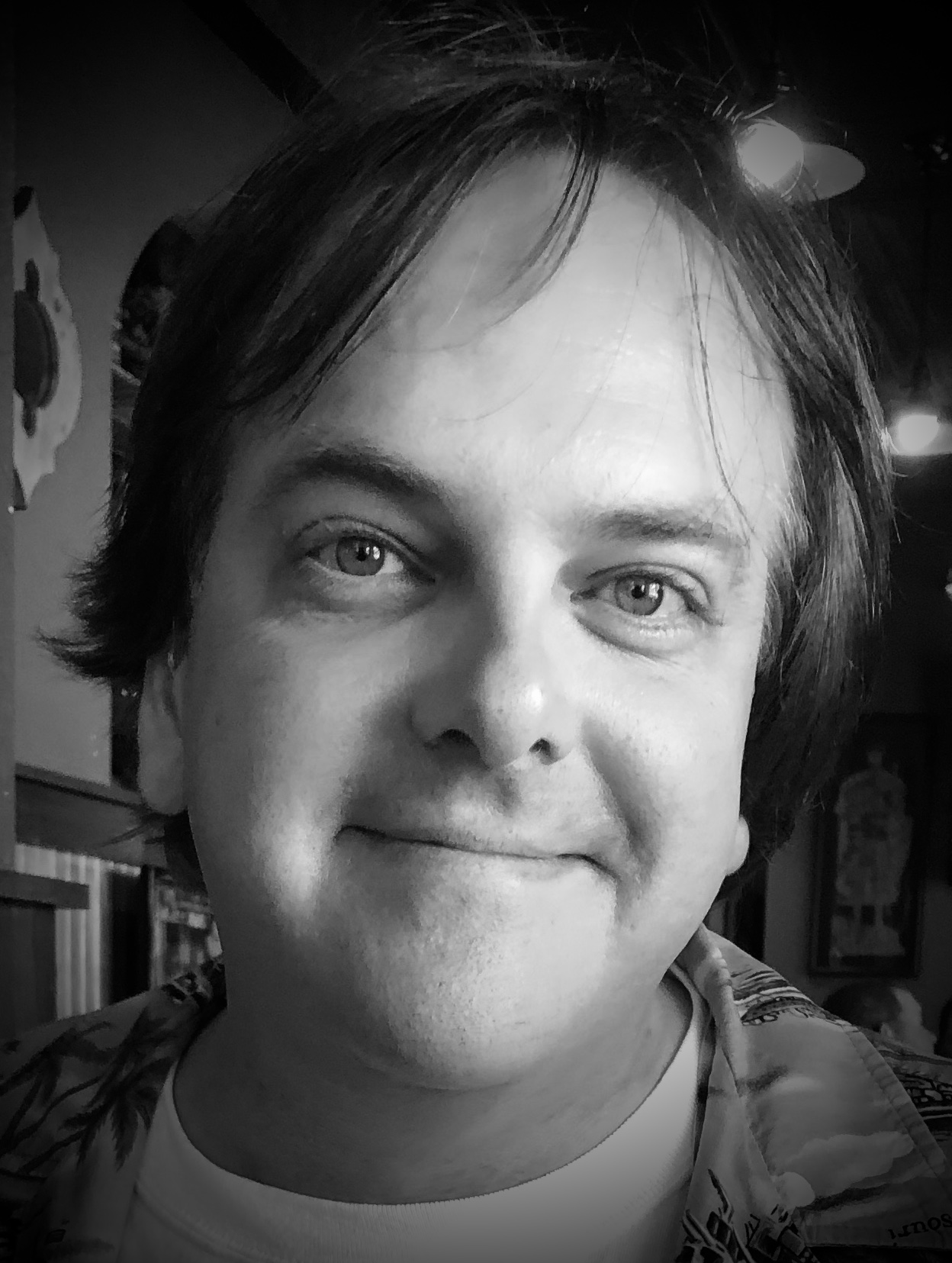
Stephen Roger Powers is the author of three poetry collections published by Salmon Poetry and Highway Speed, a collection of short stories. Other work has appeared in 32 Poems, Shenandoah, The Southern Poetry Anthology Volume V: Georgia, Rabbit Ears: TV Poems, and Stone, River, Sky: An Anthology of Georgia Poems. He was an extra in Joyful Noise with Queen Latifah and Dolly Parton, and he can be seen if you know just where to look.

Find him at www.stephenrogerpowers.com and follow on Twitter @dollypoet and Instagram @dollyfan

National Poetry Month

BMP Celebrates National Poetry Month

As the pandemic has continued into its second year, we at Brain Mill are thinking about spaces & places: how we exist in space, the importance of access, and the particulars of navigating places. We have gathered together in ways that may have been new to us over the last few years, greeting each other in small squares of connectivity, developing relationship and care with virtual check-ins, follows, and voices translated via technology. In our best moments we have learned to listen; in our worst, we have been caught up by all the ways we need to do better and think more deeply about community systems and for whom entry is barred.
Editors’ Picks Week 3: Poetry by Skylar Brown and Kathleen Hellen

Editors' Picks, Week 2

Poetry by Skylar Brown and Kathleen Hellen

flamingos

by Kathleen Hellen


In yardland, not the back-side, not the hedge-side, 12 flamingos front their gaudy colors (pink-green-yellow—you get the picture) in plastic acrobatics (necks leaning in, long necks entangled—you get the picture) as if to flaunt the PDA. Twelve bawdy lawn adornments, not unusual per se, but here, where woodsmoke rings the crisp March air, where whiff of evergreen perfumes, flamingos are (just say it!)—anomaly. What if in some lush patch in Lihue, a palmy stand, there was a garden gnome as guardian? A wagon wheel? Or in the dirt in Butte a stone-cold, long-eared buddha? How will unsuspecting others know to slant the slang? Is it tote or poke or paper bag? Pop or soda? Gum or rubber band? How to know the when and wear of masks? Who to vote for? Who to hate? How to take out fare? Is it grits and open carry? Just when I think it can’t get any more absurd than flamingos placed afoul, two streets down, one across, two clowning black-beaked cousins cult that one-leg thing. The breed of some belief? I want to march up to the door and bang on it with fists, yelling, Hey! Where do you think you are? Tampa?

Jareen Imam author photo

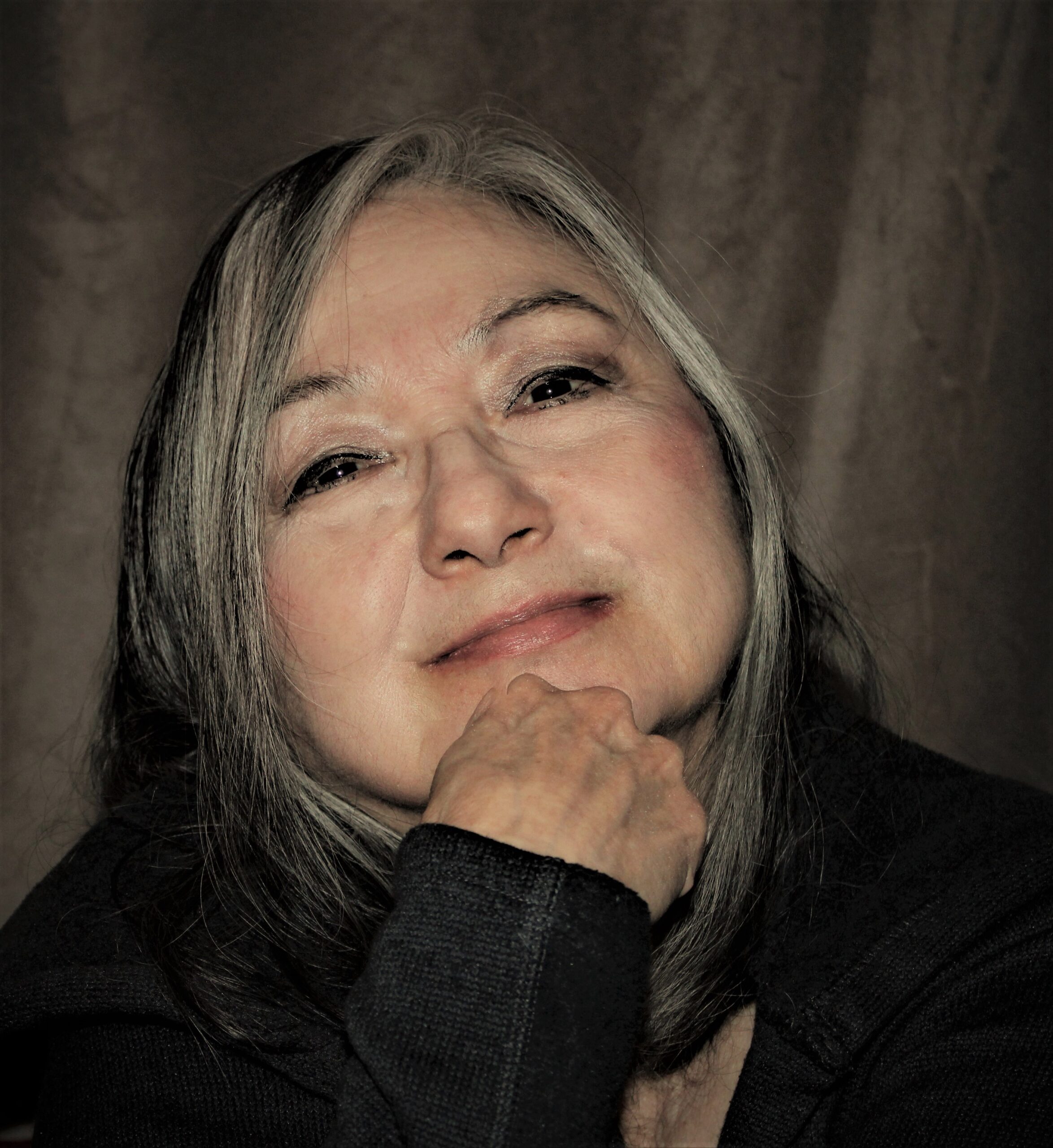
Kathleen Hellen’s collection meet me at the bottom is forthcoming in Fall 2022 from Main Street Rag. Her credits include The Only Country Was the Color of My Skin, her prize-winning collection Umberto’s Night, and two chapbooks, The Girl Who Loved Mothra and Pentimento. Featured on Poetry Daily and Verse Daily, her work has appeared in Barrow Street, Beltway Poetry Quarterly, Brilliant Corners, The Carolina Quarterly, Cave Wall, Colorado Review, Gris-Gris, Harpur Palate, jubilat, Massachusetts Review, Mead, Muzzle, New American Writing, New Letters, North American Review, Painted Bride Quarterly, PANK, Poetry Northwest, Prairie Schooner, The Rumpus, The Sewanee Review, Spillway, Subtropics, The Sycamore Review, Waxwing, and West Branch, among others. For more on Kathleen, visit https://www.kathleenhellen.com/ or https://www.facebook.com/kathleen.hellen/

National Poetry Month

BMP Celebrates National Poetry Month

As the pandemic has continued into its second year, we at Brain Mill are thinking about spaces & places: how we exist in space, the importance of access, and the particulars of navigating places. We have gathered together in ways that may have been new to us over the last few years, greeting each other in small squares of connectivity, developing relationship and care with virtual check-ins, follows, and voices translated via technology. In our best moments we have learned to listen; in our worst, we have been caught up by all the ways we need to do better and think more deeply about community systems and for whom entry is barred.

Top photo by Edgar Moran on Unsplash

Poetry Month Spotlight: Ae Hee Lee

Poetry Month Spotlight

Ae Hee Lee

Artist Statement

While thinking about space/place, I was drawn to the haiku as a form of restraint and intensity. I took inspiration from Brain Mill’s call for poems that speak to space/place as well as the architecture of the page, and explored how I could also engage with the topics of connection/longing through fragmentation.


About Ae Hee Lee

Born in South Korea, raised in Peru, Ae Hee Lee currently lives in the United States. She is the author of the poetry chapbooks: Dear bear, (Platypus Press, 2021), Bedtime || Riverbed (Compound Press, 2017), and Connotary, which was selected as the winner for the 2021 Frost Place Chapbook Competition. Her poetry has been published or is forthcoming at Poetry Northwest, The Georgia Review, New England Review, and Southern Review, among others. She can be found on her website: aeheeleekim.com and on Twitter @aeheelee

National Poetry Month

BMP Celebrates National Poetry Month

As the pandemic has continued into its second year, we at Brain Mill are thinking about spaces & places: how we exist in space, the importance of access, and the particulars of navigating places. We have gathered together in ways that may have been new to us over the last few years, greeting each other in small squares of connectivity, developing relationship and care with virtual check-ins, follows, and voices translated via technology. In our best moments we have learned to listen; in our worst, we have been caught up by all the ways we need to do better and think more deeply about community systems and for whom entry is barred.

Editors’ Picks Week 2: Poetry by Anise Black

Editors' Picks, Week 2

Poetry by Anise Black

Powderhorn Bench

by Anise Black


Child sits on a worn bench
facing the omnipotent glistening lake

Sun casts hazy ripples of Mother’s back
onto the broken piles of wrinkled soil

She sorrowfully gazes past the maverick of ducklings
compliantly trailing after their Mother

Quaking

Past the mass of children joyously frolicking
on the periodic playground

Laughing

Past the disengaged couples
reverently power walking in sync

Talking

They sit on the bench until slivers of splinters
dig into Child’s bow-legged thighs

Mother descending, unraveling
underneath the plastered sky
The lake hue turning from amber to ash

Father, prematurely engulfed by the same sky
Sternly cast into a trapped mortal inferno
A sky Child knew all too well

Envisioned

Drawn in orange crayon
while Father was still alive
Coloring in the lines
wishing for his immortality

Premonition

Child comforting Mother’s silent cries
Unkept, fractured, mourning

Mother and ducklings retreat
from the ashen lake to their warm nest

Child hugs herself tightly as a chill passes
over her and between her and Mother

Father sits beside her, above her
sheltering her in the warmth
of the archaic wooden bench

His presence soothes her
as he sings her favorite song

He cradles their water stained faces
cupping dried tears with hollow burnt hands

They sit on the bench
warmly embracing the Veil

Nesting
Staring at a gloomy and spirited lake
Unkept, fractured, mourning

Jareen Imam author photo

Anise Black is a black poetess, writer, and recovering New Yorker who now lives cozily nestled in North Carolina. Anise once wrote an epic poem dedicated to each of her ferocious, loving felines (El Gato & Layla Ali). She loves to hike in the Blue Ridge mountains, watch cooking shows, and read science fiction.

National Poetry Month

BMP Celebrates National Poetry Month

As the pandemic has continued into its second year, we at Brain Mill are thinking about spaces & places: how we exist in space, the importance of access, and the particulars of navigating places. We have gathered together in ways that may have been new to us over the last few years, greeting each other in small squares of connectivity, developing relationship and care with virtual check-ins, follows, and voices translated via technology. In our best moments we have learned to listen; in our worst, we have been caught up by all the ways we need to do better and think more deeply about community systems and for whom entry is barred.

Top photo by Anthony Cantin on Unsplash

Poetry Month Spotlight: Angela Trudell Vasquez

Poetry Month Spotlight

Angela Trudell Vasquez

Artist Statement

My work is infused with nature. I am a poet of place as much as anything. I observe the world around me, suss it out, and sculpt it on the page. I love theory and spend large amounts of time exploring the stanzas in my brain, reading, being immersed in art and in the wild. I harvest my free writes for poems quite often. Sometimes lines come to me in dreams. I write to discover what it is I am thinking. This is my way of approaching the page.


Space Time


I.

We are magic dying.

Pink peonies gasp tight ants assist open petals

no peony exists without ministrations of light

brick wall frames space between drive

a garden of red clay pots brightens balcony

all balconies lit with green light caress eyes

eyes mystery, upset images transform in skull

how we got here is fought over in courtrooms

people pretend to be god brandish fire sticks

hands tools, nails weapons

a newborn is a garden of purple heirloom potatoes

an angel reads minds from her high chair, babbles

mother feeds child smashed orange skin sweet potatoes with tiny spoon.

We are most vulnerable when we sit at the table with fork and knife.


II.


Early rose light calls from window

jack rabbits bound

flight occurs on ground.

Where are my crow friends?

Hawk brown circles school bathed in blue light

students descend stairs fade into brilliance

talks done talk begins

black pen scratches white paper

mind waxes                 sheds peacock feathers.

How do you begin to think mired in thought and self-doubt?

Walk clears canvas, blank sheets beg

pull feet to mountain ascend.


Because


The dew spools in the far corner of the pasture,
a black and white Holstein dairy cow
licks her newborn calf clean.
Her pink tongue unfolding.
Emerald field grass stripes blink.
The calf looks over the hill
past barb wire fences, inter-
state traffic, rolling green
hills and faded white farmhouses,
across the north plains
towards the coral orb,
the heat of the rising sun
for the first time…

Sobs wrench my body cavity
for all in captivity. Tears
flood my shirt.
I pull over.

Let me sit in sadness for a spell.

I need to write this out.

……….Died in her sleep.

……….Her sister threw herself in front of a truck.

……….Leaves behind three daughters.
……….Her father called her, Negrita.
……….The other two sisters were fair.

The mother
bathes her calf
mist rising
love, a pink tongue
in the morning
licks its forehead
dew blinks grass
fog lingers around their ankles
a vision
culled from the herd that crowds the hill.

Credits

“Space Time” was published first by Yellow Medicine Review and appears in the collection In Light, Always Light published by Finishing Line Press in 2019.

“Because” is from the collection In Light, Always Light published by Finishing Line Press in 2019.

About Angela Trudell Vasquez

Angela (Angie) Trudell Vasquez is a second- and third-generation Mexican-American writer, editor, small publisher, and the current poet laureate of Madison, Wisconsin (2020-2024). She holds an MFA in poetry from the Institute of American Indian Arts. Finishing Line Press published her collections, In Light, Always Light, in May 2019, and My People Redux, in January 2022. In 2021, she attended the Macondo Writers Workshop started by Sandra Cisneros, and became a fellow, also known as a Macondista. She is the current chair of the Wisconsin Poet Laureate Commission. Her work has appeared most recently in Yellow Medicine Review, Sheltering with Poems, In Other Words, Hope is the Thing, Poem-A-Day, and can be found on the Poetry Foundation’s website.

Find out more at www.angietrudellvasquez.com, www.artnightbooks.com, on Facebook and on Instagram.

Check out her new project, Poet in Residence with Madison Public Library, March to May 2022.

National Poetry Month

Photo by Nicole Taylor

National Poetry Month

BMP Celebrates National Poetry Month

As the pandemic has continued into its second year, we at Brain Mill are thinking about spaces & places: how we exist in space, the importance of access, and the particulars of navigating places. We have gathered together in ways that may have been new to us over the last few years, greeting each other in small squares of connectivity, developing relationship and care with virtual check-ins, follows, and voices translated via technology. In our best moments we have learned to listen; in our worst, we have been caught up by all the ways we need to do better and think more deeply about community systems and for whom entry is barred.