
“Right Where I Left You” Is Geeky Queer Bliss
"Right Where I Left You" Is Geeky Queer Bliss
Isaac Martin is an Afro-Mexican gay comic book geek who has been looking forward to spending one last summer with his best friend, Diego Santoyo.
The two of them were supposed to be attending Legends Con, the biggest pop culture convention in Georgia. When Isaac misses his chance to buy passes, he ends up gradually getting closer to his crush, Davi, and getting to know Diego’s gamer friends instead. However, as the day of the biggest teen Pride event approaches, Isaac finds himself drifting farther apart from his best friend.
 One of the best things about this book is the complex depiction of various relationships that Isaac has and develops. At the beginning of the book, Isaac has a loving and mildly tense relationship with his Black mom due to their different opinions on Isaac’s dad, Carlos. He also has a somewhat tense relationship with his older brother, Iggy, and solid relationships with his older sister, Bella, his abuelito, and his best friend, Diego. As the book progresses, some of Isaac’s core relationships change due to his attempts to form new ones with Davi and with Diego’s gamer friends.
While Julian Winter’s past works also feature relationships ranging from family to crushes, this book shows how difficult it can be to keep them all balanced when you experience changes and have some unresolved issues. For instance, Carlos’s divorce from Isaac’s mom creates some cracks in Isaac’s relationship with Iggy, as well as his relationship with their mother.
At same time, Diego and Isaac have different plans post–high school, and Isaac’s social anxiety keeps him from communicating as well as he wants to. Diego wants to design his dream game, while Isaac will be attending college by himself in the fall. Isaac is scared to open up to new people and worries he will be alone once he goes to college, and this causes him to be clingy with Diego and also distance himself from potential new friends.
In addition to the various relationships, the depiction of different geeky interests is diverse and fun. Isaac’s love of comic books, particularly the Disaster Academy series, is displayed in the forum posts and fanfic comments featured at the beginning of each chapter as well as at other moments of the book. Diego’s passion for video games is shown through conversations with his friends and in his career aspirations. One of Diego’s friends, Zelda, enjoys cosplaying (i.e., dressing up as fictional characters) and the singer Whitney Houston, literally wearing both passions wholeheartedly.
Though the book does not take place at a pop culture convention, it introduces exotic hangouts for its characters that are wonderfully descriptive. There is the comic book store, Secret Planet, that has the homely feel of an indie bookstore, and Twisted Burger, a fast food restaurant with delicious burgers and enormous milkshakes. These places are presented in a way that makes them appear so well in the mind’s eye, you may wish they were real.
A final aspect of this book that is notable is how this book shows how difficult it can be to navigate queer identity and experiences. In particular, the queer crush subplot was well done, because Davi was going through something that wasn’t necessarily uncommon, but that is not talked about much. Isaac’s character arc shows how you can end up unintentionally lashing out and getting in your own way in the pursuit of personal happiness. Isaac also learns that some friendships don’t require deep bonds for every person, especially if the other person is initially hard to connect with.
All in all, Julian Winters’s Right Where I Left You is geeky queer bliss. With a memorable cast of characters, an assortment of teachable relationships, and a plethora of pop culture references, this book is the perfect summer vacation.

The Afro YA promotes black young adult authors and YA books with black characters, especially those that influence Pennington, an aspiring YA author who believes that black YA readers need diverse books, creators, and stories so that they don’t have to search for their experiences like she did.
Latonya Pennington is a poet and freelance pop culture critic. Their freelance work can also be found at PRIDE, Wear Your Voice magazine, and Black Sci-fi. As a poet, they have been published in Fiyah Lit magazine, Scribes of Nyota, and Argot magazine among others.


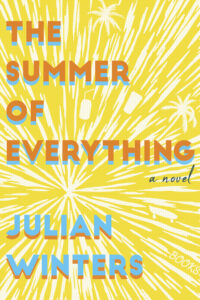 The Summer of Everything by Julian Winters


 Punching the Air by Ibi Zoboi and Yusef Salaam
 Ten years ago, several of these superheroes gave their lives to stop the disastrous events of the Green Night. In the aftermath, a new generation of heroes are trying to do their part to fill the space left behind. One of them is Jordan Harris, a young Black boy with the power to manipulate gravitons. When he is arrested one night while doing vigilante work, he must go undercover at the superhero training academy Fort Olympus. While there, he discovers a world-threatening conspiracy that forces Jordan to work together in a team to save the day.
 Yet every hero needs a villain, and the mystery of the antagonist and their eventual reveal was interesting enough to keep me reading. I found their reasoning behind their actions a bit dull, but that could have been due to my own expectations. To give them credit, the antagonist does drive home a quote from the book that says villains aren’t born, they are made due to circumstance.
 One of the things that I enjoyed about this book is the concept of the game SLAY. Not only is it a cool mashup of a card battle game and a fighting game, but I really appreciated the amount of detail that the author put into the game’s rules, the player versus player battles, and the cards themselves. Having a video game exclusively for Black people with cards inspired by Black culture and the diaspora is delightful. Some of my favorite cards were the Gabby Douglas card, which gave the player the power to do gymnastics, and the Unbothered Card, which shields you from attack energy and then has a surprising effect. Not to mention, the player versus player battles are described in a way that it makes you feel you’re watching the battle as a spectator.


Recent Comments