Leaning Toward an Other Light

Leaning Toward an Other Light

Kimberly Blaeser

In my poetry travels, I often quote Audre Lorde’s claim, “Poetry is not a luxury.”

If not a luxury, it follows then that poetry is a necessity. But how and in what ways is that true? When I teach, I speak about the “supra-literary” intentions of poetry—poets creating art that refuses to stay still on the page, that wants to stretch itself and do something in the world. Like other arts, poetry is an act of attention: it asks us first to look at and then to look through what we encounter in our world—to see it differently. Seeing differently, of course, is the first step toward change; a new understanding can lead to new action. Today, more than ever, we need poetry in its role as an agent of change.

Seamus Heaney has suggested poetry is “a joy in being a process for language” and an “agent for proclaiming and correcting injustices.” In her poem “Savings,” Chickasaw poet Linda Hogan writes, “This is the truth, not just a poem.” She also writes, “This is a poem, not just the truth.”  For me, poetry is both “affective” and “effective”: aesthetically pleasing and simultaneously doing something in the world.

I periodically teach a graduate poetry craft and theory seminar called “The Poetics of Spirit, Witness, and Social Justice.” On the simplest level, the work we read and the work the students write in that class casts new light on conditions and experiences of our world. They require us to re-see everything from history to nature, education to politics, and to revise—not just the poems we may have drafted in our notebooks, but our very understanding about spirit, language, privilege, and power.

I grew up on the White Earth Reservation with my inheritance one part Indigenous wisdom, one part a legacy of violence and unjust treatment at the hands of the U.S. government. Somewhat naturally, then, for me activism and poetry have always been wedded. The work I do as a writer is a vital part of a life lived leaning toward an other light; it hearkens toward a different vision of how to be in the world. Humbly, as I place myself among those who seek justice, equality, a sustainable relationship to our planet—who seek change—I hold up my own small lamp of assembled words and images.

But poetic activism is not merely opposition—it is the work of sustaining spirit and community building. Indeed, I began writing poetry seriously when I was traveling with Winona LaDuke and Gordon Henry to raise money for the White Earth Land Recovery Project. At different times over the years, I have been a part of writing groups, participated in various publication projects, and belonged to formal or informal art communities—Word Warriors, Poets Against the War, Crow Commons, etc. In line with this notion of community building, activism can also mean providing basic access. Much of the work I do as a teacher, much of what I did as Wisconsin Poet Laureate, is simply this—sharing poetry with diverse groups of people and giving them the opportunity to share their work and their ideas as well.

The re-seeing poetry encourages, the spiritual nourishment it provides, and the communities it can build, all circle us back to thinking about tangible ways poetry sustains us. In classes, I have used Carolyn Forchè’s volume Against Forgetting: Twentieth Century Poetry of Witness as a text to show the longstanding use of poetry in confronting extreme conditions like war, poverty, and injustice in different eras and many different parts of the world. Poets exposing the stories may prevent future atrocities. Naming the truth of history also heals.

In my own travels, I have met and performed with poets in various regions of the world, including Bahrain and Indonesia, and yes, poetry of witness, poetry of resistance, poetry for change is flourishing around the globe. But precisely because poetry raises awareness, there are also attempts to silence the voices of writers, artists, and other agents for change. I know individuals who have suffered at the hands of repressive governments. To me, the fear that fuels such repression merely reinforces my belief in the power of literature to teach, to incite change.

About Kimberly Blaeser

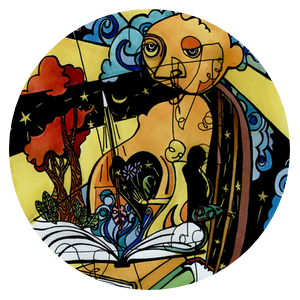
Kimberly Blaeser, writer, photographer, and scholar, is the author of three poetry collections—most recently Apprenticed to Justice; and the editor of Traces in Blood, Bone, and Stone: Contemporary Ojibwe Poetry. Blaeser served as Wisconsin Poet Laureate for 2015-16. A Professor at the University of Wisconsin—Milwaukee, where she teaches Creative Writing and Native American Literature, Blaeser is also a member of the low residency MFA faculty for the Institute of American Indian Arts. In addition, Blaeser serves as a member of the board of directors for both the Wisconsin Academy of Sciences, Arts, and Letters and the Aldo Leopold Foundation. An enrolled member of the Minnesota Chippewa Tribe who grew up on the White Earth Reservation, she is an editorial board member for the “American Indian Lives” series of the University of Nebraska Press and for the “Native American Series” of Michigan State University Press. Blaeser’s poetry, short fiction, and creative nonfiction have been widely anthologized, and selections of her poetry have been translated into several languages including Spanish, French, Norwegian, Indonesian, and Hungarian. Blaeser is currently at work on a collection, Ancient Light, which includes ekphrastic poetry and a form for which she coined the term “Picto-Poem.”

National Poetry Month

BMP Celebrates National Poetry Month 2017

The theme of teaching and learning poetry, and our emphasis on student poets, speaks directly to the action of poetry in our country and global community. Never has the education of our students been so threatened, and never has truth been more challenged than in the current political climate. The truth emerges through education and the resistance and questions of our youngest generation, and it is their lead we absolutely must follow if they are to live in a society that fosters their achievements, liberation, and justice. Truth emerges through poetry as well — poetry bears witness to what truths seem impossible to speak any other way. Its constraints limit the temptation to misconstrue, obscure, and bury.

Lullaby

Lullaby

Kate Asche

Find yourself alone in someone else’s house, nine thousand feet above your actual life, days hemmed mostly in by national forest and the wind of your own thoughts.

(He says he will die young. He says he is old. He says touch, turned take.)

Here, there is nothing to do but walk around the pastures, up mountains, along your own fence-lines. Feed the dogs in your care. Feed the feral cat, you name him Jasper, that keeps the rodents down.

(He says he is only a child. He says he was never a child. He says split. Ache.)

Coyotes sound in the night. Hear it as promise or warning; either way, hear it as a signal somehow for you. Awaken: the ridges lost in what you try to call fog, that’s what you know it as, but the name won’t stick.

(He says he is strong. He says he is naked. He says monster, innocent.)

You’re trying hard to understand love, how it can pour out of broken things. You try to understand broken, hear it as a lullaby—

Hush little baby don’t say a word


About Kate Asche

Kate Asche’s poetry is forthcoming in Natural Bridge and has appeared in The Missouri Review (as an Audio Prize finalist) and in Pilgrimage, Bellingham Review,and elsewhere. Her chapbook, Our Day in the Labyrinth, was published by Finishing Line Press in fall 2015. A graduate of the UC Davis creative writing program, she teaches workshops in Sacramento and is associate editor at Under the Gum Tree.

Website


National Poetry Month

BMP Celebrates National Poetry Month 2016

If “love calls us to the things of this world,” then poetry too can call us to think about challenging questions, difficult situations, and social justice, implicating and engaging the reader with the world we live in, in the hope that this engagement is a step toward wrestling with our better selves.

2016 Editors’ Choice Poems: Week 2

2016 Editors' Choice Poems: Week 2

We are delighted to present this week’s selections from the Brain Mill Press 2016 Poetry Month Contest. We received many outstanding entries, from which these pieces by Jessica Jacobs, Olajide Timilehin Abiodun, and Catherine Chen stood out. We hope you’ll enjoy them as much as we did.

There Ain’t Nothing Like Breck for Stop n’ Stare Hair

Jessica Jacobs

It’s 10 p.m. Do you know whereyour children are? Well, there I was

with the remote, my thumb a die punch,a jackhammer’s relentless up and down

through a world of possiblelives—America’s Most Wanted, Nick

at Night, To Catch a Predator—in searchof prey worth pausing for. I slowed,

though, not for shows but for theirinterruptions: Bare shoulders. Wet neck. Rope

of hair glistening beneath a glisteningstream. Prell. Breck. So many ways to

get your hair glossy. So much skinjust off-screen

I tried to keep myself from wantingto see. I rapped my wrist

with the remote; pinched the undersideof my thighs, behind

my knees—a child’s small-fingered self-flagellation. I knew

only enough to know I should not wantthis. So I called myself names, donned

shame as my hair shirt. Though Inever once turned it off. Or looked away.

About Jessica Jacobs

Jessica Jacobs is the author of Pelvis with Distance, winner of the 2015 New Mexico Book Award in Poetry, an Over the Rainbow selection by the American Library Association, and a current Lambda Literary Award finalist. An avid long-distance runner, Jessica has worked as a rock climbing instructor, bartender, and editor, and now serves as faculty for Writing Workshops in Greece and as the Hendrix-Murphy Writer-in-Residence at Hendrix College. She lives in Little Rock with her wife, the poet Nickole Brown. More of her work can be found at www.jessicalgjacobs.com.

National Poetry Month

Excuses

Olajide Timilehin Abiodun

Fountain pens are expensive

Only a kobo lays in my pocket

Script-let books are scarce

I couldn’t found none

Internet is a necessity

I have no gadgets

The four legs of my table are ill

The carpenter storms with bill

Art needs audience

No one will listen to me

Busy are days

Time is rob by minutes

It left me only a minute of pace

to pour my world out on paper

Paragraphs are sans coherence

Sentences are hard to come by

Lines are porous

lacking the wit of poets

Even words are stiff

Like a drained-up river

They spring forth no water

Ideas seize to flow like rivulets

The muse proves stubborn

she only keeps silent in sober

Out of the reach of her master

I’m no poet.

About Olajide Timilehin Abiodun

Olajide Timilehin Abiodun is no mean poet. He resides on the coast of West Africa in the giant nation called Nigeria. He owns and tutors at GiftedPens.com, a blog that focuses on stronger poetry writing and making a good living writing poems.

Website

National Poetry Month

Psychonausea

Catherine Chen

There is a red brick wall at the very end of the street. You relieve it of form and enter the hole that remains. Infinity is here. Only in persistence can your body adjust to the conditions of precarity. Are you willing to tread past the point of identity? Take this sign. Die, then struggle. I ask you, “Where will you go from here?” What the hole of history obscures is the degree to which we have trained ourselves to live under the hypnosis of mythology. The hole has the circumference of a quarter but that is our approximation and the hole itself has no conception of currency. A quarter’s circumference is a dollop of honey is a rose is the imprint my index finger leaves on packaged meat at the supermarket. Say the things you could not tell your mother the night you realized her desires were born of her failure. Say her name. Say “Black Lives Matter.” That life continues today is no small achievement. Even as devastation lies with them in bed, the lovers’ bodies know how to derive pleasure from the fractal formations of the chandelier’s crystal blue lights: sunrise. I use dangerous language to distinguish myself. Keep treading. Use tools inaccessible to technology, like topographical memory or an archive of self-erasure or illegibility. Drones have been useful in mitigating the abscess that outlines the hole of history. Expansion, contraction. With every gasp and kiss, the lovers inhale the toxic fumes of another air strike. You too consume these chemicals. You too do not stop taking up space.

About Catherine Chen

Catherine Chen is a writer invested in histories of race, trauma, and labor. Her writing has appeared in Mask Magazine, Found Poetry Review, and The Coalition,among others. Presently she is at work on a cyborg text of failure and redistribution. She is a Pisces living in Boston.


National Poetry Month

BMP Celebrates National Poetry Month 2016

If “love calls us to the things of this world,” then poetry too can call us to think about challenging questions, difficult situations, and social justice, implicating and engaging the reader with the world we live in, in the hope that this engagement is a step toward wrestling with our better selves.

Monasteries

Count them luckyWho have them within

Who feel no needTo follow prophets

To distant islandsOr remote beaches

Where salvation is assuredAnd paradise promised.

Count them luckyWho know the opening

Of gates within, whoSeated as they are

Remain beside altarsWhere blue and greenSing arias.

In them, Night,With a thousand yellow lights,Braids its hair,

And rinses its bodyWith dark watersFrom village wells.

Abayomi Animashaun is a Nigerian émigré who came to the United States in the mid-1990s. He holds an MFA from the International Writing Program at the University of Nevada, Las Vegas, and a PhD from the University of Kansas. His poems have appeared in several print and online journals, including Diode, The Cortland Review, Versedaily, African American Review, Passages North, Ruminate Magazine, and The Adirondack Review. His poems have also been included in Begin Again: 150 Kansas Poems and We Have Crossed Many Rivers: New Poetry from Africa. A recipient of the Hudson Prize and a grant from the International Center for Writing and Translation, Abayo is the author of two poetry collections, Sailing for Ithaca and The Giving of Pears, and editor of two anthologies, Walking the Tightrope: Poetry and Prose by LGBTQ Writers from Africa and Others Will Enter the Gates: Immigrant Poets on Poetry, Influences, and Writing in America. He teaches writing and literature at the University of Wisconsin, Oshkosh, and lives in Green Bay, Wisconsin, with his wife and two children.

Website

BMP Celebrates National Poetry Month

If “love calls us to the things of this world,” then poetry too can call us to think about challenging questions, difficult situations, and social justice, implicating and engaging the reader with the world we live in, in the hope that this engagement is a step toward wrestling with our better selves.

2017 Editors’ Choice Poems: Week 2

2017 Editors' Choice Poems: Week 2

Topaz Winters

We are delighted to present this week’s selections from the Brain Mill Press 2017 Poetry Month Contest. We received many outstanding entries, from which this piece by Topaz Winters stood out. We hope you’ll enjoy it as much as we did.

When My First Boyfriend Learned I Was on Anti-Psychotics, He Laughed and Told Me He Always Suspected I Was Crazier Than I Let On

Topaz Winters

I wanted to murder him,
but his body kept getting
in the way. We learn to
live with that sawtoothed
loudness, caught halfway
between the wonder &
the wanting. & how I
wanted. I wanted his eyes
blue & razed shut. Wanted
apology like unbent knee.
Pulse cold, childish. How
much can a thing whistle
before all that’s left is air?
Such a strange syntax we
live inside. Waltz through
aurora. Gulp down bullets
instead of the pills that
could make this all better.
God, I am tired of writing
poems about sickness.
When he spoke, I heard
my father: you know I only
ever wanted the best for you.
As if I were afraid of
leaning into wounded.
As if I couldn’t gut him
& run, easy as birthplace.
Easy as the voices finally
shocked into silence. A
kind of hook here, say it:
careful, darling, you’re
showing your hand. So
many times my body
has been more ache
than human. In which
direction must I search to
find a name for the curdle
in my throat? Slipping
on melting beasts, forcing
open memory’s jaws. &
how I wanted. I wanted
to snap that lovely neck
the way a gun cocks into
song. I wanted not to hurt
anymore, my kneecaps
halfway shattered, the
dark consuming itself
over & over again. Just
once, I wanted reciprocity.
I wanted not to be the
crazy one. Just once, I
wanted the sky to wake
up on time & remind us
of the little mouths with
no names except erasure.
I could have lived on that:
every angle a limb could
break. Every way his body
yawned into my grasp,
treading the bloodstream,
light going limp, his eyes
that swum & stunk of
remembering.

About Topaz Winters

Topaz Winters is a queer, neurodivergent woman of colour attending Singapore American School. Her chapbooks Heaven or This (2016) & Monsoon Dream (Platypus Press, 2016) have been downloaded over 15,000 times, & at 17, she is the youngest Singaporean ever to be nominated for the Pushcart Prize. She is deeply interested in the anatomy of healing. More at topazwinters.com.


National Poetry Month

BMP Celebrates National Poetry Month 2017

The theme of teaching and learning poetry, and our emphasis on student poets, speaks directly to the action of poetry in our country and global community. Never has the education of our students been so threatened, and never has truth been more challenged than in the current political climate. The truth emerges through education and the resistance and questions of our youngest generation, and it is their lead we absolutely must follow if they are to live in a society that fosters their achievements, liberation, and justice. Truth emerges through poetry as well — poetry bears witness to what truths seem impossible to speak any other way. Its constraints limit the temptation to misconstrue, obscure, and bury.

Constructing ‘a Plausible Protagonist’

Constructing 'a Plausible Protagonist'

C. Kubasta

Constructing ‘a Plausible Protagonist’

Riding home double, atop the handlebars, a dangling leg
catches spokes. Like the ticker-tape sounds
of cards flapping, like the sudden violence

done to childhood when you trust too much.

After, I remember
how we’d beg to skip church if
we went to Sunday school, if
we helped with the baby, if
we’d mow that afternoon, and the permission once given

felt like the hill rising up out of the ditch after
crossing the highway and before we walked
the half-mile home together in quiet, between
the treeline and the houses.

But, we were riding a bike & here we are walking.

And the point of this is an entirely conventional story, subtitled
“Virtue Rewarded” or “Vice Punished,” as all stories
could be subtitled. Once when retelling

the story of the bike accident, how the bike became airborne, spiraling
over me, and the soft landing of pine needles and sugar sand, I remembered
the boy jokes you’d tell me; where the punchline
always referenced my self and my kin.

Depression may be just a poorly told tale. And when I went down

into the needles & sand, you arced
over me, the back half of the bike propelled you so far forward –
and we were only lucky that no one was worse hurt, no splintered bone, no

speeding back to church to rouse the parents from the sermon, the slumber, the complacence,

to sound the alarm. When I tell the story now, all I remember is that I loved you,
and then later, I didn’t. In the sandbox
we’d spend summer hours building canals and tunnels and bridges
and running the garden hose, creating worlds beyond any of today’s simulations;

the time we found a bag of cement in the barn & decided to make it all permanent

and after transplanting minnows and crawfish from the river, we came back

the next morning and they were all dead. I sort my poems into piles, and this pile is called:
Poems Only To Be Read To Strangers.

Reprinted from All Beautiful & Useless (BlazeVOX, 2015).

National Poetry Month

BMP Celebrates National Poetry Month 2016

If “love calls us to the things of this world,” then poetry too can call us to think about challenging questions, difficult situations, and social justice, implicating and engaging the reader with the world we live in, in the hope that this engagement is a step toward wrestling with our better selves.