As a teenager and budding poet, the very first verse novel I can recall reading is Bronx Masquerade by Nikki Grimes.
Told from the point of view of many diverse high school students in a slam poetry style, it wasn’t hard for me to enjoy. However, the brief glimpses into the characters’ personal lives weren’t enough for me to completely love the book. After finishing Elizabeth Acevedo’s The Poet X, I feel like it filled the gaps that Bronx Masquerade had.
The Poet X tells the story of Xiomara, an Afro-Latina teen who feels suffocated by her mother’s strict religious parenting and frustrated by the way the world perceives her as a brown girl with burgeoning sexuality. For a while, she writes down her truest thoughts in secret, convinced that no one will want to hear them. After being severely punished for daring to explore her sexuality and attraction to her male classmate Aman, she decides to join her school’s slam poetry club and finds the courage to express herself.
For a while, she writes down her truest thoughts in secret, convinced that no one will want to hear them.
One of the first things about the book I noticed was Xiomara’s poetic voice. Even prior to joining the poetry club, it is very distinctive, powerful, and vivid. In the early pages of the book, there is a page called “Names” in which Xiomara explains the origins of her name and the impact of it, evoking the image of a defiant warrior. Her personality is summed up in the following lines: “My parents probably wanted a girl who would sit / in the pews / wearing pretty floral and a soft smile. / They got combat boots and a mouth silent / until it’s sharp as an island machete.”
Although Xiomara initially keeps her thoughts secret, her struggle and desire to speak and act on them is always apparent. This is especially telling in the homework assignments that she turns in for her English class. While the first drafts of those assignments are honest, the final drafts are toned down to convey what Xiomara thinks her teacher, Ms. Galiano, wants to hear. Later, the fact that Ms. Galiano truly cares for Xiomara’s deepest thoughts becomes a key factor in Xiomara’s decision to join the poetry club.
Although Xiomara initially keeps her thoughts secret, her struggle and desire to speak and act on them is always apparent.
Ms. Galiano’s support of Xiomara is one of the most touching aspects of the book. She is patient enough to let Xiomara join the poetry club when she is ready and a caring enough teacher to gently nudge Xiomara toward slam poetry by introducing it in one of her classes. Later, she even becomes one of Xiomara’s shoulders to cry on after a tumultuous confrontation with her mother. Ms. Galiano reminds me of a Black high school literature teacher I had who encouraged my writing and helped me during a difficult time.
Others in Xiomara’s life include Aman, a young man with good intentions that almost always come through. There is Xavier, Xiomara’s genius twin, who tries his best to support Xiomara despite experiencing a very different sexual awakening from hers. But of the entire cast of characters, the character who most resonated with me after Ms. Galiano and Xiomara was Xiomara’s mother.
Xiomara’s mother is both problematic and sympathetic. She wants the best for her daughter but lacks the ability to listen to her daughter without using religion to criticize her. Her religion is a source of strength, because it helped her through the difficult birth of the twins, so she tries to impose it on them to help them be strong too.
Feeling stifled by her mother, her religion, and her peers, Xiomara uses the written word to say what she can’t say aloud.
Feeling stifled by her mother, her religion, and her peers, Xiomara uses the written word to say what she can’t say aloud. Most notably, she uses her words to express her sexual awakening and how women are held to different standards than men in religion and real life. The most surprising poem in the book involves her masturbating, something I rarely read about in YA books involving women of color. The ecstasy and stigma surrounding masturbation is examined, and it is refreshingly realistic to see in a book for teens.
Xiomara discovers slam poetry and starts to become braver and more honest about her feelings.
Ultimately, I believe Xiomara and her story resonated with me so much because she reflects a part of the teen poet I was and the adult poet I am becoming now. My personal favorite pages are when Xiomara discovers slam poetry and starts to become braver and more honest about her feelings. I understand the joy and struggle Xiomara experiences as a poet because I’ve experienced them many times myself. The Poet X is a testament to finding and expressing your personal voice.
The Afro YA promotes black young adult authors and YA books with black characters, especially those that influence Pennington, an aspiring YA author who believes that black YA readers need diverse books, creators, and stories so that they don’t have to search for their experiences like she did.
Latonya Pennington is a poet and freelance pop culture critic. Their freelance work can also be found at PRIDE, Wear Your Voice magazine, and Black Sci-fi. As a poet, they have been published in Fiyah Lit magazine, Scribes of Nyota, and Argot magazine among others.
"The Exene Chronicles" Is a Beautiful, Brutal Glimpse into 80s Punk Culture
When I initially read the synopsis of Camille A. Collins’s book, The Exene Chronicles, part of me expected a novel written as a series of letters and poems.
Part of me expected an angsty, maybe slightly melodramatic book about a young Black female punk rock fan writing letters and poems to the lead singer of her favorite band. Instead, I got something more genuine and relatable.
At the center of The Exene Chronicles is Lia, a fourteen year old Black punk fan in the 1980’s living in Coronado, a San Diego suburb. As one of the few Black kids in the area and at school, she befriends Ryan, a white girl her age acting rebellious and grown up to cope with unwanted sexual advances for her pubescent body. When Ryan disappears, Lia uses the punk rock singer Exene Cervenka as a guide to cope with what happened, what led to Ryan’s disappearance, and Lia’s falling out with Ryan.
One notable aspect of the book is the depiction of the joy and tumult that Lia deals with as a Black punk fan. On the one hand, seeing Lia become enraptured with Exene and punk rock through listening to CDs and viewing the 1981 punk rock documentary The Decline of Western Civilization is enjoyable and relatable. During these moments, Lia reminded me of my teenaged self in the early 00’s discovering alternative rock bands Linkin Park and Evanescence through CDs and YouTube.
Although we lived in different decades and listened to different rock subgenres, I really related to Lia’s feeling of alienation and frustration and how punk rock became the catalyst for her to express herself and feel better about her life. Some particularly memorable thoughts Lia (and Ryan) have about Exene is expressed in the following: “And as much as they admired Exene, watching it all unfold bolstered their perception of themselves also, and made them, for a moment, feel fearless — of every place they’d been and wherever it was they were going.”
On the other hand, Lia also experiences racism, not just in the punk rock scene but also in her daily life. Some of the racism is overt, with Lia being called the “n-word” by white people during certain interactions. As a Black reader, I did find these scenes stinging me a bit, especially during one particularly harrowing scene involving Lia encountering Nazi skinhead youth. Other times, the racism is more subtle, Ryan making race “jokes” and Ryan’s mother thinking “Lia should’ve been the one abducted because Black people are used to suffering.”
Skillfully intertwined with racism is a critique of America’s glamorous white middle class standards, toxic masculinity, and sexual assault and harassment. These issues are depicted not only through Ryan and Lia, but also through secondary characters such as Ryan’s younger brother Jeff and the predatory young half-Mexican man, Neil. The book’s point of view alternates between the main characters and the secondary characters, providing a multi-faceted look at some of the ugliest aspects of the American ideal.
Despite the seriousness of the book, Collins manages to add some beauty in the story with lyrical turns of phrase. This writing style was especially notable when reading from Lia’s point of view, displaying her dreamy side. Notable examples of this include, “Many of the songs began in a flurry, the gates open on a racetrack and the horses fly! Played fast and ending abruptly with the slam of a door that gives finality to an argument, the notes standing on tiptoe.”
All in all, this book is a beautiful, brutal glimpse of 80’s punk culture. Lia is a young, alienated Black female punk fan who must navigate a sea of whiteness and racism to define herself on her own terms. Through the highs and lows of punk rock music, Lia’s story of eventual liberation from confining standards inspires all.
The Afro YA promotes black young adult authors and YA books with black characters, especially those that influence Pennington, an aspiring YA author who believes that black YA readers need diverse books, creators, and stories so that they don’t have to search for their experiences like she did.
Latonya Pennington is a poet and freelance pop culture critic. Their freelance work can also be found at PRIDE, Wear Your Voice magazine, and Black Sci-fi. As a poet, they have been published in Fiyah Lit magazine, Scribes of Nyota, and Argot magazine among others.
“Miles Morales: Spider-Man” Is a Down to Earth Read
Spider-Man is both a title and a character that has morphed and evolved over time.
Although it began as the story of Peter Parker, Spider-Man has since become a mantle taken up by people such as Korean American Cindy Moon and Afro-Latino Miles Morales. At the time of this writing, Miles Morales’ story has been gaining prominence through not only comic books but also the animated film Into The Spider-Verse. Adding to that fame is Jason Reynolds’ 2017 young adult/children’s novel Miles Morales: Spider-Man.
Set in the lively city of Brooklyn, New York, this book examines Miles Morales experiencing a sort of identity crisis. His superpowers are on the fritz and causing him so much trouble at home and school that he is considering hanging up the suit for good. However, Miles soon finds a problem that is affecting both his superhero and civilian lives. Now, he must learn to bridge his past and present as a superhero and teenager in order to defeat an enemy that is all too close to home.
He must learn to bridge his past and present as a superhero and teenager in order to defeat an enemy that is all too close to home.
One of the most palpable aspects of this book is how Miles interacts with the city and neighborhood around him. A really fun scene involves Miles and his best friend Ganke on the subway with showtime boys, young break dancers that appear and dance spontaneously for cash tips. Another lively scene involves Miles and his father Jefferson witnessing some playful banter between customers and the barber at a barbershop. These scenes brings Miles’ neighborhood to life in a way that lets the reader see and feel Brooklyn even if they have never been there.
Besides Miles’ interactions with his neighborhood, his interactions with his friends and family are delightful. In fact, the most entertaining interactions involve Ganke, Miles’ crush Alicia, and Miles’ parents. Miles’ parents have a strict yet loving dynamic with their son, while Ganke is both comedic relief and buoyant support for Miles. Finally, Miles’ interactions with Alicia embody both the clumsiness of teenage crushes as well as a complicated, socially aware drive.
These scenes brings Miles’ neighborhood to life in a way that lets the reader see and feel Brooklyn even if they have never been there.
Enhancing Miles’ interactions with his family and friends are introspective sijo poems that Miles, Alicia, and Ganke learn to write for class. A Korean form of poetry involving three lines between fourteen and sixteen syllables, the sijos written by the characters allow them to express feelings they have a hard time conveying aloud. A sijo poem that shows a more vulnerable side to Miles goes, “I hate my father’s face when he tells me my block is a burden / like my job is to carry a family I didn’t create / like my life is for fixing something I didn’t break.”
Balancing out Miles’ friends and family is the chilling super-villain that Miles faces. Without giving too much away, the villain is a cleverly crafted character that is more than just some kooky super-powered bad guy. The villain is very much rooted in the real world, something that Miles can’t just punch away. Watching Miles slowly figure out the villain’s motives and connect the dots about their plot is gripping, with the final reveal of the villain’s identity shocking the reader and asking them to critique their own lives.
The villain is very much rooted in the real world, something that Miles can’t just punch away.
A final aspect of the book worth commenting on is how self-contained this story is. Even if you have never read a Miles Morales Spider-Man comic book or seen Into the Spider-Verse, you can pick up this book and read it without ever feeling lost or confused. Miles’ superpowers and superhero backstory is casually shown in a way that feels natural rather than an information dump. Some say that comic books are a stepping stone to novels, but this novel is a good gateway to comic books.
Overall, Miles Morales: Spider-Man is a down to earth, thoughtful book that combines the best of superheroics and teenage antics. Miles Morales is both a superhero to himself and a superhero to his loved ones. As he faces a true-to-life villain and learns to balance being a teenager with being a superhero, readers just might discover their own inner super powers too.
The Afro YA promotes black young adult authors and YA books with black characters, especially those that influence Pennington, an aspiring YA author who believes that black YA readers need diverse books, creators, and stories so that they don’t have to search for their experiences like she did.
Latonya Pennington is a poet and freelance pop culture critic. Their freelance work can also be found at PRIDE, Wear Your Voice magazine, and Black Sci-fi. As a poet, they have been published in Fiyah Lit magazine, Scribes of Nyota, and Argot magazine among others.
In my Survey of British Literature class in college, I remember learning several new words reading Milton.
He’s credited with introducing several words to the English language, but I remember one he didn’t invent: amanuensis, “a literary or artistic assistant, in particular one who takes dictation or copies manuscripts.” The image is familiar – blind Milton, leaning back in his chair, surrounded by his daughters. There’s a painting in the New York Public Library that shows Anne, Mary, and Deborah, each engaged with their father’s work. Milton wrote Paradise Lost, and later works, with the help of a number of amanuenses. His daughters, a nephew, and some people paid to do the work. But I was most interested in his daughters then – and now.
The stories that make up our histories are ever shifting. One story is that the muse would visit Milton during the night, and he’d repeat lines over and over to himself, getting them right, committing them to memory, until someone arrived to write them down. He described his own process in several places. The youngest daughter, Deborah, worked with some biographers later in her life, so some of her impressions may have survived. Other biographers wrote of how the daughters hated their father: his demands, the tasks he set before them, his hypocrisy about the very notion of liberty, his re-marriages, the household where he kept them prisoner. Milton was a man of his time perhaps. Perhaps somewhere between the voice in blind Milton’s head, and the hand that wrote down the lines, some whiff of Anne, Mary, or Deborah survives.
Emily Bowles’s chapbook His Journal, My Stellaexplores a similar situation in some ways. The relationship between Esther Johnson and Jonathan Swift is introduced in a prefatory note to Section I. “Miss” establishes some basic parameters for their relationship. It is a fatherly, mentor relationship. She is eight. He is an “authority.” Later, perhaps, their relationship changes. The poems in Bowles’s collection traverse the grid of this shifting relationship, between powerful established man, and “pliant, pleasurable” Stella – who wants to be seen as “more than a child, better than a woman.” The deftness of these poems is the way they are sketched only, paired with modern-day experiences and relationships, stretched across the negative space of the page, leaving the reader more gaps than knowing. The repetition of “Miss” to signify young unmarried woman/girl, and “miss” to signify something lost, and the line-ending that splits “miss / take” recur over and over to fragment idea and thought and concept. Who can know what happened in Milton’s household? Who can know what was in Stella’s heart? Or Swift’s? The opening note makes clear: “This is and is not something we now refer to as grooming.”
Another classroom wells up at me in the poem “Misogyny in Rabelais.” The speaker has “missed / The Point.” The speaker has gone off topic, writing about something she shouldn’t have, questioning something outside of the poem. This is not an approved topic. “It is not valid,” the “[male] professor” points out. The final stanza of the poem is arranged in opposition to itself, a form that happens again and again here: “you” aligns itself with one margin, but the story occurs on the other margin, in the gutter of the page.
By the end of this poem, the speaker has become fragmented, both second-person (a person to see through) and an “I” still inhabited. She is two-personed, unable to withstand the weight of male authority, but uniquely situated to watch her failure and write it down.
While the story of Stella and Swift forms a framework for Bowles’s collection, the poems aren’t confined by that relationship. Many of the poems don’t reference that relationship explicitly but could be about it. Or not. They navigate the see-saw between specific and universal, but all traverse scaffolds of power, and specifically the power between men and women, that differential in romantic and sexual relationships, in marriage. Each poem calls forth “an act of sexual / textual / violence.” I said the poem “Misogyny in Rabelais” reminded me of a classroom – it does. A graduate school classroom where I asked if we could talk about a poet’s ethics, and the professor said that “wasn’t an interesting question.” An undergraduate classroom where a visiting poet told a round table of eager women poets that “no one wants to read about these things”; he told us, we earnest women-college students at our glossed wood table to “think about your audience.” We had been rapt.
In the article “Experts in the Field” published in Tin House, Bonnie Nadzam writes about abusive men in the writing world – and she touches on exploitive practices and the long-term effects they can have on students’ writing, careers, and voices. Power and authority can have long-reaching effects; power and authority can silence. As mentors, those who seek to harm can control their victims into their future. They are gate-keepers – they control access to jobs, residencies, contracts, networks. Most importantly, they can control access to our very selves, and the way we see ourselves. Through their reputations and classrooms and programs, they can “[teach] the rest of us how we should tell our stories.” In several poems, Bowles gives texts, criticism, judgement literal weight: “I wore the allusions, / those critical garments, / until they didn’t fit anymore.”
Bowles takes on structures beyond the classroom and criticism, exploring marriage and the home. In “Cedar Waxwing in Our House” the speaker finds kinship with a cat, noting the way we choose kitty litter and grain-free food to further divorce the creature from the wild – leaving us all “neutered.”
Domesticity
can feel like a form of
terrorism, and sometimes
a feral urge creeps in
on mouse feet or cedar
wax wings.
There’s that fragmentation again – separating words we expect to see together, perhaps the way the bird’s wings were separated by jaws and claws. In the short poem “I Went Missing,” Bowles makes of words fragments, so they can be read multiple ways. I like to imagine hearing this, as well as reading it, inserting a long pause at the line breaks, giving the page its due.
It was a miss
take
to
take
his name. I went
missing when I
miss
took
my
self
for his Mistress.
Perhaps the speaker of this poem is Stella, perhaps it’s the poet, perhaps it’s any married woman who regrets marrying. Or not regrets entirely, but just wonders about things lost in the joining. Things like names and the identities they signify. I appreciate the slight form, the symmetry of the lines.
The final section of Bowles’ book, Section IV, is titled “Missed.” The note describes how Stella fell ill, died. Swift lived on and mentions of Stella continued. Perhaps she lived on in his fiction, fictionalized. Perhaps she animated Gulliver’s Travels. A poem from this section complains “I am an envelope, sent back and forth / between men . . .” Perhaps whoever survives ensures their version of the story survives, but it isn’t that simple, not between women and men. Not when the context of history has its own rules, in its own places, and one party holds more cards than the others. Not when the negotiations take place behind closed doors in dimly-lit rooms. Witness Deborah, Milton’s surviving daughter, whose voice still wasn’t strong enough to trouble her father’s legacy much.
Portaging celebrates new writing from the Midwest with a particular focus on experimental and hybrid work from small presses.
C. Kubasta writes poetry, fiction, and hybrid forms. She lives, writes, & teaches in Wisconsin. Her most recent books include the poetry collection Of Covenants (Whitepoint Press) and the short story collection Abjectification (Apprentice House). Find her at ckubasta.com and follow her @CKubastathePoet.
Paula Cisewski’s poetry book, The Threatened Everything (Burnside Review Books), is on the smallish size, trim-size-wise.
It fits easily in my small hands and seems to be littered with hearts—although upon closer inspection those hearts are less than sweet. None of that prepares me for the first poem, “The Apocalypse Award Goes To.” Variously, each section of the poem offers, then withdraws the award to:
First, “my newly betrothed and me . . . It was already the apocalypse, and we already felt appropriately minute.”
Next, the award is given to “most grown people,” who are described as “kaleidoscopically unsafe.” Then, the “animal kingdom,” then “doctors who specialize in treating Prolonged Apocalypse Stress Disorder,” so that finally the poem includes everybody. But these are just the bones of the poem; it’s shot through (literally, in one case) with interruptions. This is a poem for this moment, I think—which, given the time invested in writing a poem, revising, getting it into some editor’s hand, pre-production, and publication of a book, shows some strange sort of prescience on the part of the poet. That I should find it in my hands right when I needed it. Because the poet stopped me to say, “For statistically what percent of the parents pushing strollers on this sunny boardwalk have guns tucked away in holsters? For bullets rip through every modern poem, even the ones where shot or gun is not stated explicitly.”
As I was digesting that, thinking of a friend who I recently learned is nearly always packing, who I’ve begun to hug more carefully, the poem clobbered me with, “Another patient in this waiting room switched on the news and I immediately began leaking. Oh, well. It won’t be the first time a poet has leaked through her own poem.” The poem talks about the practice alarm for the apocalypse. It asks, parenthetically, “What if we need the alarm while the practice alarm’s going off?” and later, “(Those sirens are just on TV, aren’t they?)” These are the questions of worriers and I’ve embraced my suppressed worrier-self of late. This poem is the frontispiece for the entire collection—mixing technology and pop-culture references, sly jokes, relatable fears, and the constant sense of unease and disbelief that has come to characterize the current political and cultural moment for many of us. As the poem says of the apocalypse, “It’s a slow burn. Some of us have mothered whole people through it, others have died of old age in it.”
Cisewski’s book thereafter is divided into three sections: Field Guide to Austerity and Surroundings; The Wolf/Cave Problem; The Laughing Club. In the second section, twins are everywhere. There is a “good one” and a “bad one” and they are the same person, finally. The speaker of the poem “The Good One” is like that soft-sewn children’s toy that has the face of Little Red, and the Wolf, and if you flip it over, also the Grandmother, all in one. After one kills the other waiting for the “old woman” to arrive, she realizes fingerprints differ even on identical twins, so she undertakes to sever hands and sew them on, becoming all one person in one body: “whether or not I had ever been / the good one no longer mattered.” Other imagery from that tale recurs in other poems in this section—the kitchen shears, the animal inside the girl-speaker (like an echo of Carter’s retelling of the tale). All this reminds me of Carol Clover writing of slasher movies, “What makes horror ‘crucial enough to pass along’ is, for critics since Freud, what has made ghost stories and fairy tales crucial enough to pass along: its engagement of repressed fears and desires and its reenactment of the residual conflict surrounding those feelings.”
The final section of The Threatened Everything ends with laughter, a cathartic kind of laughter. It is not joyous, but the kind of laughter that occurs after too much stress, too much pain, when the body and soul is wrung out and doesn’t know what else to do. In the poem “Suddenly Laughter” it’s described as an “intersection / at terror and comfort.” Laughter is a “familiar wrecking ball” that “pummels / your heart’s hollow / business center.” The poem ends with the word “relief,” but we don’t feel any relief. Rather, we’ve decided to laugh, because we don’t know what else to do anymore.
Similarly, in the poem “Humans, Dogs, Apes and Rats” we have a description of rats and the insistence that they laugh. That they have laughed “since before / humans even resembled // ourselves.” Before our culture, or technology, before we gathered to exchange ideas, “or irony, way / before irony.” And then, for those of us uncomfortable with rats, there is the description: “a wriggling pink pile / of bald rodent babies, // the size of several / opposable thumbs.” This is laughter that rings true and unsettles, as many poems in this section ring true and unsettle. Like the poem that includes Obama’s joke about Orange not being the new Black, but of course that’s exactly what happened, and it’s not so funny after all.
But I can’t end on that note, although this was a poetry collection that seemed to meet me where I was, deliver gut-punches I wanted to receive, right in my pale fish-belly. I have to tell you about my favorite poem. In the first section is the amazing “Revolution Prairie” which takes up the imagery of weeds and root systems and limbs and desire.
Consider the right of way of weeds,the root system’s defiant grip,
that they’re only called weeds becausewe didn’t buy them with money
or decide where to plant them.A flowering without
a boss, like our lovepopping up everywhere
(I wish I could read the whole poem aloud to you . . .) Suffice it to say, the weeds burst forth; the poem concedes a mower could cut it all down—the weeds, us, the words that are weeds that burst out of us like sentences of things that need to be said, popping up everywhere. But the poem ends with a call, a promise, and a declarative: “Burst forth with me in this narrow vista / of the threatened everything.”
Portaging celebrates new writing from the Midwest with a particular focus on experimental and hybrid work from small presses.
C. Kubasta writes poetry, fiction, and hybrid forms. She lives, writes, & teaches in Wisconsin. Her most recent books include the poetry collection Of Covenants (Whitepoint Press) and the short story collection Abjectification (Apprentice House). Find her at ckubasta.com and follow her @CKubastathePoet.
Shortly after the Trump Administration announced it was ending Temporary Protected Status for Salvadorans, the New York Times ran an article with reading suggestions for understanding the country those immigrants are expected to return to in 2019.
Of the three books suggested, only one is by a Salvadoran author. Readers are led to assume that Salvadoran storytellers simply don’t exist—a dangerous lie I myself believed for the majority of my life.
Growing up, I devoured many, many books about white people. Stories about white people turned me onto reading. Though prep school and the glamourous New York City were completely foreign to me, J.D. Salinger managed to make Holden Caulfield feel like a familiar friend, a reflection in a funhouse mirror. Ray Bradbury’s short stories introduced me to the place where nostalgia meets science fiction, an intersection I now write from often. Stories about, and by, white people gave me a voice by which to pen my own stories.
But the stories I’d begun to formulate in the margins of a high school notebook full of biology notes were hollow. The dialogue and monologues that I gifted my characters with were all mine, imbued with my teenage confusion and angst. But the characters were not like me. They were not Latinx, they were not the children of immigrants, and they knew nothing of growing up Salvadoran in Los Angeles. My first full-length draft ended up being an eighty-page young adult novel where two of the main characters were white teenagers from the suburbs of Colorado.
At another juncture in my development as a reader, with a college acceptance that relocated me across the country, the handful of non-white professors at my predominantly white institution gifted me stories that were (finally!) not about white people.
The dialogue and monologues that I gifted my characters with were all mine, imbued with my teenage confusion and angst. But the characters were not like me.
In a contemporary African American literature course, Claudia Rankine, Toni Morrison, George C. Wolfe, and Paul Beatty stunned and haunted me. Lisa Ko, Viet Thanh Nguyen, and Amy Tan wrote stories about immigrants that struck a chord deep inside.
Perhaps most life-altering were the Latinx authors I hadn’t realized were so desperately missing from my own personal canon. I flipped through Drown by Junot Díaz, as if to catch up for every day I hadn’t spent reading his work. Gloria Anzaldúa’s Borderlands/La Frontera gave me the words to explain the feelings I knew too well, of being American but hyphenated. Achy Obejas, Luis Valdez, Julia Alvarez, Hector Tobar, and other Latinx authors unhinged my timid tongue. They offered well-crafted stories about Latinx families and enemies and lovers. Their work gave me permission to write stories as I lived them, in English and Spanglish and slang.
But El Salvador, the country of my parents’ birth, wasn’t in those stories. The conjugation of voseo, refugees labeled economic immigrants, a U.S.-funded civil war and its aftermath: it was all missing from the literature I was reading. I convinced myself that those stories simply didn’t exist and anything I wrote about El Salvador and Salvadorans was a whisper into a cultural abyss.
I convinced myself that those stories simply didn’t exist and anything I wrote about El Salvador and Salvadorans was a whisper into a cultural abyss.
It wasn’t until months later that I’d come to realize that these stories existed, but that they’d been hidden away from me. According to Arturo Arias, “the Central American population remains nearly invisible within the imaginary confines of what constitutes the multicultural landscape of the United States.” Sociologist Leisy Abrego has argued that the U.S. government’s failure to acknowledge individuals fleeing the Salvadoran Civil War as refugees created “the silence that is the large void in generations of children of Salvadoran immigrants growing up in the US being denied access to our own histories.”
The stories I so desperately needed were out there.
But because of the value placed on Salvadoran lives and xenophobic assumptions of what El Salvador offers the world culturally, they were not on my radar. The journey I’m on now is one that involves recovering Salvadoran stories, mining them out with the help of friends and colleagues who offer a title here, a poem there.
It wasn’t until my sophomore spring of college, two decades into my life, that I finally discovered literature that represented El Salvador as fully as I’d come to know it on every international trip back to San Salvador. A professor asked me if I’d ever read Roque Dalton. I hadn’t, and I told him so.
Looking back, I feel an irrational sense of shame in the fact that, as an intense lover of books, I hadn’t heard about the most famous Salvadoran writer. But the stories had been hidden from me, and it wasn’t until I picked up Dalton’s poetry that I began to see the artistic landscape that’s existed in El Salvador for decades.
Though Roque Dalton’s extensive body of work comes from the years leading up to his assassination in 1975, he understood El Salvador and its diaspora the way I’ve come to, decades after his death. In “Poema de Amor” he refers to Salvadorans as,
los guanacos hijos de la gran puta,
los que apenitas pudieron regresar,
los que tuvieron un poco más de suerte,
los eternos indocumentados,
los hacelotodo, los vendelotodo, los comelotodo
Salvadorans, particularly those “eternally undocumented,” are those that do it all: as cooks, housekeepers, landscapers, farmers, and all the jobs in between. They sell it all as street vendors in Los Angeles where they’re criminalized for their attempts to make a living. Roque Dalton’s poetry has reflected what I know about the people who’ve left El Salvador for their new homes up north. Versions of my friends and families live in the poems I spent far too long assuming didn’t exist.
Versions of my friends and families live in the poems I spent far too long assuming didn’t exist.
But Dalton was a poet, a damn good one, not an all-knowing oracle. A twelve-year-long civil war left 75,000 Salvadorans dead, 50,000 missing, and hundreds of thousands more displaced all over the world. A scissure of that degree inevitably changed the literature produced about El Salvador, especially when a three-million-person diaspora begins to pick up their pens to write stories Dalton could have never imagined.
In a stroke of luck, I was at Harvard at the same time as a Salvadoran graduate student and poet who led me to a generation of Salvadoran writers who were like me: straddling that space between El Salvador and the United States. One of her first recommendations was a Javier Zamora, whose debut collection was forthcoming from Copper Canyon Press a few months from the day of our conversation.
When it was released, Javier Zamora’s Unaccompanied felt like the book I’d been searching for from the moment I’d realized that writing about El Salvador was not a hopeless endeavor. My complicated relationship with another country that is mine, though more in my nostalgia than anything else, has never been an easy thing to articulate. Yet Zamora writes tactfully, “Tonight, how I wish / you made it easier to love you, Salvador. Make it easier / to never have to risk our lives.” The poems were written in the distinctly Salvadoran Spanglish I’ve learned to speak but had yet to see in print. Reading a line like “to say sobreviviste bicho, sobreviviste carnal. Yes, we over-lived” felt like knowing a secret language, coded just for me.
When it was released, Javier Zamora’s Unaccompanied felt like the book I’d been searching for from the moment I’d realized that writing about El Salvador was not a hopeless endeavor.
Roque Dalton died in 1975 and Javier Zamora’s collection was published last year. Their writing spans more than four decades. But initially, those were the only two Salvadoran storytellers I had to cling to. Only in the last few months have I begun building up my own personal canon of Salvadoran writers telling their stories, and indirectly mine, those of my parents, tíos, and tías.
William Archila conciliates the tension between American and Salvadoran by presenting them as one in the same, writing Duke Ellington into Santa Ana in his poetry.
Señor Ellington claps his hands along,
dancing in a two-step blues, stomping
in the center of everyone like a traffic cop
conducting a busy city street.
Leticia Hernández-Linares write musical poems about women who challenge the machismo of the culture they belong to, including one about a woman who shares my own mother’s name.
Sitting with Estella, Dolores conjures
cumbias with sugar on top, about women
who aren’t gonna take it anymore
Yesika Salgado guided me through heartbreak, hunger, and the presumed unknowability of our Salvadoran identity, writing:
every man I have loved does not know my country / has
not been awakened by the rooster’s crow / does not know
the swell of grass and dirt beneath June thunderstorms /
does not smell burning wood and think of home
My canon, writers from both here and there, grew little by little, like a Santa Tecla sprinkle turned tropical storm: Quique Avilés, Claribel Alegría, Cynthia Guardado, Elena Salamanca, Lorena Duarte, Karina Oliva Alvarado, Susana Reyes, harold terezón, Alejandro Córdova, Willy Palomo, Janel Pineda, Claudia Castro Luna, Roberto Lovato, Raquel Gutiérrez, Alexandra Lytton-Regalado, Gabriela Poma.
These writers, whose work has entered my life in its most recent era, give El Salvador and its diaspora shape, complexity, and dignity. Finding faithful representations of Salvadorans in literature has been a difficult process, access to texts being one of the central struggles. Personal recommendations and anthologies like “The Wandering Song: Central American Writing in the United States,” have made the process easier.
These writers, whose work has entered my life in its most recent era, give El Salvador and its diaspora shape, complexity, and dignity.
But it’s also required hours of sifting through footnotes and hoping that the cited texts are still in circulation. Two bilingual anthologies published by Kalina Editorial, “Teatro Bajo Mi Piel/Theater Under My Skin” and “Puntos de Fuga/Vanishing Points,” have been wildly helpful for identifying contemporary Salvadoran authors. Yet, I wasn’t able to buy copies until I was physically in San Salvador last summer.
These questions of access, of who comes across our stories and why, offers me, as a reader and writer, a challenge. For the sake of a rich but overlooked literary tradition, there’s a need to archive and connect others to our stories with the hope that people will begin to acknowledge that El Salvador is more than just its social ills.
In perhaps my favorite Roque Dalton poem ever, “El Gran Despecho,” he writes:
País mío no existes
sólo eres una mala silueta mía
una palabra que le creí al enemigo
That country of mine, nestled between two Americas, is the vibrant homeland of poetry and prose. Read its literature, lest you believe the lie that it simply doesn’t exist.

 Told from the point of view of many diverse high school students in a slam poetry style, it wasn’t hard for me to enjoy. However, the brief glimpses into the characters’ personal lives weren’t enough for me to completely love the book. After finishing Elizabeth Acevedo’s The Poet X, I feel like it filled the gaps that Bronx Masquerade had.
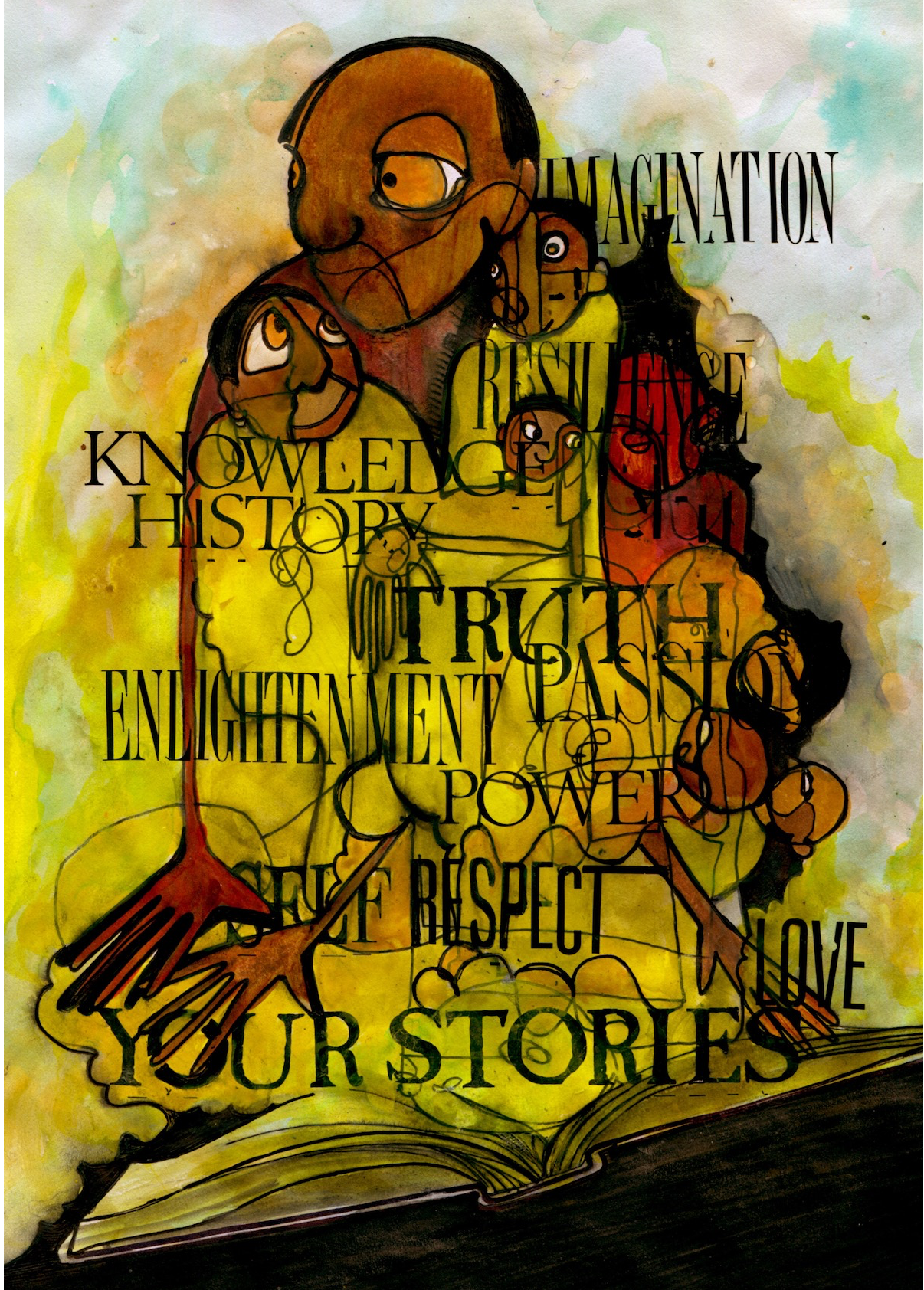
 At the center of The Exene Chronicles is Lia, a fourteen year old Black punk fan in the 1980’s living in Coronado, a San Diego suburb. As one of the few Black kids in the area and at school, she befriends Ryan, a white girl her age acting rebellious and grown up to cope with unwanted sexual advances for her pubescent body. When Ryan disappears, Lia uses the punk rock singer Exene Cervenka as a guide to cope with what happened, what led to Ryan’s disappearance, and Lia’s falling out with Ryan.


Recent Comments