“A Song Below Water” Is a Compelling Story of Sisterhood, Magic, and Police Brutality

“A Song Below Water” Is a Compelling Story of Sisterhood, Magic, and Police Brutality

When I first learned about Bethany C. Morrow’s A Song Below Water and how it featured Black mermaids, I couldn’t help but think of mythology, especially the Yoruba orisha Yemaya and the water spirit Mami Wata.

Depending on who you ask, some people interpret them as mermaids. I thought of them because I’ve wondered what a modern interpretation of a Black mermaid would be like. A Song Below Water managed to answer my question in a thought-provoking and touching way.
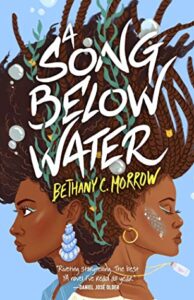
Tavia Phillips is a siren who must hide her powers in order to keep herself alive. Her best friend, Effie, is struggling with a painful past and strange happenings in the present. While they are trying to navigate their junior year of high school, a siren murder trial shakes Portland, Oregon, to the core. In the aftermath, Tavia and Effie must come together and come to terms with themselves.

One of the most notable aspects of this book is how it blends fantasy and reality almost seamlessly. Mythical creatures such as sirens, elokos, and gargoyles exist alongside humans, albeit not peacefully. Sirens (and other mythical creatures) have always been interpreted as an allegory for a dangerous woman, but this is especially noticeable when applied to a Black female protagonist. Tavia Phillips’s experiences as a Black female siren parallel what real Black women deal with every day, especially when it comes to police brutality. Not only are they considered dangerous for simply existing, but their voices are often silenced and dismissed when they try to speak up.

In fact, I found this book hard to read sometimes because it is a reminder of how difficult living can be for Black girls and women. Tavia is physically and emotionally scarred by a desperate attempt to get rid of her siren abilities as a child, while Effie is battling anxiety and nightmares as a result of a traumatic experience with mythical creatures. At one point, Effie even states, “Black and female and a siren is just layers upon layers of trauma. One time I said she’s [Tavia’s] too young to deal with this, and she said we don’t get to be.” Yet what kept me reading the book were the moments of joy that Tavia and Effie experience together and by themselves.

When it comes to Tavia and Effie’s friendship, they are close enough to be sisters. Sometimes I forgot that they weren’t related by blood because their interactions with each other were just as beautiful and memorable as those I’ve seen between real and fictional siblings. A particularly memorable scene is when Effie and Tavia are gushing over fan fiction written for Euphemia, the fictional mermaid who Effie plays at the Ren faire. Scenes like this show that despite the hardships they are dealing with, Effie and Tavia still create moments when they can enjoy their youth.

Tavia and Effie’s individual character development is just as powerful as their sisterhood. Over the course of the book, Tavia learns to embrace her siren abilities and use them as a force for change. The potential of her siren abilities is explored further as Tavia realizes just how powerful she can be. Meanwhile, Effie comes to terms with her past and learns that what’s “wrong” with her can be something that is wonderful, even when the world says otherwise. The mystery around Effie’s past and present keeps the plot intriguing and develops into a wonderful coming-of-age story.

As much as I appreciated many aspects of the book, there were a few I didn’t like. The lack of explanation for what an eloko was resulted in me doing my own research and doing my best to imagine what they looked like in my head. It might be difficult for other visual readers like myself to “see” what elokos are without a fuller description.

Another aspect of the story that made me a little uncomfortable is how Tavia uses spasmodic dysphonia as a cover story for her siren abilities, as well as how she sometimes uses American Sign Language when she can’t speak without exposing her siren abilities. Her use of ASL is understandable, but the author’s decision to have Tavia pretend to have what is a real muscle disorder is problematic from the point of view of disability advocacy.

It’s not clear whether A Song Below Water is a standalone or the first book in a series. Either way, it’s a compelling read. While the portrayal of police brutality and Black trauma doesn’t make the book easy to digest, the sisterhood and magic are major payoffs. A Song Below Water encourages Black girls to embrace their power, stick together, and never let themselves be silenced.

The Afro YA promotes black young adult authors and YA books with black characters, especially those that influence Pennington, an aspiring YA author who believes that black YA readers need diverse books, creators, and stories so that they don’t have to search for their experiences like she did.

Latonya Pennington is a poet and freelance pop culture critic. Their freelance work can also be found at PRIDE, Wear Your Voice magazine, and Black Sci-fi. As a poet, they have been published in Fiyah Lit magazine, Scribes of Nyota, and Argot magazine among others.
Top photo by Briona Baker on Unsplash.


“Felix Ever After” Shows That the Love You Deserve Is Inside and Out

“Felix Ever After” Shows That the Love You Deserve Is Inside and Out

Having a sense of self-worth is important for any LGBTQ+ person, but especially for queer trans people of color.

Our race often means that we are ignored among the LGBTQ+ community, while our gender identity and sexual orientation get scorned or overlooked among allocishet people of color. To that end, it is often up to QTPOC to support each other and show each other that we are worthy of life, love, and happiness.

In Kacen Callender’s Felix After Ever, protagonist Felix Love is an artistic trans boy who wants to experience romantic love. When his pre-transition photos are leaked for the world to see, he must figure out the culprit while examining his own sense of self and what kind of love he deserves. Through his experiences with others, Felix Love must look at who and what should determine his self-worth.

In fact, Felix’s relationships with family and friends are notable for their joy as well as their pain. Felix’s friendship with Ezra is wonderful and complex, in that they have fun together but also have hard, honest discussions about their future and themselves. At one point, Felix and Ezra fight because Felix is projecting his insecurities onto Ezra. As a rebuttal, Ezra points this out without invalidating Felix’s feelings. They do all of this while examining Ezra’s class privilege as the child of wealthy parents and the pressure that Felix feels as a child of a working-class father. Their friendship is never depicted as perfect, nor as competitive, but as a relationship based on support, care, and honest communication.

One of the most notable things about this book is how it shows the harmful effect of transmisia on Felix’s self-worth. His father helped Felix transition, but he can’t bring himself to say Felix’s name. Ezra Patel, Felix’s best friend, is sensitive and understanding, but another “friend” is revealed to be trans exclusionary. In turn, the behavior of family and friends, and the experience of having his pre-transition photos displayed, make Felix feel he wouldn’t be enough for any lover. The dialogue and scenes combine with Felix’s internal thoughts to convey his pain, but they also motivate Felix to confront transmisia by holding his family and friends accountable.

Meanwhile, Felix’s father is a source of financial and emotional support, despite Felix’s issues with him. Given that Felix’s mom left them years ago, Felix and his dad must learn to make their relationship with each other work—not to mention Felix can’t quite let go of his mother, and he’s constantly drafting unsent emails to her. A particularly poignant bit of dialogue occurs when Felix and his dad discuss Felix’s mom and how some love can be unhealthy to hold on to when you’re getting less than you deserve. This conversation has an impact on Felix that stays with him when he undergoes his introspective journey.

Speaking of which, Felix’s internal journey is an emotional roller coaster. Prior to having his photos leaked, Felix was already feeling stressed because of interpersonal issues, his ongoing questioning about his gender identity, and feeling that he needs to prove himself by going to an elite university. Once things go south, Felix gets angry enough to pursue revenge against the person he assumes leaked his photos while dealing with online harassment in the aftermath. Yet his frustration also urges him to hold his loved ones accountable for their transmisia and seek answers about his gender identity via an in-person support group and online resources.

While some might find Felix unlikable for his revenge plan, his reaction is totally realistic, and his feelings are never invalidated—nor are they completely condoned. His revenge plan turns out to be less cut-and-dried than it first appears, and Felix must learn to channel his anger in a healthier way while holding himself accountable for any harm he causes. In this sense, Felix feels like a true-to-life character: he is neither perfect nor a completely bad person.

A final aspect of this book that was enjoyable is how Felix eventually uses visual art as catharsis for his newfound self-love. Art in any form has long been a refuge for QTPOC to express themselves, and to see Felix learn to take time for himself and literally draw his true self into existence is beautiful. If the book’s cover is any indication, Felix’s final portrait encompasses all that he is in his vibrant glory.

Despite some slow, suspense-building pacing, after the first hundred pages Felix After Ever is an engrossing coming-of-age novel that presents queer pride in all its complicated and powerful aspects. Readers will root for Felix as he learns that the love he deserves can be found inside himself, as well as outside himself among others who truly care for and respect him.

The Afro YA promotes black young adult authors and YA books with black characters, especially those that influence Pennington, an aspiring YA author who believes that black YA readers need diverse books, creators, and stories so that they don’t have to search for their experiences like she did.

Latonya Pennington is a poet and freelance pop culture critic. Their freelance work can also be found at PRIDE, Wear Your Voice magazine, and Black Sci-fi. As a poet, they have been published in Fiyah Lit magazine, Scribes of Nyota, and Argot magazine among others.

“Black Enough” Showcases Blackness Joyfully and Honestly

“Black Enough” Showcases Blackness Joyfully and Honestly

The myriad experiences that Black people have are enough to make a tapestry. Due to racism, respectability politics, and other factors, only certain experiences get acknowledged.

In the young adult fiction anthology Black Enough, sixteen Black young adult authors examine the ways contemporary Black teens exist with their Blackness. The anthology is edited by author Ibi Zoboi, who also contributes a story to the book.

As a whole, the anthology does a good job of including stories that show Black teens from different walks of life. In addition to race, its Black teen characters also embody different socioeconomic classes, genders (and gendered expectations), and sexual orientations. Authors like Jason Reynolds and Tracey Bapiste showcase distinct writing styles that make their stories appealing to read. While these aspects give the coming-of-age stories included in the anthology strong appeal, those hoping for stories outside contemporary settings may find themselves disappointed. Furthermore, the lack of content warnings for sensitive topics such as sexual assault, death, and self-harm may trigger some readers.

Nonetheless, several stories stand out in this anthology. “The Ingredients” by Jason Reynolds is a really fun conversation between Black boys walking home from the pool who are hungry for something to eat. The conversation flows naturally from their time at the pool to what kind of sandwich they dream of eating. The dialogue is true to life and filled with joy and vivid detail that will make you smile—and maybe crave a sandwich.

Another well-written story is Tochi Onyebuchi’s “Samson and the Delilahs,” which tells the story of a Nigerian American debate team student who ends up joining a heavy metal band. The internal struggle of the main character, Samson, who is torn between his family’s cultural beliefs and his own interests, is palpable in his thoughts and dialogue. It was wonderful to see how Samson eventually learns to bridge the two.

A story that I personally resonated with is Nic Stone’s “Into The Starlight,” a romance between bougie, wealthy Black girl Mackenzie Davis and “ghetto” Black boy Mak. This story not only features honesty between these two as lovers but also takes class and respectability politics into account. It asks where the line between “bougie” and “ghetto” are, whether there is a gray area, and if the line should matter at all.

I also liked “Oreo” by Brandy Colbert, which tackles themes similar to “Into The Starlight.” Instead of class and respectability politics, it discusses class in terms of how some Black Americans end up losing or literally moving away from their roots in their aspiration for the wealth and opportunities given to white people. The story gives the term “Oreo” a deeper meaning than the one I personally knew, which is a Black person with so-called white personal interests. It also shows how Black parents and other Black family members can influence each other for better or worse.

Black Enough showcases and comments on Blackness in an authentic and thoughtful way.

Many of the stories in this book show how some of the internal conflict that Black teens have about their Blackness can be due to what their family—whether a mother, father, aunt, or uncle—has taught them and how that clashes with personal interests and white American culture. Leah Henderson’s “Warning: Color May Fade” has a Black female visual artist trying to break free from her parents’ expectation that she attend law school while also staying true to her Blackness. “Kissing Sarah Snart” by Justina Ireland features a Black gay girl who is learning to revel in her queerness while dealing with her mom’s mental health issues and her dad’s respectability politics. Every story ends differently, but all of them include Black teens learning to just “be.”

Given individual personal tastes, some stories will inevitably be more appealing than others, but this is the case with any anthology. Black Enough showcases and comments on Blackness in an authentic and thoughtful way. Although aimed at Black teens, Black adults can also take something from this collection of stories. If you need an introduction to some of the newer Black young adult authors out there, this book is a good place to start.

The Afro YA promotes black young adult authors and YA books with black characters, especially those that influence Pennington, an aspiring YA author who believes that black YA readers need diverse books, creators, and stories so that they don’t have to search for their experiences like she did.

Latonya Pennington is a poet and freelance pop culture critic. Their freelance work can also be found at PRIDE, Wear Your Voice magazine, and Black Sci-fi. As a poet, they have been published in Fiyah Lit magazine, Scribes of Nyota, and Argot magazine among others.

“How To Be Remy Cameron” Explores Identity with Complexity and Care

“How To Be Remy Cameron” Explores Identity with Complexity and Care

When other people define you based on labels, it can be hard for you to define yourself.

This is the conflict at the center of Julian Winters’s second novel, How To Be Remy Cameron. After being assigned an essay about who he is, seventeen-year-old Remy Cameron must come to terms with the labels others have given him and how they fit into how he sees himself.

For Remy, the most suffocating labels are the gay kid, the Black one, and the adopted child. Each label is a reminder of his Otherness, and confronting them via an essay that’s worth half his grade and a chance at a prestigious college is overwhelming—as it would be for anyone who has attended public high school. In fact, Remy feels so overwhelmed that he refers to the essay as “The Essay of Doom.

When other people define you based on labels, it can be hard for you to define yourself. This is the conflict at the center of Julian Winters’s second novel, How To Be Remy Cameron.

While dealing with this essay and the labels placed upon him, he also experiences two life-changing events. The first is learning about a previously unknown member of his biological family. The second is crushing on Ian Park, a Korean young man who recently came to terms with his orientation and isn’t publicly out. These events are notable not only in terms of character development but also because they deliver refreshing storytelling.

As a reader, I really appreciated how Remy isn’t completely cut off from his biological family. Given that the book’s premise is about identity and his adopted family is white, it would have felt uncomfortable not to see him interact with any other Black people besides one of his friends. The biological family member who reaches out to Remy is wonderfully fleshed out, becoming a nice confidante while being her own character. Furthermore, the topic of adoption is explored in a sensitive and realistic manner through Remy’s adopted family and his biological family.

When it comes to Ian Park, Remy’s crush and their subsequent romance is both amusing and heartwarming. A particularly enjoyable aspect of their interactions is how they always ask each other permission to kiss and touch each other. Remy learns to do this from Ian, who in turn learned the importance of consent from his grandmother. It’s really nice to see Remy adapt to Ian’s needs this way, especially since Ian isn’t publicly out yet. Remy never tries to get Ian to do anything before he is ready to, and this allows Ian to explore his orientation at his own pace.

In addition to these events, other aspects of the storyline help Remy question his identity further. One enjoyable scene is a conversation about music tastes between Remy and Brook, another Black student. It moves from talking about their favorite music artists to how eclectic their tastes are and how music doesn’t define them. The dialogue shows how close the two are as friends while giving Remy a small nudge in his personal journey.

Speaking of friendship, Remy’s interactions with his circle of friends are fun to watch. Featuring the witty Lucy Reyes and the single-minded Rio, among others, their dialogue never sounds forced or too cheesy. Remy and Lucy’s scenes together are especially amusing, because Lucy teases Remy in a way that is friendly and supportive. At one point, Remy must learn not to keep his friends in the dark too much, and it’s touching to see friendship and romance given an equal amount of weight.

All in all, How To Be Remy Cameron is a thoughtful, poignant, and fun coming-of-age experience.

Other notable characters include Remy’s adoptive family and his English teacher, Ms. Amos. Remy’s adoptive family is quirky and loving, with the mom into 80s music and the father able to make wicked French toast recipes. As the book progresses, both realize that while they can listen to Remy and try their best to cheer him up, they aren’t always going to be able to help him through certain things. Meanwhile, Remy’s English teacher is wonderful and honest in a way that puts things in perspective for Remy and encourages him to find his own voice.

All in all, How To Be Remy Cameron is a thoughtful, poignant, and fun coming-of-age experience. While self discovery isn’t always easy, Remy’s willingness to question and learn about himself is inspiring. With a great cast of characters, memorable dialogue, and a entertaining setting inspired by Dunwoody, GA, this book is wonderful.

The Afro YA promotes black young adult authors and YA books with black characters, especially those that influence Pennington, an aspiring YA author who believes that black YA readers need diverse books, creators, and stories so that they don’t have to search for their experiences like she did.

Latonya Pennington is a poet and freelance pop culture critic. Their freelance work can also be found at PRIDE, Wear Your Voice magazine, and Black Sci-fi. As a poet, they have been published in Fiyah Lit magazine, Scribes of Nyota, and Argot magazine among others.

Top photo by alex bracken on Unsplash


“Magnifique Noir Book 2” Exemplifies the Magic of Self-Care

“Magnifique Noir Book 2” Exemplifies the Magic of Self-Care

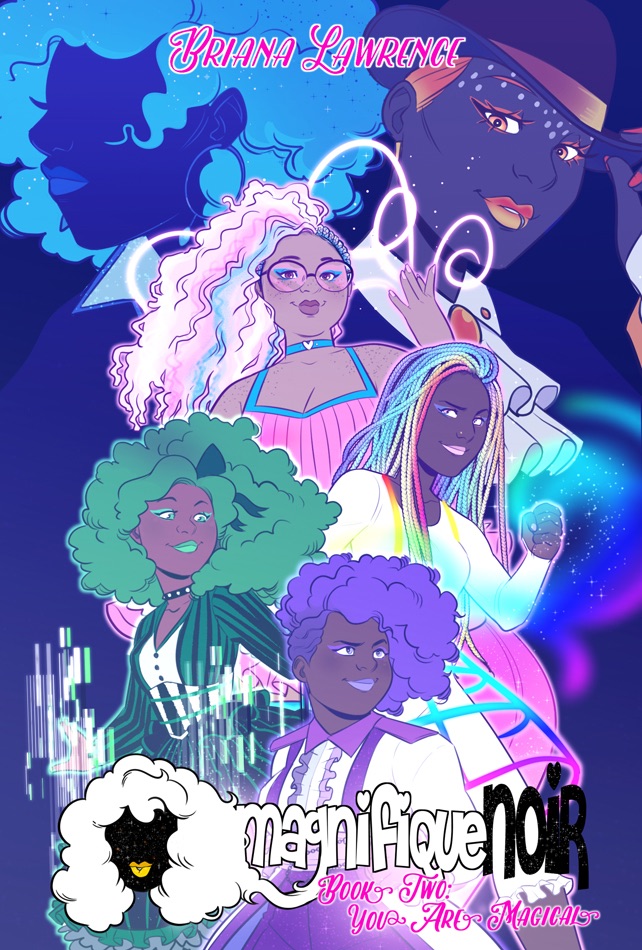
Created by Briana Lawrence, the illustrated novel series Magnifique Noir tells the story of Black queer young women as they come of age as young adults and as members of the magical girl team Magnifique Noir.

Book 2 of the series picks up a few weeks after the ending of Book 1. In the aftermath of a difficult battle, the new generation of the magical girl group Magnifique Noir is trying their best to move on. As they start to balance their everyday lives with their magical ones, the past comes back to haunt them in unexpected ways.

A noteworthy theme of this book is the pressure on Black women to be “the strong one.” Black women are always expected to put everyone else before themselves. Even though they are magical superheroes, the ladies of Magnifique Noir are still human. They have to learn to check in with themselves and each other. This is especially apparent in the book’s first two chapters, in which one of the girls is having nightmares about the team and their loved ones dying — a development that reflects the influence of the Japanese anime series Madoka Magica. The darkness of the situation is softened by the display of concern from her friends and her eventual decision to talk about the nightmares.
Another theme, related to the insistence that Black women be strong, is the expectation for Black women to always be wholesome. Rooted in respectability politics, this expectation denies Black women agency in terms of how they present and express themselves. A later chapter comments on this theme when the ladies attend a burlesque show inspired by Magnifique Noir. Kayla, a Black female burlesque dancer, is slut shamed by a white woman for her sexually charged take on Magnifique Noir’s Cosmic Green. Even though their superhero identities are a secret, Magnifique Noir stands up for Kayla as civilians.

This book shows Black women that they don’t always have to be strong or perfectly wholesome.

The decision to tackle the expectation of wholesomeness as it applies to Black women sets this book apart from other works inspired by magical girl anime. Given that the magical girl anime genre primarily features schoolchildren and was originally targeted at kids, it is rare to find books about adult magical girls doing adult things like seeing a burlesque show. Yet there are still some sparkly sweet moments could easily fit alongside classic magical girl manga like Sailor Moon.

One of my favorite moments takes the form of an illustration called “8 Bits of Rainbow” by artist Fried Unicorn Rainbow. It is a small yet dynamic and colorful piece depicting an awesome team-up between Magnifique Noir members Cosmic Green and Radical Rainbow. Another memorable illustration is “Rest Well, Magical Girls” by artist coloured_braids. It features three of the ladies in PJs sleeping together in the same bed. It is a tender moment captured well with pink pillows peaceful expressions, and the amusing contrast between the girl’s sleepwear.

In addition to illustrated moments, there is also great dialogue, scenes, and entire chapters devoted to queerness. One highlight features the character Marianna Jacobs figuring out how to define her asexual orientation with the help of Blaze, Magnifique Noir’s leader. The moments that build up to this one sensitively portray Mari’s orientation as something she is new to, but not something that she needs to change. Another notable moment is the romantic tension between Magnifique Noir’s Radical Rainbow (a lesbian) and Prism Pink (confirmed by the author to be a trans woman). Their scenes together capture the nervousness and excitement of having a crush very well.

One final bit of praise must go to the backstory about the old members of Magnifique Noir. While there are still some questions left unanswered, what is revealed is done in a way that will shock and perhaps surprise the reader. It was also great to see an older woman like Blaze growing a little closer to the girls and becoming more involved in their civilian lives as well as their magical ones. In this way, she becomes more like an auntie spending time with her nieces.

Adding a darker tone and some mature content, Magnifique Noir Book 2 continues to deliver a wonderful coming-of-age storyline with affectionate, powerful, and fun moments. This book shows Black women that they don’t always have to be strong or perfectly wholesome. No matter what you have to work through or how unwholesome you might seem, you are still magical.

—> Learn more about Magnifique Noir at the author’s website.

The Afro YA promotes black young adult authors and YA books with black characters, especially those that influence Pennington, an aspiring YA author who believes that black YA readers need diverse books, creators, and stories so that they don’t have to search for their experiences like she did.

Latonya Pennington is a poet and freelance pop culture critic. Their freelance work can also be found at PRIDE, Wear Your Voice magazine, and Black Sci-fi. As a poet, they have been published in Fiyah Lit magazine, Scribes of Nyota, and Argot magazine among others.

Books to Give Black Readers This Holiday Season

Books to Give Black Readers This Holiday Season

This year, I’ve read so many great young adult and middle grade books by Black authors.

From sci-fi fantasy academic studies to queer contemporary romance, it has been a banner year for the Afro YA blog. These books have not only entertained and informed me but also have me excited for a new generation of stories by young Black authors.

Since the holidays are the opportune time to read, give, and receive books, here is a holiday gift guide inspired by some of my favorite reads from this year. Whether buying for yourself or someone else, these books are a must-read for anyone.

The Dark Fantastic: Race and the Imagination from Harry Potter to the Hunger Games by Ebony Elizabeth Thomas

Combining personal experience with academic study and pop culture, this book discusses how race influences the type of sci-fi and fantasy stories we are exposed to on and off the page. Aimed at fans, creators, and anyone in between, adult sci-fi fantasy enthusiasts are sure to love this. For those who enjoy and critique media such as the Harry Potter series or the television series The Vampire Dairies, this book might provide some insight.

Miles Morales: Spider-Man by Jason Reynolds

This middle grade book features the Miles Morales version of Spider-Man facing villainy that threatens his own neighborhood. Miles Morales struggles to balance his teenaged life with his superhero life, but soon finds them both colliding. It’s fun, easy to jump into, and true to life. For fans of the animated film Spider-Man: Into the Spider-Verse or anyone looking for a superhero-themed novel, look no further than this book.

The Black Veins by Ashia Monet

The Black Veins follows the adventures of a Black bi teen named Blythe Fulton as she recruits a team of Elemental Guardians to help rescue her kidnapped family. It takes the camaraderie and awe of young adult fantasy from the 2000s and updates them for today’s audience. With found family, humor, adventure, this is a refreshing urban fantasy read.

This Is Kind of an Epic Love Story by Kacen Callender

When aspiring filmmaker Nathan Bird meets his old friend Oliver “Jamie” Hernandez, he must try to rekindle their friendship while coming to terms with his romantic feelings for him. This is a gay romantic comedy that nods to the teen coming of age stories that came before it while forging its own hilarious and heartfelt path. For LGBTQ readers and rom-com lovers, this is a perfect gift.

Darius & Twig by Walter Dean Myers

The late Walter Dean Myers was a trailblazer for contemporary children’s and young adult literature. Darius & Twig tells the story of a writer and a runner trying to find and achieve their dreams. Their friendship sustains them as they face various obstacles in their way, and their story will surely inspire even more writers and readers.

Tristan Strong Punches a Hole in the Sky by Kwame Mbalia

Introducing a child or adult to African mythology and African American folklore isn’t hard anymore thanks to this book. John Henry, Anansi, Brer Rabbit and more feature in this book to help young Tristan Strong save the world from an evil haint. Come for the engrossing and hilarious adventure and stay for the emotional and brave hero’s journey of Tristan Strong.

The Afro YA promotes black young adult authors and YA books with black characters, especially those that influence Pennington, an aspiring YA author who believes that black YA readers need diverse books, creators, and stories so that they don’t have to search for their experiences like she did.

Latonya Pennington is a poet and freelance pop culture critic. Their freelance work can also be found at PRIDE, Wear Your Voice magazine, and Black Sci-fi. As a poet, they have been published in Fiyah Lit magazine, Scribes of Nyota, and Argot magazine among others.