
Disgusted & Enthralled & In Love: A Review of Louder Birds by Angela Voras-Hills
Disgusted & Enthralled & In Love
A Review of Louder Birds by Angela Voras-HillsIn her poem “Splendor,” Angela Voras-Hills writes, “I am disgusted and enthralled and / in love.” The poem has just described the untangling of a mangled worm, half-eaten by millipedes—the millipedes deprived of their lunch, the worm (semi-rescued) but not long for it. After this hinge line, the next is, “The baby grows too big for my womb.” As the poem continues, the reader meets more bodies: flies, a spider, a fourteen-year-old son, an infant daughter. The poem closes, “The difference / between the moment of being and a moment of being. // When there’s a body and when there is none.” Here, each of these bodies is a notion of home—fragile. Hopeful, requiring tending. Throughout Louder Birds (Pleiades Press), Voras-Hills constructs notions of homes and tears holes in them—thin skins and ribs, wombs, papered layers of rooms & structures, old barns, traceries of farms & crisscrossed land.
 The world made in these poems is stitched together by fragile associations—half made, tenuous. The language is incantatory, impressionistic. In “Preserving,” the form of the poem moves stanza by stanza with a word or image occasioning the next. The first, “I can spend a whole winter / in the summer of these lemons / if they’ve covered in enough salt,” leads to the next, where “Trucks are salting the roads / so I can drive . . .” An image of walking leads to an image of falling. Although this form is not as pronounced in other poems, overall the poems are made of these associations. Half-starts & skips. They are juxtapositions—a setting side by side of notions of the poet’s imagination (for better or worse). Sometimes, they offer a snapshot of worst-case scenarios or the kinds of ingrained knowledge that accumulate in small towns or rural areas of what could happen—because it’s happened before.
The opening poem of the collection, “Retrospective,” describes a girl holding a sign that reads “Zucchini / and God.” She’s barefoot and bare shouldered. There’s a gray sky, and a cat, and a corn field, and “the boundaries between home and the road // are insecure.” There are signs, and there are signs—sirens, it seems (and if you don’t know what that means—it’s a warning for a likely tornado or terrible storm). “We’ve all been in the presence of something dark // and have chosen not to seek shelter.” This poem, coming before all the others, is a warning of sorts—and it’s borne out in the following pages: in these poems, things will turn quickly. What seems to be only a roadside scene can quickly become something else, something dangerous. There will be loss, the evidence of something awful come before.
“Chateaubriand” is one of those poems that turns quickly. It begins:
my limbs with your mouth. Like the trail,
we’re a handful of breadcrumbs . . .
In the second stanza, “A girl / from another town was pinned against a fence / with the grill of a pickup while jogging.” I thought I was reading a love poem—but here’s brutality, and it’s not random. It’s personal, a neighbor “the guy behind the wheel, a stranger, lived / on her street.” And the poem addresses the reader then, with a “you,” reminding me of the intimacy of the page, the small space I’m caught in: “one day, you’re eating Chateaubriand, / the next, you can barely pronounce tender.” Those notions of home return, complicated by the imagining (?), remembering (?), of that complicating act—the one that twines with the imperative to love. The body that “keep[s] / our organs safe” like the skin of a grape, “making a home of your darkest, inside spaces.”
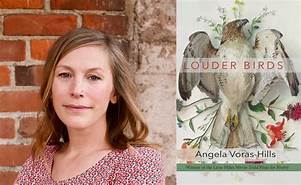
The cover of the book, featuring a bird carcass arranged over dried flowers, as well as a number of the poems, invoke dead animals, and the bodies of “the beasts / we’d run over along the way.” In “The Rabbit in the Road,” a blood tide rises over the curb, coating feet and leaving tracks all the way home. In “Home (IV),” a coyote eats her young. In “Unfurling” (a poem that ends with the beginning of labor), there is a poisoned opossum, a blanket of glistening cricket bodies. The displacement of human pain onto the witnessing of other pain—often the close examination of animal pain—a kind of alchemic dissection, as if to engage with these safe bodies, at a distance, with some sort of critical analytical eye—is a recognizable strategy. This displacement makes for powerful poetry: close looking, and capturing that on the page in indelible detail, and then snapping the reader back to the real true thing.
The poem “A Small Hole Filled with Mud” calls to mind the beginning of Angela Carter’s “The Snow Child,” where the wife’s desire for a child is crystallized by a perfect blood-filled hole in the snow. All desire, all wanting, a stylized image of perfection in the contrast of crimson and white. In Voras-Hills’s poem, desire is cast in the rural imagery of salt licks and bait piles—those heady tastes that lure the animal in us. The way salt almost burns the tongue with its pleasure; the way fruit rots in a late-autumn heat, a dense sweet tangibly heavy. Called, the speaker of the poem has arrived, and is “waiting / for the man to see me through / the screen door.” Instead of that image of perfect beauty, there’s the hole filled with mud, the mud “up to my ankles.” In that field, “children who won’t exist are calling / my name.”
In the notions of home Voras-Hills suggests throughout her collection, as well as the ways she troubles their existence, she names a particular kind of landscape and place, best articulated in her poem “Maps of Places Drawn to Scale.” The poem begins with a car accident, a van flipping on an exit ramp. “In a small town, a priest / knows the man’s name.” The poem muses that at the Chinese buffet (there’s often a restaurant called this in small towns), no one’s fortune cookie says “you will suffer [ . . .] / but it’s implied / in the parking lot.” Throughout the collection’s accretion of imagery, memory, and imagining, a skeletal narrative has formed—one of a relationship surviving losses of would-be children, finding comfort in the world they make together even as that world is threatened. One of looking out windows into the distance at neighbors—people and fields and animals, the barn across the way—and trying to find one’s place there. This poem ends with the comfort and suffocating qualities of living in one of those small-scale places: “But in a small town, there’s one / name for each baby born, and eventually / it’s on the lips of everyone in the street.”

C. Kubasta writes poetry, fiction, and hybrid forms. She lives, writes, & teaches in Wisconsin. Her most recent books include the poetry collection Of Covenants (Whitepoint Press) and the short story collection Abjectification (Apprentice House). Find her at ckubasta.com and follow her @CKubastathePoet.




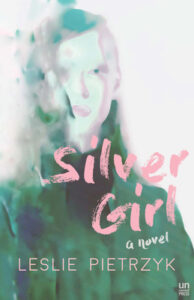 Silver Girl is told in sections: The Middle, The Beginning, The End, and Where Every Story Truly Begins. Through sections that skip between the protagonist’s college years, her late childhood, and immediately after college, the reader meets her family, her college best friend and roommate (and her family), and contrasts those dynamics. Sisters—their bonds and rivalries—are central to the story, both biological sisters and the kinds of sisterhood that develops when people live together, forced into intimacies by shared spaces and confidences. The protagonist sees college in Chicago as an escape from her Iowa town, from her family, but also as a chance to reinvent herself, to be someone else. At home in Iowa, she takes her younger sister Grace to the mall before Christmas, where she has to explain the bookstore isn’t a library and then beg the salesgirl for a book, pretending to be the family named on the paper ornament hung on the charity tree. All that work for a $2.25 paperback, but they needed every coin for the bus home.


Recent Comments