
My House of Mysterious Compartments
My House of Mysterious Compartments
A Review by C. KubastaTara Burke’s poetry collection Animal Like Any Other (Finishing Line Press) has compartments:
poems about growing up in the Blue Ridge Mountains of Virginia, about living with her girlfriend surrounded by dogs, about the painful dissolution of that relationship, about desire and sex, about new love, and several long poems that braid all these aspects of the poet’s life into a kind of manifesto. The forms switch between a maximalist prose that sweeps across the page without punctuation and resists known syntax, and tight lineated forms of unctuous imagery. The poem “Declaration” includes the line taken for the title of the collection and describes the making of steak. With the lines “massage a bloody loin / with bare hands [. . .] press salt into its flesh / and press the ruminant / into my hot iron pan . . .” my mouth waters – the poet goes on to declare:
“Domesticity
can be radical.
Can be lesbian.
These are good ways
to stick it to the man:
cook food, love
women, enjoy
staying home.”
By recounting childhood, memories of growing up amidst parents’ sometimes simmering or submerged anxieties and anger, the needs of brothers, each well-defined moment becomes almost incantatory. The background is cast in plain language (blue and grey and tan), the details everyday, but images swim up from the long lines. In the house on Blue Ridge Mountain Road, “we didn’t believe in weeds.” The speaker’s mother would plant things and move things there at the edge of the woods, including stones she’d found “here and there intending toward beauty.” In another of these childhood poems, a vignette about the child-poet ignoring her mother’s entreaty to stop, she says she was “unclear of no and its partner shame.” In “How We Purpled the Road” we see two unaccompanied children, their unsupervised play, the wonder and danger of it. Purpling is the crushed fruit of blackberries and the bruises earned; the poet says, “immediate regret is a bruise I know well.”
 Interspersed between these memory-moments are love poems, which seem to be about both finding one’s person as well as finding the self. The structure of moving between the early childhood poems and the adult poems make sense, as they suggest another kind of knowing and coming of age. The clarity of the language rings true: “I want this body / finally mine, naked, covered / in glitter and chicken feathers.” It is straightforward and defiant and joyful, tinged with the awful fantastic. Soon though, the beloved becomes a source of worry – long before the poem-story begins to hint at how the dissolution will happen, the speaker hints at meaningful differences between them; her girlfriend is a police officer, and the speaker wonders about her job, things she may have to do. “How will you see this world / with your gun? Is there anything / we can protect?” This too ties back to the childhood poems, when the poet tries to understand her father. In the poem “Inside Me” the reader sees the father, over and over again – in his chair, smoking, hauling rocks, always working. This poem is one of those that ranges across the page, with little breaks for breath, few guideposts of phrasing or punctuation. It ends with the resonant line: “there he is inside me singing what a surprise when I realize it’s not a song but a sob” – there’s no period. The poem ends, but it doesn’t end. The sob catches in the throat, nowhere to go.
“New Year’s Day” is a central poem. In a small moment, the speaker sitting in a sun-drenched kitchen, her girlfriend preferring the more shadowed living room, a whole continent of differences between them become visible. “Oh I think I was lucky I trusted because time was your gift to me then” – the reader can feel that time is running out. “She doesn’t love light like I do” and we know that light means so much more than light. When the poet mentions taking her mother’s advice, we know that all of those childhood moments, those poems that cannot be contained are contained in her now, purpling her, and it doesn’t matter which room they sit in this morning – dread hangs over the prose stanzas, as if even poetry is out of reach. A few poems later, the couple has moved and the poems begin to speak of predators – things that threaten them, their dogs, the goat they’ve taken to keeping. The speaker admits “so I pretended like I always do / that I wasn’t afraid.” After leaving the home they had together, she confides “I was half myself and maybe / it was never the hungry coyotes / but the whole of my bloodstream howling.”
The poems so far have a natural trajectory: childhood stories that explore early memory and the parental relationship as a potential model, the self in love and loss, the aftermath of relationship and rediscovering the self. What these poems are building to are some incredibly moving long poems that weave all of that together and speak in a full-throated cry, somewhere between manifesto and affirmation. The poems “Exercise in Which a Poet in Heartbreak Finds Herself in a Writing Class with Fiction Writers and Doesn’t Leave, Rebels a Little, Learns to Put Characters Under Pressure,” “Queer Girl,” and “Blue Body Hungry for Origin or Certainty” are all breakneck poems – read-aloud poems – poems built upon the foundation of what comes before them in this collection, and owing a debt to the careful building of voice that Burke takes her time with in earlier smaller moments.
What binds all the poems together in Animal Like Any Other is the insistence of both the ordinary and revolutionary-ness of desire. To want another so badly that nothing matters – not the dog-hair on every surface, not that she may someday kill someone and you’d have to live with it. It is the very ordinariness of this want, this love, that ultimately (or so the poet imagines) causes the end of their relationship. In “Exercise in Which a Poet in Heartbreak Finds Herself in a Writing Class with Fiction Writers and Doesn’t Leave, Rebels a Little, Learns to Put Characters Under Pressure,” she tries to inhabit her girlfriend, to understand how and why she asked her to leave. To understand how too much love can be oppressive, too easy, not enough and too much. In “Queer Girl” – again, refusing to use anything like a sentence structure – she rails against the restrictions of women’s and girls’ sexuality, their wants, their smells, and the way their expressions of self are policed, writing “her body a light I turned to and no I do not care that her body as light may be cliché to you fuck your rules fuck your right or wrong words for poems for sex.” In “Blue Body Hungry for Origin or Certainty,” alternating prose stanzas and right-justified fragments are nearly-affirmations. The poem revisits the landscapes of the poet’s life: blue mountains, red dirt and dust, green trees. It calls the reader back to the body, embracing curves and movement, singing a song of love and lust. The body is love – art is love – this life we make, riddled with loss and hardship, but also striving toward each other – is love.
There are no compartments in the poem “Blueberry Pancakes.” The poet, Tara, writes of her work, engaging with students, worrying about them and their lives. She writes about “when language feels like self-indulgence” and not caring whether “they learn to cite in the correct tedious format.” She writes about her adopted pit bull, who growls in her sleep, “unsure if it is today or yesterday unsure if she’s ever really safe.” But mostly she writes about her mother who made blueberry pancakes at Christmas, the berries “came from a box saved from leftover canned berries in the Jiffy muffin pre-made mix” frozen in Ziploc bags throughout the year.
“on days like this when I know we’re all dying we’re going to drown or starve or be shot on this
hot earth together but not quite together enough I wish instead we were some semblance of that
family you tried to keep simple together drowning it all in syrup—
I wish my lips were sticky and blue—
on days like this all I want is to eat, have home back, say thank you”
Burke reminds us at the end of her collection the way we crave sweetness, some memory of home, some warm body to hold us. The final poem returns to the goat she cared for at her home with her girlfriend, the goat they kept safe from coyotes, and milked each day. She’s gathering the milk, “warm / like warm and sweet like sweet, / clean like clean.” It’s an anti-maximalist moment at the end, a closure that brings us into the space of another animal, close enough to feel the heat of its body, our breath and its breath.
About the Author
 Tara Shea Burke is a queer poet and teacher from the Blue Ridge Mountains and Hampton Roads, Virginia. She’s a writing instructor, editor, creative coach, and yoga teacher who has taught and lived in Virginia, New Mexico, and Colorado. She believes in community building, encouragement, and practice-based living, writing, teaching, and art. She is the author of the poetry book Animal Like Any Other, from Finishing Line Press (2019). Find more about her work and www.tarasheaburke.com
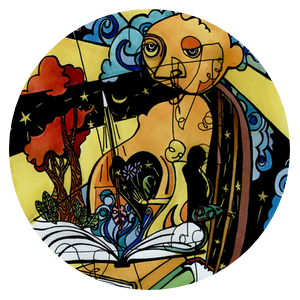
Top photo: Animal Like Any Other front cover

Portaging celebrates new writing from the Midwest with a particular focus on experimental and hybrid work from small presses.
C. Kubasta writes poetry, fiction, and hybrid forms. She lives, writes, & teaches in Wisconsin. Her most recent books include the poetry collection Of Covenants (Whitepoint Press) and the short story collection Abjectification (Apprentice House). Find her at ckubasta.com and follow her @CKubastathePoet.
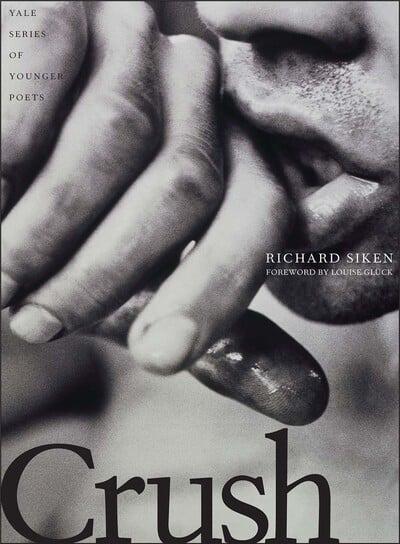 When, early in March, we began to spend most of our time apart—in our respective homes, in front of computer screens instead of people, texting and calling to connect virtually rather than face-to-face—I ordered novels and short story collections and poetry to feed the part of myself that missed friends, family, colleagues, and students. I tried to keep a schedule for the first few weeks, and it included live poetry readings in the quiet of my home, my dog attentive beside me. The books I lingered over, reading and re-reading, were poems that spoke of touch, vulnerability, bodies that comfort and confuse, pain that rises in words on the page and that, in a deft poet’s tongue, forces us to see the world in its trauma and longing. Those were Richard Siken’s first collection,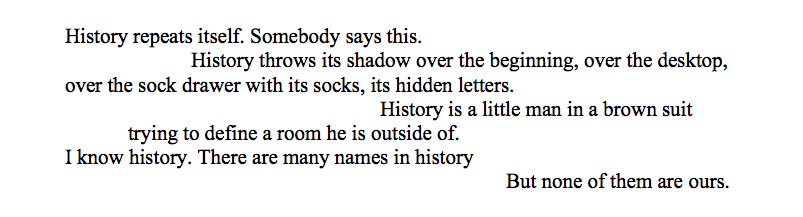
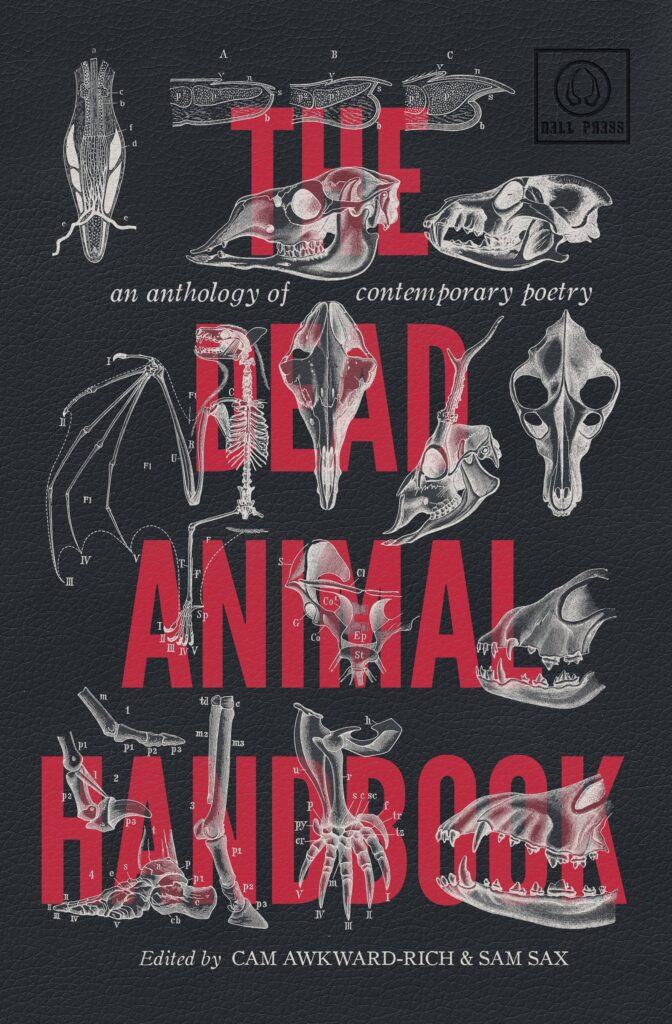 The anthology The Dead Animal Handbook, from University of Hell Press, takes a cue from this kind of poetry too, utilizing the imagery of animals—dead and gone—to foreground our humanity, or lack of it. In the introduction, editors Cam Awkward-Rich and sam sax write, “Rather than simply rejecting animality in order to claim humanity, many of these poems embrace the animal as a way of understanding the racialized, gendered, or sexual self, or in order to model forms of resistance.” Organized, in part, around the kinds of animal imagery in the poems (from birds, to fish, cats or dogs, or cattle), the included names are a wide selection of American poets—including important black and brown poets, and queer poets—as the editors put it, the “not straightwhitemen” of contemporary literature. Additionally, there’s a good mix of award-winning and well-known poets, alongside less-well-known poets—and since the collection came out in 2017, several contributors have become much more prominent.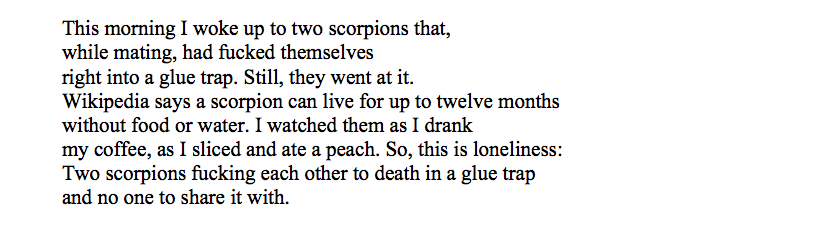
 Because we’re all looking for the story that’ll save us, the poem to keep us alive.
 What I notice each time I re-read the book is how the poet’s voice and memories are bound up with her mother’s. Section One begins with her mother, “My mother lived on a moshav,” and tells how that came to be through the stories of the previous generation: an old British airport hangar, but before that a grandmother in a prison camp in Palestine, and before that both grandparents’ arrival by boat, and before that Romania. In the midst of these early pages, these primal stories, the poet tells us her mother’s first memory, “a dog barking behind a screened door, its mouth full of sharp teeth and drool, its legs taller than her three-year-old self.” Kopernik then makes the all-encompassing move, “her memory could have been any year, any country.” What child doesn’t have some terrifying memory lodged somewhere, what child doesn’t remember some beast at the door? It is the twining of these — these small anywhere-moments with the larger stories of families making and re-making, migrating & moving — that accomplishes the large and small of The Memory House. Two pages later, we are granted the title line, after more moments that refract the mother’s memories through the poet-daughter’s voice: “Our memories tangle into a single memory house.”



Recent Comments