—C. Kubasta, Editor, BMP Celebrates National Poetry Month 2019
Winner
“what do i know about consent anyway” by Hannah Soyer
Short List
“A composing book, 1973” by Daisy Bassen
“FOR COLORED GURLS WHO HAVE CONSIDERED SUICIDE WHEN THE TWIST OUT WAS NOT ENUFF” by Levi Cain
“[mispronunciation]” by Uma Menon
Editors’ Picks
Week Five
“To: that nought in da jcemestry” by Penelope Alegria
“To Cry Out” by Cassandra Hsiao
“This Cosmic Dance” by Natasha McLachlan
what do i know about consent anyway
Contest Winner
Hannah Soyer
About Hannah Soyer
Hannah Soyer is a disabled creative writer and artist interested in perceptions and representations of what we consider ‘other.’ She is the creator of the This Body is Worthy project, which aims to celebrate bodies outside of mainstream societal ideals, and the founder of Freedom Words, a program to design and implement creative writing workshops specifically for students with disabilities. She has been published in Cosmopolitan, InkLit magazine, Mikrokosmos Journal, Hot Metal Bridge, Rooted in Rights, and her most recent piece, ‘Displacement,’ has been nominated for a Pushcart Prize.
The book is old. The book has a yellow cover. The book was given to me by my father. My father was a teacher.
The book is simple. The book is deceptive. Deceit is valuable. Deceit is proscribed.
The sentences are short. The sentences make a song. The sentences want involution. A clause has claws.
The claws are yellow. The claws are old. The sentences are about bombs. The sentences are about immolation.
The book belonged to a girl. The girl was a student. She learned about bombs. The yellow of immolation.
The sentences are about runaways. She ran away. The girl. Clawed.
About Daisy Bassen
Daisy Bassen is a practicing physician and poet. She graduated from Princeton University’s Creative Writing Program and completed her medical training at The University of Rochester and Brown. Her work has been published in Oberon, The Delmarva Review, The Sow’s Ear, and Tuck Magazine as well as multiple other journals. She was a semi-finalist in the 2016 Vassar Miller Prize in Poetry, a finalist in the 2018 Adelaide Literary Prize, a recent winner of the So to Speak 2019 Poetry Contest and was doubly nominated for a 2019 Pushcart Prize. She lives in Rhode Island with her family.
FOR COLORED GIRLS WHO HAVE CONSIDERED SUICIDE WHEN THE TWIST OUT WAS NOT ENUFF
Short-List Selection
Levi Cain
swear on my mama no–swear on something more simple and sacred. swear on my brother’s future mixtape, swear on pig fat in collard greens and freshly whipped shea butter, arroz con what the fuck ever– that the cracked cushion chair of my hairdresser’s closet is in fact a cathedral, packets of yaki and remy dotted with the same angels, skin the color of good brandy. the nollywood movies blaring on the thrifted television is the preacher. there is one constant truth– the half-room in waltham is a tabernacle for second generation girls who never learned how to cornrow.
a blackgurl’s bond with a hairdresser is tighter than the binding of isaac, requires more faith than you ever know how to give after years of lye being applied to your scalp, after years of being teased by whitegirls who crow that your hair looks like brillo pads that they wouldn’t let their housekeepers scour the sink with. the same whitegirls who now quiz you on coconut oil and ask you to anoint them with the wisdom of deep conditioning.
i and every other blackgurl who grew up in the suburbs are haunted by visions of hot combs and strangers putting their hands in our hair, pulling so sharply we swear we hear the echo of a whip crack.
but those ghosts have no place here, in this space that has only space enough for you, your hairdresser, and maybe her friend from haiti who you do not know the name of but who twists braids so gently it is as if she wants to be your mother.
this is an act of love, but all gods are not filled with goodness and so neither is the woman who stands with jojoba in her right hand, 84 inches of kankelon in her left, who asks why you never seem to have a boyfriend, who told you she would rather die than break bread with faggots but passes you plantains as communion, presses your forehead to her chest as madonna, calls you daughter, welcomes you with open arms to a rented room in a part of a town that would make a principal’s lip curl –this blackgurl bethlehem, this satin covered resting place, this plane of being where you are you are blackgurl, are celebration, are miracle, are nothing but holiest of holies.
About Levi Cain
Levi Cain is a queer writer from the Greater Boston Area who was born in California and raised in Connecticut. Further examples of their work can be found in Lunch Ticket, Red Queen Literary Magazine, and other publications.
[mispronunciations]
Short-List Selection
Uma Menon
i try to pull out a chameleon’s tongue from inside my throat, change the color, change it all before another ……………[mispronunciation] leaves my colorless mouth
instead i find my mother tongue stuck inside my throat, a lump forgotten only by me & i find a desire, tucked away, to strangle her and choke myself before another ……………[mispronunciation] escapes without explanation
i am afraid that i have stained the english that i speak that it yearns to be bleached in cold sand
i watch my mother chug down womanhood, let it slide through the grip of her mother tongue, into the stomach of America ……………[& her mispronunciations]
About Uma Menon
Uma Menon is a fifteen-year-old student and writer from Winter Park, Florida. Her writing has appeared or is forthcoming in the Huffington Post, The Rumpus, and National Poetry Quarterly, Sahitya Akademi’s Indian Literature, and the Cincinnati Review, among others. Her first chapbook was published in 2019 (Zoetic Press); she also received the 2019 Lee Bennett Hopkins Award in Poetry.
To: that noght in da jcemetsry
Contest Editors’ Pick
Penelope Alegria
Th city light s r beutiful 2night. Sky twinkles starligt on sidwalks with cracks that almost shape like ur sillhouette in twinkling moondust. Clay polish tatters blu on ashes of cigar wrappers flickering burnt blac n im thinkn of the time u rolled roun in somebody else’s ashes in that gravyard next to the church with the clouds rdy to snow upside down crosses.
Did u kn o th grass smells lik tequila n th boys breaths smells like lilac flickering burn t blqck sparks n my legs feel like pillow n l8ly it dpens’t feel right wrapping myself up in white bedsheets bc they dont feel wuite as electric as ur fingertips n m drunk
Im drunk im dunk m drnk n i want u nex to me w legs like pillows n breath like lilac burnt black n u rollin around in someboyd else’s ashes n i dk y u wouldnt want that eithr
About Penelope Alegria
Penelope Alegria has participated in Young Chicago Authors’ artistic apprenticeship, Louder Than a Bomb Squad. Her work has been featured or is forthcoming in La Nueva Semana Newspaper and El Beisman. Penelope was among the top 12 poets in Chicago as a Louder Than a Bomb 2018 Indy Finalist and was awarded the Literary Award by Julian Randall. She has performed spoken word at The Metro, University of Chicago, and elsewhere.
To Cry Out
Contest Editors’ Pick
Cassandra Hsiao
yellow: the cold echo of collapse muddled muddied house of decay return to the ground that bore me grow betrayal roots below mold my fingertips bleed flag i no longer show pale yellow: crayoned sun shine shield i risk changing colors if i don’t yellow: aroma that does not lie trapped in tin pots roasted crisp red brown duck i can taste home cannot find home sell home know home remember touch of yellow: lazy tongue remarks sting firecracker never cool enough to swallow yellow: taste morning hours sunrise son rise sweet victory to open shop open bells jingle lucky cat licks its paws yellow: eyes glass over cat looks white yellow: light
About Cassandra Hsiao
Cassandra Hsiao is a rising junior at Yale University, majoring in Theater Studies and Ethnicity, Race & Migration. Her poetry, fiction, and memoirs have been recognized by Rambutan Literary, Animal, Claremont Review, Jet Fuel Review, and National YoungArts Foundation. Her plays have been selected as finalists for national playwriting competitions held by The Blank Theatre, Writopia Labs, Princeton University, Durango Arts Center, California Playwrights Project, and YouthPLAYS. Her work is currently being produced in theaters across the nation. She has also won a Gracie Award for her entertainment journalism and was recognized as a Voices fellow for the Asian American Journalists Association (AAJA).
Natasha McLachlan is a poet currently living in Southern California. After losing her speech in 2018 due to unforeseen circumstances, she fell in love with reading all over again, as it helped her cultivate self-care–this, she hopes, will be a cure for others in a hectic and frantic lifestyle. She was a first-generation college student, graduating from California College of the Arts with a bachelor’s degree in Writing and Literature. As a minority, she takes pride in breaking the barriers and stigma around individuals of color by simply being herself. When she is not writing, she is spending time with her family or bonding with her 9 siblings, whom she considers her best friends. Her inspiration comes from the moons and stars around her, nature being her greatest muse.
BMP Celebrates National Poetry Month — Break Poetry Open
For this year’s National Poetry Month, Brain Mill Press & Voices want to add to your #TBR pile, sing siren songs of unsung heroes, and signal boost living poets we should be reading more. By the end of the month, we hope you will have acquired 30+ new books of poetry and that they continue to multiply in the darkness of your library. Explore new voices & new forms — re-read some old favorites — play if you liked this poet, you’ll like... the old-fashioned way, algorithm-free — just poetry lovers talking to poetry lovers, as the Universe intended. Happy #NaPoMo2019 from Brain Mill Press.
Jessie Lynn McMains on the Poetry of Daphne Gottlieb
If it weren’t for Daphne Gottlieb, I wouldn’t be a poet.
That sounds hyperbolic, but it’s true. Okay, I might have been a poet even if I’d never read her work but my poems wouldn’t be as brave. Since the summer of 2001, when I bought Why Things Burn at Quimby’s in Chicago, her poems have given me a map for writing about the hard things—rape, addiction, mental illness—right alongside poems in praise of love, desire, rebellion. (But hard love, desire like a car crash, rebellion because you’d die otherwise; which is the way I’ve always experienced those things.) For eighteen years her poems have taught me ways to write the truths of how women, queer folks, and other non-normative bodies move through the world. How we armor ourselves, adorn ourselves. How we survive and find joy.
Daphne’s poems often involve an insertion of herself/the speaker into pop culture, history, or the literary canon. Much like Kathy Acker did in her prose (Daphne was a recipient of the Acker Award for Excellence in the Avant-Garde), taking source texts from the canon and making her hero(ine)s pirates and knights, Gottlieb’s poems ask: why can’t a girl be an outlaw, an adventurer, the author of her own story? Why can’t a girl be a Sal Paradise or Dean Moriarty, rather than just a Camille or Marylou?
Daphne’s poems aren’t easily categorized. Her work blends elements of performance poetry and “academic” poetry (as her official website bio states: “[Gottlieb] stitches together the ivory tower and the gutter just using her tongue”). Form-wise, her poems run the gamut from a more traditionally structured lyrical style to prose poems and other experimental forms. (I once nearly got into a bar fight with a dude who dismissed her entire oeuvre because she writes prose poems, and he said, “prose poems aren’t really poetry.”) So this is another thing Daphne has taught me—how to use my words as a bridge between school and street, stage and page. How to be both glitter and gutter, simultaneously.
Here’s a hard truth—sometimes people like us and those we love don’t survive. But maybe more than anything else, Daphne’s poems have shown me that I can use words to give my ghosts breath. Poems can be houses for the dead to inhabit, and every time someone reads those poems, they are again briefly, gloriously, alive.
About Jessie Lynn McMains
Jessie Lynn McMains is a poet, writer, and publisher. They are the author of multiple chapbooks, most recently The Girl With The Most Cake and forget the fuck away from me. You can find their personal website at recklesschants.net, or follow them on Tumblr, Twitter, and Instagram @rustbeltjessie
BMP Celebrates National Poetry Month — Break Poetry Open
For this year’s National Poetry Month, Brain Mill Press & Voices want to add to your #TBR pile, sing siren songs of unsung heroes, and signal boost living poets we should be reading more. By the end of the month, we hope you will have acquired 30+ new books of poetry and that they continue to multiply in the darkness of your library. Explore new voices & new forms — re-read some old favorites — play if you liked this poet, you’ll like... the old-fashioned way, algorithm-free — just poetry lovers talking to poetry lovers, as the Universe intended. Happy #NaPoMo2019 from Brain Mill Press.
Expatriate Cheyenne writer Lance Henson’s new work in Dead Zone et autres textes has the same powerful slight lines, imagistic suggestiveness, and resistance vision of his earlier work.
The poem “secret” claims the kind of revelation I have always discovered in Henson’s work: “the half blindness that allowed you to see further / words forged in motions” (24). The back cover text “places” Henson and his stance with this description:
somewhere between rage and freedom I am sitting in the ashes of a dream singing. . .
Finally, one of unnamed poems in the collection offers the kind of straight-forward societal indictment that also characterizes his work:
america america no longer a theme park now a killing field if you are ………………the other. . . . (54)
A member of the Cheyenne Dog Soldier Warrior Society, veteran, Native American activist, AIM member, and member of the Native American Church, Henson also holds an MFA from University of Tulsa and has worked as poet-in-residence in over 800 schools in the United States and Europe. Since his first volume of poetry, Keeper of Arms, was released in 1971, he has published twenty-eight chapbooks or volumes of poetry which have been translated into twenty-five languages.
Throughout his oeuvre, Henson presents his sparse uninflected poems in lower case, without capitalization, and with ellipses as his main form of punctuation. His poems often weave together images of the external landscapes with spiritual terrain reflecting on their porous interconnections. They also offer commentary on historical and contemporary failings of the U.S. government and on the broader capitalistic colonizing forces at work in the world. Henson’s comments in “The Whirlwind is a Mirror” shed light on his aesthetic when he claims, “All poems are prayers when they work,” and “Poetry is revolutionary. It must be to survive.” About his preference for the short poem, he notes: “I think brevity is one way to acknowledge strength and one way to acknowledge and pay homage to the Great Silence we came out of.” Indeed, Henson’s poetry may be crafted to a large extent of prayer, revolution, and great silences.
A poem like “strong heart song” that gives title to his 1997 collection Strong Heart Song: Lines From a Revolutionary Text seems to contain all of these elements:
nadors do mi uts e mghon bach ni tseheskotseo ehmin
i will walk on the ashes of the earth singing (iii)
By opening the poem first in Cheyenne, the bilingual Henson enacts a revolutionary response to the colonization of language. Then, with the phrase “the ashes of earth” he implies something about the fleetingness of physical reality and perhaps offers a warning about the inevitable destructive effects of contemporary human actions. Still the poet will proceed “singing,” which in the larger context of Native ceremonial tradition is often the equivalent of prayer. Both verbally and visually the poem is small — much is left unspoken; much is contained in the implied silence.
Perhaps the finest gesture in Henson to silence comes in the poem “celebration” which opens with “cold light / at the edge / of words” and closes with this word picture:
in a portrait a woman is holding her apron
catching the snow (Selected Poems, 10).
The poem accumulates meaning from the idea of an artist’s creating a picture/portrait, the vision of the woman “catching” snow (or perhaps manna), and the idea of her making of herself a vessel — attempting to gather or hold that which will only melt as snow or dissipate as fleeting knowledge. Such, of course, is always the poets’ futile quest, particularly in the light of injustice.
It is as well Henson’s quest in Dead Zone. In the poem “Kofi,” he recognizes that Sisyphus-like task of poets to build with language even as we already acknowledge its inadequacy:
now your words have entered a frontier known only to poets in our collective book of the wind. . . . (70)
In this new book, as in all that came before, the success of Henson’s poetry stems partly from its eloquent portrait of its own fleeting reality.
About Kimberly Blaeser
Kimberly Blaeser, writer, photographer, and scholar, is the author of three poetry collections—most recently Apprenticed to Justice; and editor of Traces in Blood, Bone, and Stone: Contemporary Ojibwe Poetry. She served as Wisconsin Poet Laureate for 2015-16. Blaeser is Anishinaabe and grew up on White Earth Reservation. A Professor of English and Indigenous Studies at the University of Wisconsin—Milwaukee, Blaeser is also on faculty for the Institute of American Indian Arts low residency MFA program in Santa Fe. Her photographs, picto-poems, and ekphrastic poetry have been featured in various venues including the exhibits “Ancient Light” and “Visualizing Sovereignty.” Her fourth collection of poetry, Copper Yearning, will be published by Holy Cow! Press in fall 2019.
BMP Celebrates National Poetry Month — Break Poetry Open
For this year’s National Poetry Month, Brain Mill Press & Voices want to add to your #TBR pile, sing siren songs of unsung heroes, and signal boost living poets we should be reading more. By the end of the month, we hope you will have acquired 30+ new books of poetry and that they continue to multiply in the darkness of your library. Explore new voices & new forms — re-read some old favorites — play if you liked this poet, you’ll like... the old-fashioned way, algorithm-free — just poetry lovers talking to poetry lovers, as the Universe intended. Happy #NaPoMo2019 from Brain Mill Press.
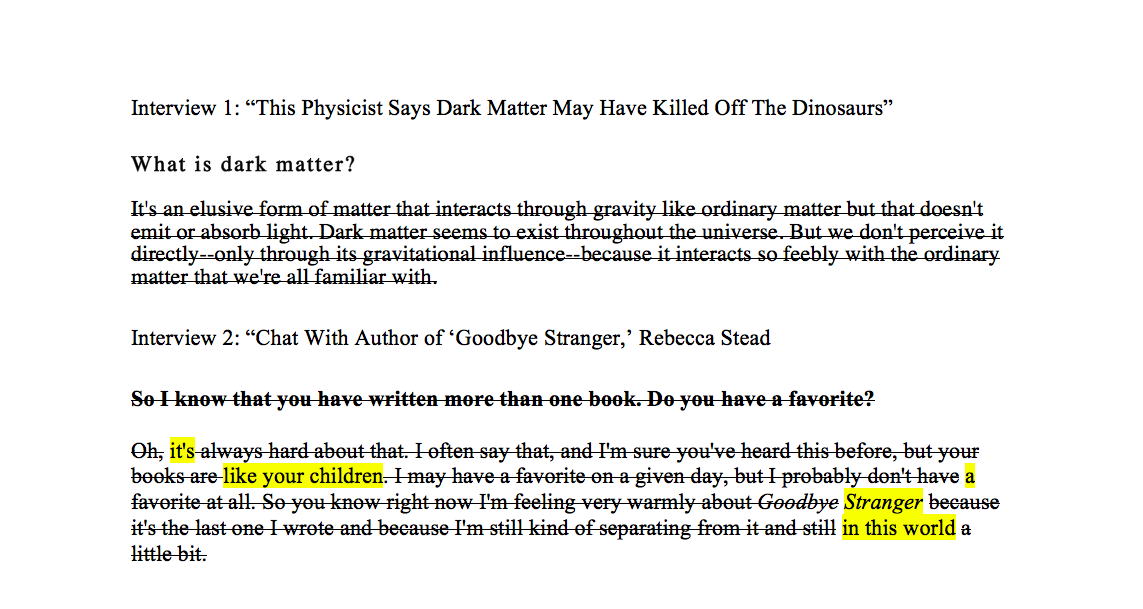
a poem for anyone who is bad at giving direct answers to questions
(1) Find two interviews on different topics. Let’s call them Interview One and Interview Two.
(2) Copy down only the questions from Interview One.
(3) Using only the responses from Interview Two, answer these questions. Instead of simply copying-and-pasting, approach each response as an erasure, extracting the words necessary to “answer” the questions. You may take as much or as little of the original text as you wish.
(4) You should go through the Q&A in order, using the first response from Interview Two to answer the first question in Interview One. And so on and so forth.
(5) The interview ends when you run out of questions or responses, e.g. if Interview One contains more questions than Interview Two does answers.
SAMPLE
What is dark matter?
It’s like your children. A stranger in this world.
Is dark matter made of atoms?
Well, it’s easier to fabricate something that small, true.
If it’s invisible, why call it “dark?”
I don’t. But other people do.
How can we tell dark matter exists?
People make us feel badly. Sometimes love is very boring.
Dark matter was first hypothesized many decades ago. Tell us about that.
I would like to see you more. I’d like to see a slightly less pretty you.
What is the current state of knowledge about dark matter?
There’s still time to fix things.
Do new findings about dark matter tell us anything about the origins of the universe?
There is this idea that matter—it’s complicated.
How about the existence of multiple universes—the so-called multiverse?
It was a challenging space but a safe space. Now, it’s very very different. Your problems follow you home.
Speaking of your book, what is the connection between dark matter and the dinosaurs?
It’s like this wave of feeling connected to people. “This must be it.” In my experience, it doesn’t work in that way. This world is, I think, moments of doubt.
If dark matter might explain the demise of the dinosaurs, might it also explain how life on Earth got its start?
I mean, I’m not really part of the process.
So if dark matter can send dangerous comets and asteroids our way, should we be worried?
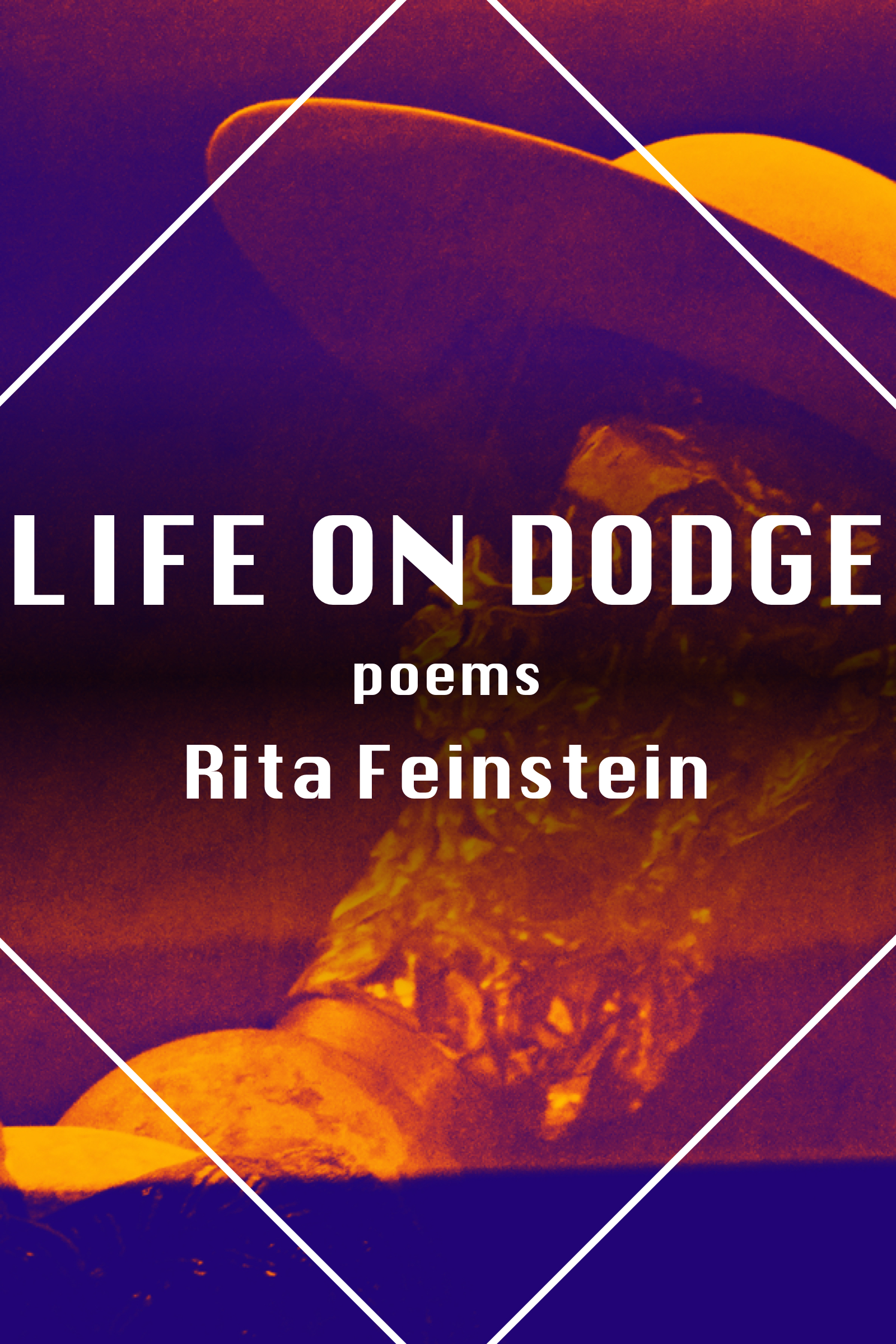
Rita Feinstein is a DC-based writer and teacher. Her work has appeared in Grist, Willow Springs, and Sugar House, among other publications, and has been nominated for Best of the Net and Best New Poets. She received her MFA from Oregon State University.
Life on Dodge is a generous gift to the broken-hearted, a romp through an interstellar garden with the best of guides. —Kiki Petrosino, author of Witch Wife
I realize that being a woman is a lot / like being a planet—I can’t decide / what my gravity attracts. I am as helpless / as I am powerful.
Poet Rita Feinstein builds a planet from twenty-five sonnets of lost love, and the astrophysics is undeniable. What has more gravitational pull than loss? What is a more alien landscape than the rearrangement of a heart?
A strong narrative arc built from verse, Feinstein’s debut collection crosses Shakespeare with science fiction to launch readers into a world apart where a newly broken heart is celebrated, examined, nurtured, and let to rage, as if only the atmosphere of an entirely new planet is able to bear the process of healing. This emotionally generous collection looks at pain and love—fourteen crystalline and confessional lines at a time. Dodge, as the speaker names her planet, “is not Virginia.” It is “red because a horse heart / is red . . . Red because / that’s what I was wearing when I left,” and as the speaker fills Planet Dodge with men (because “there’s no reason for Dodge / to be this empty”), she finds “how easy it is to hate them all / after six years of loving you too much.”
Life on Dodge is a powerful cycle of confessional verse, a contemporary radio signal to Plath and Sexton, utterly unafraid of the heat and danger of reentry after the fully interstellar escape that comes after heartbreak. “Next month the pain will be less, / and the next month it will simply disappear. / For example: today you are coming to Dodge. / You are coming to take me home.”
A Selection from Life on Dodge
When you left, there was a sound
like the scraping of a dagger
being unsheathed from my heart,
and in the left-behind hollow,
a red bat came to roost.
Good, I thought, because bats go
where moths go and moths go
where the light is, which means
there’s still something like a streetlamp
in me, however dusty and guttering.
But where its corona bleeds to black,
you can still hear it—the sleek shriek
of steel against bone, the infinite echo
of you pulling away.
BMP Celebrates National Poetry Month — Break Poetry Open
For this year’s National Poetry Month, Brain Mill Press & Voices want to add to your #TBR pile, sing siren songs of unsung heroes, and signal boost living poets we should be reading more. By the end of the month, we hope you will have acquired 30+ new books of poetry and that they continue to multiply in the darkness of your library. Explore new voices & new forms — re-read some old favorites — play if you liked this poet, you’ll like... the old-fashioned way, algorithm-free — just poetry lovers talking to poetry lovers, as the Universe intended. Happy #NaPoMo2019 from Brain Mill Press.
We’re overwhelmed by the positive response to our first poetry month. Both weeks, we had talented poets participate, and it was a particular joy to showcase their poems on our blog. During the events, when we received a new poem in our inbox, it was genuinely exciting. We read them right away, and we read them out loud. These poems provided respite and conversation to a very small but very busy publishing house, and then provided discussion and ideas to our audience when they were shared.
So one might ask, if these poems, all of them, already did so much, why recognize “winners?” It’s a valid question, and an important one, and the answer reflects this — because poetry is important and it is valid, and there is significant skill and craft and self employed in the writing of a poem in addition to singing. All of these poems sang, all of them, and it is a human impulse to sing of ourselves and for others, and also, there are poets seriously dedicated to making poems as beautiful as can be borne, and who are in conversation with formal constraints, history, language, and influences. Recognizing such poets forwards poetry for all of us — in the reading and writing of it, and of its significant use in activism, which is desperately required in our world.
Poets are still executed, detained, imprisoned, and otherwise silenced, all over the world, for writing poems. Iranian peace poet Hashem Shabaani was hanged for his work by a tribunal last winter. Susana Chávez Castillo (Mexico), an outspoken poet and women’s rights activist, was found brutally murdered, a crime believed to be associated with her political and artistic expression. Currently, poets Aron Atabek (Kazakhstan), Mohammed Ibn al-Dheeb al-Ajami (Qatar), Enoh Meyomesse (Cameroon), and Liu Xia (China) are imprisoned for their poems and speech by their governments or government factions — all in inhumane conditions.
Poems and poets are important. Recognition and promotion of poems is vital. Poems are a vital contribution of speech, and they have often been the speech that has sang the purest, and the loudest, and the most human.
Elizabeth Berry is our 2015 overall winner of Brain Mill Press Celebrates Poetry Month events. Her poems, On Growing Up, submitted to the WORK event, and Stars in the Sky, submitted to the LOVE OR FEAR event, are arresting for their authority, the intensity of their anger at where the women they speak of find themselves, honed with plain language and sharp metaphor. Her two poems resolve nothing in their ending lines, and yet push to the reader to feel catharsis.
Additionally, Brain Mill Press would like to recognize two runners up, G.B. Gordon and Pam Faste. you by Gordon showcases a lyrical attention to language and is deeply romantic without sweetness. We found you to be both spare and heavy with the feeling of the speaker. Faste’s poem, Moment Before, captures beautifully a small and breathless moment of infatuated anxiety that all of us deep in love or like or crush have felt so keenly.
Thank you, everyone, and please share this announcement far and wide.
On Growing Up
On the day that my grandfather died my grandmother lit a cigarette looked down at the stricken faces of her children and said well, we still have this farm to take care of. My mother, then eight, looked out the window at the cows that crowded the fence, waiting for food, for release from the swollen udders, and beyond at the hay, tall in the fields, and at the tractors resting in the sheds, waiting for the long legs of morning to walk up and turn the key.
At eighteen, my mother, as lean and brown as a leather strap covered her face and veiled her reasons to follow my father a hundred miles from home.
Three kids in three years.
Mortgage
yard
car
pool
PTA
Low money, no money, grocery store clerk, pregnant daughter, baby crying all night, no lights, pay that bill but another’s coming.
And so it went for thirty years. Yet every month they would drive back over the mountain as visitors, and sit, drinking tea until the cows moaned and the others rose to go to work.
Occasionally, reluctant to unclasp ourselves from the circle of laughter and soft shadows that floated down from the familiar ceilings, we would follow them to the cool concrete floors, and clanging gates of the milking barn. My mother, face lit by the glow of the yellow interior lights, moved quickly to lead, to coax the herd into position and nodded with satisfaction when they lined up, and did their jobs.
Stars in the Sky
Maybe your cancer has come back and that is why it is so hard to sleep and when you do sleep you wake up with a throat full of sand and you stumble across the worn wood floors to the kitchen for water and gulp it down by the glassful trying not to look at the window because the moon might look back and once you lock eyes with it it’s hard not to notice the blanket of stars that spreads out forever
and there’s just something about a blanket of stars spreading out forever that is destroying you making your heart literally ache in your body as you yearn for a boy’s fat hand in your hand his face a moon shining back in a picture that you keep hidden in a drawer with all of the other sharp knives safe there from stars raining down from skies from windshields exploding on impact.
You rub the scars. Stare out the window.
For this year’s National Poetry Month, Brain Mill Press & Voices wants to add to your #TBR pile, sing siren songs of unsung heroes, and signal boost living poets we should be reading more. By the end of the month, we hope you will have acquired 30+ new books of poetry and that they continue to multiply in the darkness of your library. Explore new voices & new forms — re-read some old favorites — play if you liked this poet, you’ll like . . . the old-fashioned way, algorithm-free — just poetry lovers talking to poetry lovers, as the Universe intended. Happy #NaPoMo2019 from Brain Mill.
Literature by writers of colour published in the UK remains overburdened by a bulk of constraints. Often it fixes complicated narratives to personal struggles, consigning them to domains of the confessionnal, inner moral clashes, and the impossibly tragic.
The inauguration of the Bare Lit Festival in February 2016 marked a significant turning point. Rather than centring writers’ work around prescriptive themes, the festival looked to open possibilities beyond them. Through readings, conversations, panels, and performances, we were adamant to overcome the anachronism that exists between the vast spectrum of work produced by writers of colour and the kind of exposure they receive. With the generous help of our audiences and supporters, Bare Lit was able to honour their work both artistically and financially.
The accompanying anthology builds upon this achievement. Calling on participants and writers of colour UK-wide, we asked contributors to submit their writing in line with the aims and ethos of Bare Lit. The response was overwhelming—thank you to everyone who contributed.
We received over a hundred submissions of prose and poetry covering an impressive range. Writers took us on flights of fancy, pandering to multiple worlds while engaging us in their literary imaginations. Every submission was carefully discussed and considered on the premise of originality, relevance, and often a certain kind of gut feeling.
The selection presented here brings together original, previously unpublished works of contemporary prose and poetry by established as well as lesser known writers, giving both the opportunity to work with this volume’s brilliant editors, Kavita Bhanot and Courttia Newland, who have honed each piece to its utmost and without whom the anthology would not have been possible. The final pieces cover an unimaginably vast scope, reflecting the wide, and at times irreconcilable and contradictory, range of themes and the political élan present in the work of writers of colour in this particular period. In this sense, they are not canonical but anticanonical, and vested in the many global and diasporic vernaculars.
—From the foreword by Bare Lit co-founder and anthology co-editor Mend Mariwany
A fiction and poetry anthology in support of the Bare Lit Festival, showcasing award-winning British authors of color.
In 2016, a group of UK authors of color founded the Bare Lit Festival: the first ever literary and author festival featuring only UK writers of color. Bare Lit collects short stories and poetry by literary luminaries whose work represents the values and mission of the festival. Edited by Kavita Bhanot, editor of Too Asian, Not Asian Enough, Courttia Newland, author of The Gospel According to Cane, and Bare Lit Festival cofounder Mend Mariwany, all proceeds of this anthology go toward direct support of the Bare Lit Festival for authors of color.
The Bare Lit Anthology is an excellent way to read and discover talented BAME poets working in the UK.
BMP Celebrates National Poetry Month — Break Poetry Open
For this year’s National Poetry Month, Brain Mill Press & Voices want to add to your #TBR pile, sing siren songs of unsung heroes, and signal boost living poets we should be reading more. By the end of the month, we hope you will have acquired 30+ new books of poetry and that they continue to multiply in the darkness of your library. Explore new voices & new forms — re-read some old favorites — play if you liked this poet, you’ll like... the old-fashioned way, algorithm-free — just poetry lovers talking to poetry lovers, as the Universe intended. Happy #NaPoMo2019 from Brain Mill Press.
Literature by writers of colour published in the UK remains overburdened by a bulk of constraints. Often it fixes complicated narratives to personal struggles, consigning them to domains of the confessionnal, inner moral clashes, and the impossibly tragic.
The inauguration of the Bare Lit Festival in February 2016 marked a significant turning point. Rather than centring writers’ work around prescriptive themes, the festival looked to open possibilities beyond them. Through readings, conversations, panels, and performances, we were adamant to overcome the anachronism that exists between the vast spectrum of work produced by writers of colour and the kind of exposure they receive. With the generous help of our audiences and supporters, Bare Lit was able to honour their work both artistically and financially.
The accompanying anthology builds upon this achievement. Calling on participants and writers of colour UK-wide, we asked contributors to submit their writing in line with the aims and ethos of Bare Lit. The response was overwhelming—thank you to everyone who contributed.
We received over a hundred submissions of prose and poetry covering an impressive range. Writers took us on flights of fancy, pandering to multiple worlds while engaging us in their literary imaginations. Every submission was carefully discussed and considered on the premise of originality, relevance, and often a certain kind of gut feeling.
The selection presented here brings together original, previously unpublished works of contemporary prose and poetry by established as well as lesser known writers, giving both the opportunity to work with this volume’s brilliant editors, Kavita Bhanot and Courttia Newland, who have honed each piece to its utmost and without whom the anthology would not have been possible. The final pieces cover an unimaginably vast scope, reflecting the wide, and at times irreconcilable and contradictory, range of themes and the political élan present in the work of writers of colour in this particular period. In this sense, they are not canonical but anticanonical, and vested in the many global and diasporic vernaculars.
—From the foreword by Bare Lit co-founder and anthology co-editor Mend Mariwany
A fiction and poetry anthology in support of the Bare Lit Festival, showcasing award-winning British authors of color.
In 2016, a group of UK authors of color founded the Bare Lit Festival: the first ever literary and author festival featuring only UK writers of color. Bare Lit collects short stories and poetry by literary luminaries whose work represents the values and mission of the festival. Edited by Kavita Bhanot, editor of Too Asian, Not Asian Enough, Courttia Newland, author of The Gospel According to Cane, and Bare Lit Festival cofounder Mend Mariwany, all proceeds of this anthology go toward direct support of the Bare Lit Festival for authors of color.
The Bare Lit Anthology is an excellent way to read and discover talented BAME poets working in the UK.
BMP Celebrates National Poetry Month — Break Poetry Open
For this year’s National Poetry Month, Brain Mill Press & Voices want to add to your #TBR pile, sing siren songs of unsung heroes, and signal boost living poets we should be reading more. By the end of the month, we hope you will have acquired 30+ new books of poetry and that they continue to multiply in the darkness of your library. Explore new voices & new forms — re-read some old favorites — play if you liked this poet, you’ll like... the old-fashioned way, algorithm-free — just poetry lovers talking to poetry lovers, as the Universe intended. Happy #NaPoMo2019 from Brain Mill Press.
About The Bare Lit 2016 Anthology
Literature by writers of colour published in the UK remains overburdened by a bulk of constraints. Often it fixes complicated narratives to personal struggles, consigning them to domains of the confessionnal, inner moral clashes, and the impossibly tragic.
The inauguration of the Bare Lit Festival in February 2016 marked a significant turning point. Rather than centring writers’ work around prescriptive themes, the festival looked to open possibilities beyond them. Through readings, conversations, panels, and performances, we were adamant to overcome the anachronism that exists between the vast spectrum of work produced by writers of colour and the kind of exposure they receive. With the generous help of our audiences and supporters, Bare Lit was able to honour their work both artistically and financially.
The accompanying anthology builds upon this achievement. Calling on participants and writers of colour UK-wide, we asked contributors to submit their writing in line with the aims and ethos of Bare Lit. The response was overwhelming—thank you to everyone who contributed.
We received over a hundred submissions of prose and poetry covering an impressive range. Writers took us on flights of fancy, pandering to multiple worlds while engaging us in their literary imaginations. Every submission was carefully discussed and considered on the premise of originality, relevance, and often a certain kind of gut feeling.
The selection presented here brings together original, previously unpublished works of contemporary prose and poetry by established as well as lesser known writers, giving both the opportunity to work with this volume’s brilliant editors, Kavita Bhanot and Courttia Newland, who have honed each piece to its utmost and without whom the anthology would not have been possible. The final pieces cover an unimaginably vast scope, reflecting the wide, and at times irreconcilable and contradictory, range of themes and the political élan present in the work of writers of colour in this particular period. In this sense, they are not canonical but anticanonical, and vested in the many global and diasporic vernaculars.
—From the foreword by Bare Lit co-founder and anthology co-editor Mend Mariwany
A fiction and poetry anthology in support of the Bare Lit Festival, showcasing award-winning British authors of color.
In 2016, a group of UK authors of color founded the Bare Lit Festival: the first ever literary and author festival featuring only UK writers of color. Bare Lit collects short stories and poetry by literary luminaries whose work represents the values and mission of the festival. Edited by Kavita Bhanot, editor of Too Asian, Not Asian Enough, Courttia Newland, author of The Gospel According to Cane, and Bare Lit Festival cofounder Mend Mariwany, all proceeds of this anthology go toward direct support of the Bare Lit Festival for authors of color.
The Bare Lit Anthology is an excellent way to read and discover talented BAME poets working in the UK.
BMP Celebrates National Poetry Month — Break Poetry Open
For this year’s National Poetry Month, Brain Mill Press & Voices want to add to your #TBR pile, sing siren songs of unsung heroes, and signal boost living poets we should be reading more. By the end of the month, we hope you will have acquired 30+ new books of poetry and that they continue to multiply in the darkness of your library. Explore new voices & new forms — re-read some old favorites — play if you liked this poet, you’ll like... the old-fashioned way, algorithm-free — just poetry lovers talking to poetry lovers, as the Universe intended. Happy #NaPoMo2019 from Brain Mill Press.











Recent Comments