Mothering the Sexy

Mothering the Sexy

Christie Perfetti Williams

Sixteen years ago, I moved from the warm bosom of my frigid family homestead in Oswego, New York, to Manhattan and produced my first off off-Broadway play. It required the kind of impenetrable naiveté and unflinching courage found in kids and crazy people.

I penned the play, Carnival Girls, while in college. It was a piece I described as “multi-genre and non-linear.” Basically a hodge-podge of highlights from my writing portfolio that spanned four years as a coed studying creative writing.

Ever since my grandmother, smoking a cigarette and sipping black coffee, told me the stories of the mascaraed hootchie kootchie girls, I was obsessed with the women who worked the sexy, seedy small-town carnival circuit. So much so that today, I have a thriving NYC-based theatre company as well as a book series that bears the same name: The Carnival Girls.

An all-female theatre company, Carnival Girls Productions creates, produces, and promotes original theatrical work by and about women. Our mission is quite simple: great roles for women = great entertainment for all. And the same belief holds true for the first book in my series, Sadie of the Sideshow.

But ironically, or perhaps not, it all truly began in dingy strip club turned off-Broadway theatre across from the Port Authority Bus Terminal ten blocks from Times Square. There, I held an open casting call for female “actors, dancers, magicians, musicians, contortionists and comediennes” ages eighteen to twenty-eight. This is where my impenetrable naiveté got poked.

Hundreds of young women showed up to audition for my mildly entertaining, entirely non-paying theatrical hodge-podge. And 95 percent of these performers? Fiercely, brilliantly, achingly talented. I never truly knew what a muse was until I arrived Manhattan and had two hundred of them staring back at me, equally wide-eyed and hungry as their playwright turned producer.

And so began the task of writing new parts for the production. Because despite not having material for her, how could I turn away the ashen-faced Russian girl with the blunt black bangs and the Mona Lisa grin? Or the crop-topped and bejeweled Israeli dancer who not only could break dance but break hearts with a mere twitch of her hip? Or the African American actress whose command of the stage whilst wearing fishnets and devouring a bagel had me near tears? Mama, I wasn’t in Oz(wego) anymore. And was so very grateful for it.

My imagination went wild with the possibilities for performance. I saw clowns and con artists. Strippers and sword swallowers. Mystics and money makers. A cruel carnival barker in a corset, top hat, and brandishing a riding crop! Every artist who took the stage, I asked the same question: if you could be any kind of carnival girl, who would you be? I expected answers that were as interesting and diverse as the artists themselves. My naiveté got rammed again.

The “hot” one. The “sexy” one. The “slut.” This is how every single one of the young women responded. (Except for the one who said she wanted to be a hamster. I still have no idea what that means or how she envisioned that in a carnival world, but I’m not convinced it wasn’t sexual either.)

My twofold takeaway from this unintended social experiment was, one, young women had a very skewed (though not entirely inaccurate) view of what it meant to be a carnival worker. And, two, we were all woefully sexually repressed and craved a safe place to bear our beauty and booties.

It was just like the whole Halloween costume conundrum that our culture has been tortured and titillated by for decades. The one night a year where every and any woman could crank up their boobs, stuff their feet into stilettos, and strut out in public without fear of being judged a whore or harlot. And if a performer could do this on stage under the auspices of art? Well, damn, the hotness just got cooler.

Fast-forward fourteen years later, when an editor-friend called me with a scintillating writing opportunity. She was working for a publishing upstart that was soliciting submissions of erotic fiction for their catalogue. My friend thought of me and the modest carny girl empire that I spent the last decade building, complete with over a dozen plays and branded panties. I was advised, “Think 50 Shades but good.”Suddenly, I was the actor on the stage. I was the one given the green light to stand up and strip down. And not that I ever needed permission, but it was a kick being asked. Certainly a motivation to explore another side of my creative self, flex a kinky muscle or two. And as an artist, isn’t that my responsibility? To go where I’ve never gone before? If not for my audience, then for myself?

But there was a hitch. A sticky, curly-blond-locked one named Luke, my toddler. Who at the time was just two years old.

I spent over a decade living single in Manhattan during the height of Sex and the City (which I didn’t watch because, unlike my fellow writer Carrie Bradshaw, I couldn’t afford cable). Those were the days of writing all night and sleeping all morning. Eating cereal for dinner and drinking mimosas for brunch. Making out with strangers. Spending whatever little extra cash I had on costume jewelry, concert tickets, and copies of bootleg screenplays sold on street corners. I was so very naughty.

If there was ever a time for me to discover my inner Anais Nin, it would have been then. But not now. Not in the suburbs. Not when the majority of bodily fluids I had the pleasure of being around came from my drooling, puking, and pooping son.But while my decade of debauchery was long gone, I had earned a plethora of delicious memories from which to derive inspiration. And the wisdom to know that opportunities, particularly the real fun ones, are often fleeting.

So as a new mom now living in New Jersey, learning how to maneuver jug-handles and coordinate writing sessions with naptimes, I embarked on a new journey as an erotica writer. And it came with a couple of self-imposed caveats.

First, feverish loins and trembling thighs aside, I’d write novel that my grown-up boy would be proud of. Or at least not embarrassed by. And it wasn’t the first time that I considered the perspective of my little man as a big man. In my early twenties, well before Luke was on this planet and had sucked the jolly from my joombas, I was asked to pose for Playboy. I declined. Because I knew I wanted to be a mom someday. And not a mom with a past history of porny-pics.It was essential to me that my novel not just have steamy scenes but a real storyline and great writing. It needed to be as good as, if not better than, any of my pathos-infused play scripts. Because I had something to prove now, not just to me and my readers but to my son. Before motherhood and Manhattan, this woman was a writer. Mediocrity or pulp fiction weren’t options.

Second, I’d create a story that would contribute to the world that I wished for Luke and God-willing his siblings. Enter carny girl Sadie Valentine: a strong, sexy female protagonist with full autonomy, in charge of her life and body. And her male counterpart, Cole Snyder, who admires her intelligence, enjoys her tenacity, and, yes, lusts after her curves.

It’s a cause I’ve championed for almost two decades as a playwright; better, more diverse roles for women. My mission couldn’t and wouldn’t stop because the sex suddenly got explicit. Because it wasn’t just wounded women in need of rescuing who enjoyed the gymnastics of the flesh. But all the rest of us.

Finally, I wasn’t going to be a cliché. And this began with not seeing myself as cliché. Despite all the signs that pointed to cliché-dom. Suburban stay-at-home mom, underwashed and overdressed in wooly flannel pajamas, writing a bodice-ripper while her woefully neglected kid eats Oreos, watches Blues Clues, and decorates the walls in crayon art.

Because all fantasy aside, I bet most erotica writers worked in atmospheres that looked more like mine than they did the lustful pages of their paperbacks. And this wasn’t comforting to me, but I wasn’t going to let it discourage me either. The reality was I had written some of my darkest, most intense plays while nursing and humming lullabies. Paradox was everywhere, not just in mommy-porn.

The result? A kick-ass novel with fun, interesting characters set against the backdrop of the American sideshow. With a bit of magic and boom boom mixed in. I even used my real name on the cover. I’d be damned if anyone else got credit for it, including my saucy childhood alter ego Belinda Lavantia.

Back in my big-city-living days, my favorite part of riding the subway was seeing what everyone was reading. The myriad of newspapers printed on various colors of faded paper stock. Cinderblock-sized hardcovers propped up on breasts and bellies. Worn paperbacks folded into palms. I would imagine one of them was mine. Long gone was the dream of having an author card in the card catalog; a book on the Q train was the next best thing.

But then ebooks exploded onto the scene, and suddenly nothing could be seen. No titles and no covers. Readers hid their treasure and pleasure from spying eyes. Unafraid of being caught and judged, this is when most women caught up on their fiction de amour. Like the actors on the stage, like the revelers on Halloween, like the wife surfing the web for slow-cooker recipes, they too had cravings.

And if this mom’s fancy art could embrace their desire, nurture their fantasies, help satiate a hunger while whetting a palette (and maybe something else), then my job was done. And done damn well.

About Christie Perfetti Williams

A novelist, blogger and multi-award winning playwright, Christie is the founder and artistic director of the NYC-based theatre company Carnival Girls Productions. She makes her home on the Jersey Shore with her husband, Greg, son, Luke and dog, Cleo.

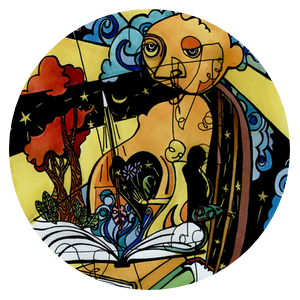
National Poetry Month

BMP Celebrates National Poetry Month 2016

If “love calls us to the things of this world,” then poetry too can call us to think about challenging questions, difficult situations, and social justice, implicating and engaging the reader with the world we live in, in the hope that this engagement is a step toward wrestling with our better selves.

“Chicagoshit” by Kwyn Townsend Riley and “Lolita Learns To Drive” by Courtney Felle

Editors' Choice Poems

“Chicagoshit” by Kwyn Townsend Riley and “Lolita Learns To Drive” by Courtney Felle

We are delighted to present this week’s selections from the Brain Mill Press Poetry Month Contest by talented poets Kwyn Townsend Riley and Courtney Felle.

We hope you’ll enjoy these editors’ picks as much as we did.

Chicagoshit


As a Chicagoan, Kwyn channels her Southside experiences into her writing. Audiences have referring to her writing as “inspirational” and “eye-opening”. Most of her poems are center on many social justice issues including racism, sexism, rape culture and gun violence. To Kwyn, poetry makes the truth sound beautiful and less painful. It serves reality a little warmer to those who are hopeless. She has released poetry videos on her youtube channel that have gone viral. Her poetry has been featured in the Huffington Post, BLAVITY, ForHarriet and a host of others. She has performed at many college campuses including but not limited to California State University at Monterey Bay, University of Cincinnati – Blue Ash and Denison University. She has also performed her poetry in Germany. She hopes by sharing her vulnerabilities that will help others with the same issues sleep better at night.

National Poetry Month

Lolita Learns To Drive

Courtney Felle

Courtney Felle imagines herself living in the liminal space between the Northeast and the Midwest. Her work currently focuses on the landscape of queerness, disability, and gender, and can be found in Blue Marble Review, Chautauqua Literary Journal, and Pen 2 Paper, among other publications. In addition to writing, she edits Body Without Organs Literary Journal, reads poetry for Helen: A Lit Mag, and campaigns for congressional candidates.

National Poetry Month

BMP Celebrates National Poetry Month 2018

Maybe you have lines living in you. Maybe you’ve been walking around like the speaker in Maggie Smith’s “Good Bones”: “This place could be beautiful, / right? You could make this place beautiful.” Maybe you’ve been inspired by Isobel O’Hare’s erasures, and have an urge to address some things. Maybe you’ve woken up in the spiked night, with a line swimming out of the deep. Maybe you have a story to tell. Or, maybe you memorized Jericho Brown’s “Colosseum” and have been repeating to yourself: “I cannot locate the origin / Of slaughter, but I know / How my own feels, that I live with it / And sometimes use it / To get the living done . . .”

These poetic efforts have touched me in the last few months, in that strange trigonometry of language, chance, and seeking, that we readers and writers do. Brown’s lines resonated with me, brought me low, and offered something – if not quite comfort, then a kind of recognition.

Dread and Grief, Energy and Song

Dread and Grief, Energy and Song

Nicole Cooley and Cathryn Cofell Discuss the Poetry of Alicia Rebecca Myers

We invited accomplished poets Cathryn Cofell and Nicole Cooley to read Alicia Rebecca Myers’s poetry chapbook My Seaborgium and share in a discussion about it. Today, we are excited to present to you the result — a lively and insightful conversation about Myers’s collection, and a welcome contribution to our celebration of National Poetry Month.

My Seaborgium is available for purchase in both print and ebook editions wherever books are sold, or in ebook and a signed, numbered fine first edition directly from Brain Mill Press.

NC: I’m so excited to talk about this chapbook by Alicia Rebecca Myers and have been thinking of what drew me to the book, what interested me even before I read the poems.

It’s the title.

First the unfamiliar—to me—word drawn from the language of science, and then the use of the possessive, “the my,” to circumscribe it. The way the word is defined in the book’s introduction also intrigued me; “seaborgium” is “a synthetic element” named in 1974 with “no practical uses” “except perhaps to mark for us a before and after.” The phrase feels playful and loving and teasing and sharp-edged all at once.

And this is reflected in the book, as In “Lullaby” at the end of the chapbook, when the speaker calls her child, “My Seaborgium / My little radish bugaboo, my / pillowfoot jeweler.” I love the way the language of science and fairy tale and slang converge here.

What drew you to this book?

CC: The title was a definite draw for me, too, for many of the same reasons. I have to admit, I assumed it was made up, had looked it up before opening the book, which pulled me in all the more. So much weight to describe an element of so little weight. Playful and sharp-edged, yes, but where you felt love, it called out for me a sadness, the idea of a life so short it’s called “a half-life.”

So yes, this was a brilliant choice for the title, for pulling us both into the book so headily.

There was a second draw for me, and that was Kiki Petrosino’s blurb of the book on the Brain Mill press website—“an attempt to account for the beauty that emerges from our moments of greatest grief”—and the description of Myers’s poems as “songs of loss and growth, motherhood and viscera.” I was connected back again to the before and after of seaborgium, but also to my own story, a story so many women share and have tried to share in verse that it can border on cliché.

Blissfully, cliché is the last thing in this book! You referenced a poem at the end of the book, but I turn to the front, to “Hostess,” the foreword poem.

If what happens after we die is the same as

what happened before then what

must count is the middle. Like the cream filling

in a Twinkie how did I get here?

–”Hostess” by Alicia Rebecca Myers

What a wonderful blend of quirk and and query, heady yet playful.

There are many wonderful poems in here, but this was a fast favorite. How about for you? Could you choose a favorite?

NC: I very much liked the series of poems focused on “weeks” so I think I will choose the prose poem “15 Weeks” (as much I love the sonnets). Throughout this book, I admired the variety of forms Myers employed, and “15 Weeks” reflects this formal play and variation. I have to quote my absolute favorite moment in this poem:

I repeatedly wake at 3am, what Grandma Walker called the convict hour, when escaped men would break into your shotgun house to kill you.

–”15 Weeks” by Alicia Rebecca Myers

This kind of vernacular language, and the reference to family, underscores the wonderful groundedness of this collection. As a counterpoint—or opposite actually—to F. Scott Fitzgerald’s “dark night of the soul,” which occurs at 3 A.M., this image brings us back to a real American landscape, a gendered one, and traces a female lineage of fear at the same time the image has an edge of humor and irony. I admired all the work this single line of the poem was able to do.

CC: Oh yes, yes! I may have to change my choice of best poem, a happy problem in a book with so many delicious options. I hadn’t thought of the Fitzgerald counterpoint, but yes again, this poem speaks strongly to me for these same reasons.

I do believe this middle section of the book—Water/Wait—is the strongest. It’s a short half-life of its own, between the before and the after, and the clever use of form and structure (as you suggested with the sonnets) buffets a ricochet of words and images. Within each poem, the yin and yang, “to be both drift and manifold” as in the poem “24 Weeks,” or “dually as wave and particle” in “33/34 Weeks.” This poem, in particular, describes vividly that duality that comes of being both woman and mother—to be fiercely independent yet so dependent on a life that is so dependent on you. “Pain tolerance isn’t the same as pain threshold” is a line from this poem that stayed with me long after the initial read, perhaps serving as the centrifugal force from which the rest of the book spins.

NC: I really like that phrase—the “centrifugal force from which the rest of the book spins.” The structure of My Seaborgium seems to do exactly that, in my mind, to both move forward in a linear progression but also to spin, to radiate outward. The last line of the book—“Every day is a day I can return to”—speaks to that, I think.

To me, this movement echoes the experience of loss, birth, and mothering in such an accurate way. As well as the movement from inside to outside, which is such a strong motif in many of the poems.

I admire the way the book refuses an easy teleology, from loss to a birth, which is a more familiar narrative, and the way the poems complicate experience.

CC: So true, and so hard to do! I mentioned my fear of cliché earlier; some might suggest any book with a central theme of birth and motherhood is automatically cliché (believe me, I’ve written one myself, know this is true). Then you look at her author photo—sweet young mom with adorable baby perched on her knee—it’s hard not to say a little “uh-oh” in the back of your throat before opening the book. So here I circle back again, to that wonderfully weird title and the first line of that cream-center poem, about death. And the first poem after that, about killing the geese. Not your typical mommy-and-me book.

In the foreword, Petrosino talks about our individual helplessness as a central theme of the book. While this was metaphorically themed throughout, surrounded the narrator, I never got the sense that the narrator herself felt helpless; did you?

NC: I never felt the speaker was helpless either—that’s interesting. Though I think a large part of mothering is feeling helpless (perhaps that’s another conversation!). The book seems to me to be full of women who are quite the opposite of helpless.

But danger is everywhere in this book, from the “Harmer’s Market” (I love that linguistic play) to the “convict hour” we talked about earlier to the dangers inherent in the body, the way our bodies may or may not betray us. I think, finally, this is my favorite element of My Seaborgium, how it manages to be both playful and dark, how the poems juxtapose both joy and terror.

CC: I was thinking about those same themes – playful and dark – when I just re-read “The Last Travel Agent.” One thing I like to do with a book I love (aka wish I’d written) is to see where the poems within have been published. This poem appeared in 2015 “Best New Poets”—a fantastic, well-earned acknowledgment of her talent—and I do believe it’s this rare gift of juxtaposition that got her there and in the other fine presses where her work has previously appeared.

This poem—heck, this whole chapbook—is brimming with words that describe dread and grief but in a voice that is full of energy and song, almost (sometimes) taunting and laughter. I’m amazed at her ability to do this. And yes, a little envious.

Bravo to Meyers, and to Brain Mill Press for publishing such a fine, fine book.

About Cathryn Cofell

Cathryn Cofell, Appleton, has birthed Sister Satellite (Cowfeather Press), six chapbooks, and Lip, a CD blending her poetry with the music of Obvious Dog. She believes the arts are crucial for positive health and advocates for an abundance of it, as a member of the WI Poet Laureate Commission and WI Academy of Sciences, Arts & Letters, and as a volunteer with the Fox Cities Book Festival, the Wisconsin Fellowship of Poets, and the Appleton Poetry Rocks Reading Series.

National Poetry Month

About Nicole Cooley

Nicole Cooley has published five books, most recently Breach (LSU Press) and Milk Dress (Alice James Books), both in 2010. Her work has appeared most recently in The Rumpus, Drunken Boat and Tinderbox. She is the director of the MFA Program in Creative Writing and Literary Translation at Queens College—CUNY.

Website

National Poetry Month

BMP Celebrates National Poetry Month 2016

If “love calls us to the things of this world,” then poetry too can call us to think about challenging questions, difficult situations, and social justice, implicating and engaging the reader with the world we live in, in the hope that this engagement is a step toward wrestling with our better selves.

Room for All of Us

Room for All of Us

Annette Langlois Grunseth

There is nothing a mother desires more than to see her child feel fulfilled and happy with life. I have an adult daughter who is euphoric now and at peace with herself through gender transition. It makes me happy to see her flourishing. I admire her courage to change.

Since she began transitioning, we are making up for lost time with mother-daughter experiences such as sharing clothes, shopping together, and having heart-to-heart talks about everything from books to music and technology to how we can help others understand diversity in its many forms. Aren’t we all unique, no two people alike?

In my forthcoming book Becoming Trans-Parent: One Family’s Journey through Gender Transition (Finishing Line Press, Summer 2017), I offer narrative poetry to share some of our “aha” moments, which include a learning curve for both of us, as well as the reader. I learned about changing avatars, new pronouns, name changes, selecting clothing, job searches, unique health issues, marriage and family, along with the joy that comes from seeing a child live her one true life.

Writing brought us together into a mother-daughter bond as my manuscript evolved. We bounced ideas back and forth; she was my fact checker for what I termed “trans-accuracy,” and she reached deeper to help me understand what it’s really like to be transgender. She was transitioning, and so was I.

As the months flew by, I watched her become joy-filled and outgoing; yet at the same time I worried about her long-term health and safety out in the world. It is now several years into transition, and she continues as the same loving, intelligent, and sensitive person she always was. The spectrum of who we are is wide and real, even if it is sometimes hidden through cultural pressure. Who we are is not fabricated — how can I help others understand this? As I say in one of my poems, I’m like the mother duck who looks after her ducklings, being protective and watchful. As parents we do the best we can. I watch people to observe if they look at us differently, and guess what? They see two women at the sink in a ladies’ restroom fixing our hair, tucking in our blouses, and moving forward.

In another poem, I describe our daughter who has skin like pink on a peach, who wears crystal beads that drape across her collar bone and is a person who walks with confidence, meets new people with ease, and has made new friends. She is the same person, but her doubting discord is gone. And yes, she’s the daughter I always wanted.

My daughter and I feel compelled to help others (think activism/advocacy) understand gender identity and the spectrum of identity that is not new, just more open these days. We are striving to make a difference with lawmakers who propose bathroom bills and threaten health insurance coverage, or employers who hesitate in hiring. I wrote this book for the reader to expand understanding and to tell about one family’s journey. I want others to know my daughter is smart, polite, compassionate, and human, so that when she goes to the bathroom, to the doctor, or applies for a job, she will be able to pee where she feels comfortable, get hired, and be treated as a woman who just happens to be transgender.

I wouldn’t change my daughter for the world, but I’d like to change the world for her and those like her.

About Annette Langlois Grunseth

Annette Langlois Grunseth has a BA in Communications from the University of Wisconsin-Madison and is a lifetime member of the Wisconsin Fellowship of Poets. Her poems have appeared in Wisconsin Academy Review, Midwest Prairie Review, SOUNDINGS: Door County in Poetry, The Poetry Box’s, Poeming Pigeons, The Ariel Anthology and other publications. Several of her nature poems were set to original music and performed at Acadia University in Nova Scotia. She is retired from a career in Marketing and Public Relations and lives in Green Bay, Wisconsin, with her husband, John, where they both advocate for equal rights.​

National Poetry Month

BMP Celebrates National Poetry Month 2017

The theme of teaching and learning poetry, and our emphasis on student poets, speaks directly to the action of poetry in our country and global community. Never has the education of our students been so threatened, and never has truth been more challenged than in the current political climate. The truth emerges through education and the resistance and questions of our youngest generation, and it is their lead we absolutely must follow if they are to live in a society that fosters their achievements, liberation, and justice. Truth emerges through poetry as well — poetry bears witness to what truths seem impossible to speak any other way. Its constraints limit the temptation to misconstrue, obscure, and bury.

Beats, Rhymes, and Spoken Word

Beats, Rhymes, and Spoken Word

Latonya Pennington

In high school, I hated hip-hop. As a budding black poet, I felt like I was expected to like it by association, but I couldn’t. The songs I was exposed to only talked about sex or a new dance craze—they seemed empty, and I couldn’t connect with them.

I didn’t get into hip-hop until I was in college, when I discovered Angel Haze while browsing a site that featured independent hip-hop artists. Her raw, relatable song “Smile N Hearts” was the one that got me. My favorite part was the interlude: the beat stops, but Haze is still speaking. For a few moments, the hip-hop song turns into spoken word as Haze speaks beautiful verses filled with introspection and imagery.

Soon I was not only downloading Angel Haze’s hip-hop songs but also some of her spoken word. Hearing her recite poetry against a beautiful piano track was deeply moving. Together, her tracks showed me the value of the human voice and how it can be used to get people to listen to you. They also taught me that hip-hop isn’t as monolithic as the radio makes it seem, and that my experiences have a place in the genre as much as anyone else’s.

I started listening to her music as I wrote poetry. Gradually, it became easier to write introspective poems without censoring myself. I was also inspired to try spoken word by recording my voice with a mic and a voice recorder program on my laptop. I traded my spoken word recordings with a friend via email.

Angel Haze opened the door for more discoveries. In the summer of 2014, I was an editorial intern for the black women’s news site For Harriet. During the internship, I discovered an article written by a black indie female hip-hop artist named Sammus. Sammus turned out to be one of several MCs of color involved in nerdcore, a subgenre of hip-hop that features songs influenced by video games and other forms of pop culture.

Black nerdcore rappers such as Sammus, Mega Ran, and Skyblew showed me a side of hip-hop that was fun and creative, but also serious when it needed to be. I realized that if hip-hop didn’t always have to be serious and kept in a box, then maybe my poetry didn’t have to be either. Eventually, I decided to experiment and write “Song of The Black Nerd,” a pop-culture-filled poem about my experiences. The poem was later featured in an article I wrote for the pop culture site Black Girl Nerds.

Spoken word also became a stronger influence on my poetry. One day, I was searching for poetry-related films when I came across Slam, a 1998 independent film starring the now legendary spoken word hip-hop artist Saul Williams. After getting it for my birthday, I watched in awe as I saw how the worlds of hip-hop and spoken word could intersect and become tools for personal freedom.

One particular part of the film resonated with me. In this scene, Saul Williams’s character, Ray, is in a prison yard about to confront a group of guys who want to beat him up over beef between them and his cellmate, Hopha. When he does confront them, he recites a poem he wrote prior to entering the prison yard. No blows are struck by the guys who have it in for him, because they are enraptured by his words. When Ray is finished, he walks away without comment, with no harm done to him.

This scene, as well as the entire film, showed me how it is possible to reach someone through spoken word. It affirmed that the human voice can be a weapon as powerful as a gun.

Slam and spoken word artists like Jessica Care Moore inspired me to read one of my published poems to the public during my final semester of college. I used my voice in a way that was similar to the spoken word artists I had watched. I spoke with emotion, attitude, and varied inflections in order to get my poem to reach my audience. Afterward, I got a lot of positive feedback from other poets, the people who published my poem, and members of the audience. Some enjoyed my reading so much that they asked me to sign copies of the magazine where my poem was published.

Despite a bad first impression, hip-hop and its sibling, spoken word, have become amazing muses for my poetry. They have taught me to value my personal experiences and my voice. By literally giving a voice to the voiceless, they have helped me speak up and express myself.

National Poetry Month

BMP Celebrates National Poetry Month 2016

If “love calls us to the things of this world,” then poetry too can call us to think about challenging questions, difficult situations, and social justice, implicating and engaging the reader with the world we live in, in the hope that this engagement is a step toward wrestling with our better selves.

The Turf Chick

Poetry Month Spotlight

The Turf Chick

Some said I was the female Pac, Some said I was the female Biggie, some said I was the female Rick, and some said rappers can’t mess with me

–The Turf Chick, Untitled

I get up every day with a new goal on my mind, the same frown and the same broken spirit from doors opening and shutting right before my eyes. It feels like I’m working overtime. Overtime with no pay.

Some days I just want to give up and live a regular life, you know? Go to work, pay rent, and enjoy the rest of my funds doing the things that excite me.

But no. I was given the gift of song, and no matter how much I try to be normal, my soul releases words that move the world!

Music is the only reason I am still alive. You get me? Being a homosexual and a woman and, I may sound cocky, but extremely talented — better than some who are very well established — it’s hard! It’s hard to prove a point. It’s easy to make you listen, but when men see me they realize I’m good for nothing because they can’t get anything out of me in exchange for a deal.

Sometimes I hate being a woman. You can tell, right? Sometimes I wish I wasn’t used as a sex symbol, used to get the things I work so hard for in life. Coming up in the music industry is tough, because you have to have the mind of shark and the heart of a beast! But the soul of pure woman. Give yourself away or work harder with the same amount a faith after every door has been slammed in your face for being a woman in the music industry.

Honestly at this point I don’t wonder when I’m going to make it or when I’m going to finally get through that door… All I want to know is, when are people actually going to listen. Before they look.

On 2229

When everything was all alright, and momma held my head when I cried on 2229, I watched my brother come in and out of jail thinking how he get that phone in his cell.

On 2229

–The Turf Chick, “2229“

The realest people crossed me and now they’re fake as ever so I’m ready for whatever

–The Turf Chick, “Whateva”

I never knew my day ones, wasn’t really there for me, they wanted my dream and everything that came with it, all us eating living life was the plan for me.

–The Turf Chick, “FearFull”

About The Turf Chick

Local rising star Gabrielle Gilbert, who goes by the stage name of “The Turf Chick,” was born in East Palo Alto and raised in Sacramento since age eleven. In the beginning, Gabrielle Gilbert, with the childhood nickname “Gi-Gi” performed for her brothers, sisters, and cousins. When she was only thirteen years old, she made her first recording at a friend’s studio in South Sacramento, rapping “I GO.” From then, Gi-Gi became “The Turf Chick,” writing and rapping messages of hope, street life, and personal struggles. Inspired by music icons Lil Kim, Messy Marv, MC Lyte, Queen Latifah, and Eve, Gabriel says her fans best describe her music as “urban and underground hip-hop with a mix of hard-core bursting lyrics.” The Turf Chick was the only solo hip hop performer at the 2007 Hub Choice Awards in Sacramento, performing in front of nearly 1,200 people.

Twitter | Instagram | Soundcloud | YouTube

National Poetry Month

BMP Celebrates National Poetry Month 2016

If “love calls us to the things of this world,” then poetry too can call us to think about challenging questions, difficult situations, and social justice, implicating and engaging the reader with the world we live in, in the hope that this engagement is a step toward wrestling with our better selves.